Transjugular intrahepatic portosystemic shunt in decompensated cirrhotic patients in a tertiary hospital in southern Brazil
- PMID: 37075438
- PMCID: PMC10176653
- DOI: 10.1590/1806-9282.20220944
Transjugular intrahepatic portosystemic shunt in decompensated cirrhotic patients in a tertiary hospital in southern Brazil
Abstract
Objective: The aim of the present study was to evaluate the outcomes of cirrhotic patients undergoing transjugular intrahepatic portosystemic shunt.
Methods: A retrospective longitudinal observational study was carried out evaluating 38 cirrhotic patients undergoing transjugular intrahepatic portosystemic shunt. The outcomes were evaluated in an outpatient follow-up period of 3 months. The assumed significance level was 5%.
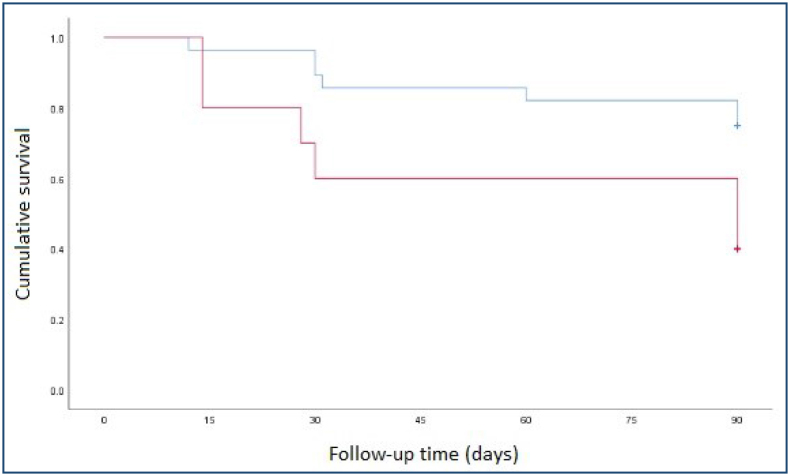
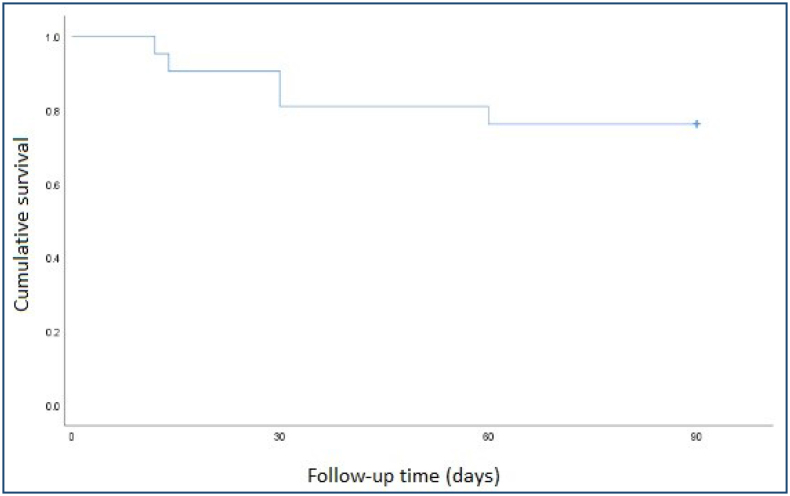
Results: The indications for transjugular intrahepatic portosystemic shunt were refractory ascites in 21 (55.3%), variceal hemorrhage in 13 (34.2%), and hydrothorax in 4 (10.5%) patients. There was development of hepatic encephalopathy in 10 (35.7%) patients after transjugular intrahepatic portosystemic shunt. From the 21 patients with refractory ascites, resolution was observed in 1 (3.1%) patient, and in 16 (50.0%) patients, there was ascites control. Regarding transjugular intrahepatic portosystemic shunt after variceal bleeding, 10 (76.9%) patients remained without new bleeding or hospitalizations in the follow-up period. The global survival in the follow-up period in patients with and without hepatic encephalopathy was 60 vs. 82%, respectively (p=0.032).
Conclusion: Transjugular intrahepatic portosystemic shunt can be considered in decompensated cirrhotic patients; however, the development of hepatic encephalopathy which can shorten survival should be focused.
Conflict of interest statement
Conflicts of interest: the authors declare there is no conflicts of interest.
Figures
References
Publication types
MeSH terms
LinkOut - more resources
Full Text Sources
Medical