


Quantitative application of dual-phase 99mTc-sestamibi SPECT/CT imaging of parathyroid lesions: identification of optimal timing in secondary hyperparathyroidism
- PMID: 37079194
- PMCID: PMC10119365
- DOI: 10.1186/s40658-023-00548-5
Quantitative application of dual-phase 99mTc-sestamibi SPECT/CT imaging of parathyroid lesions: identification of optimal timing in secondary hyperparathyroidism
Abstract
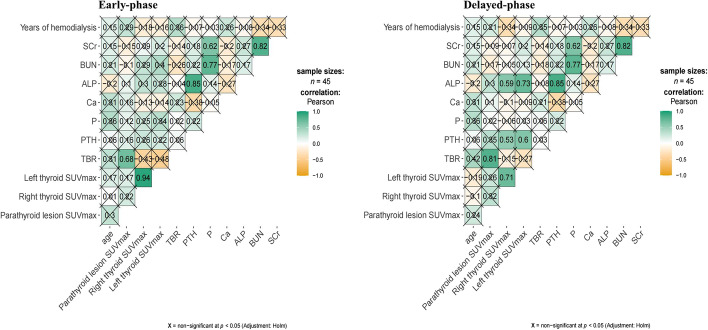
Purpose: In this retrospective study, we compared the maximum standardized uptake values (SUVmax) of parathyroid lesions and the target-to-background ratio (TBR) of parathyroid lesions to thyroid tissue in early-phase single-photon emission computed tomography/computed tomography (SPECT/CT) versus delayed-phase SPECT/CT in patients with secondary hyperparathyroidism (SHPT) in order to determine the optimal timing of 99mTc- methoxyisobutylisonitrile (99mTc-MIBI) SPECT/CT imaging.
Methods: Seventeen patients with a history of chronic kidney failure stage 5 on hemodialysis, underwent pre-operative parathyroid scintigraphy for detection and localization of parathyroid lesions. Retrospective analysis was conducted for lesions with focal accumulation of 99mTc-MIBI. All patients underwent dual-phase 99mTc-MIBI parathyroid scintigraphy and dual-phase SPECT/CT. SUVmax of parathyroid lesions and thyroid tissues was measured.
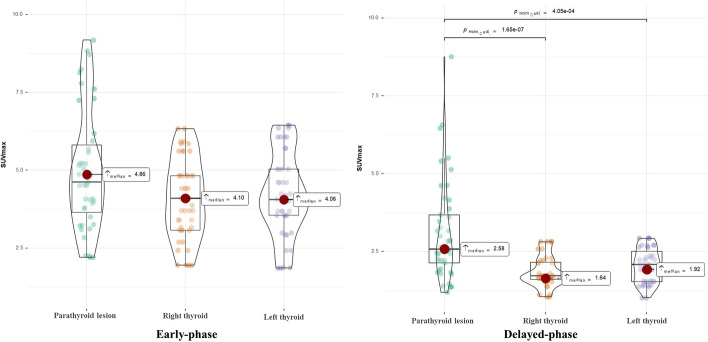
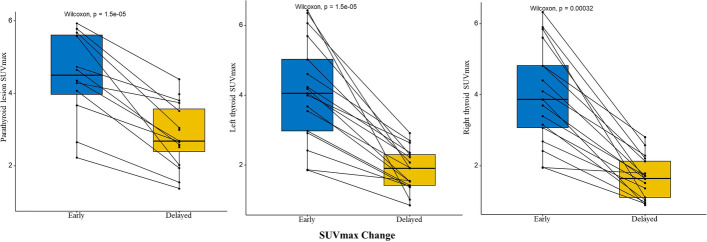
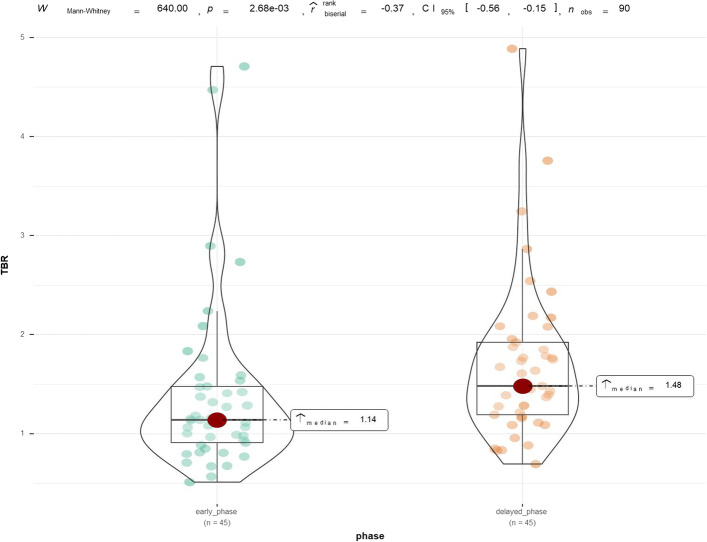
Results: Mean SUVmax of parathyroid lesions was 4.86 on early-phase and 2.58 on delayed-phase SPECT/CT, respectively. Mean TBR was 1.14 on early phase and 1.48 on delayed-phase SPECT/CT, respectively. Statistically significant differences in SUVmax and TBR between dual-phase SPECT/CT were observed (P < 0.001).
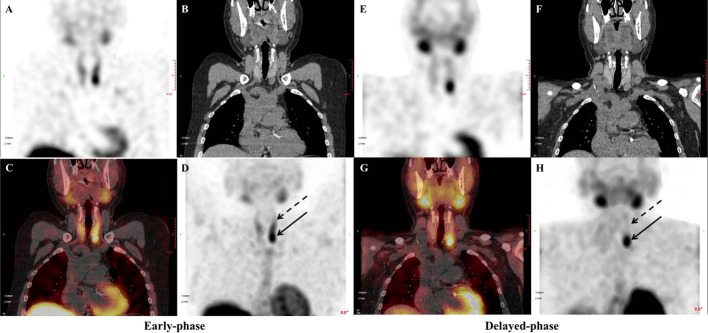
Conclusions: Delayed-phase SPECT/CT in SHPT is required because of the better image contrast.
Keywords: 99mTc-MIBI; Chronic kidney disease; Hyperparathyroidism; Maximum standardized uptake; SPECT/CT.
© 2023. The Author(s).
Conflict of interest statement
The authors have no relevant financial or non-financial interests to disclose.
Figures
References
LinkOut - more resources
Full Text Sources
