


A novel task to investigate vibrotactile detection in mice
- PMID: 37079581
- PMCID: PMC10118142
- DOI: 10.1371/journal.pone.0284735
A novel task to investigate vibrotactile detection in mice
Abstract
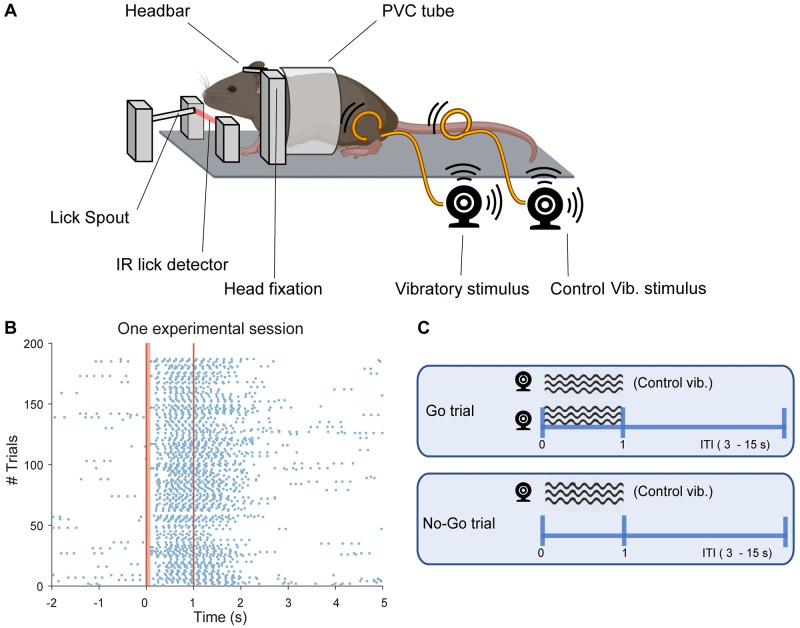
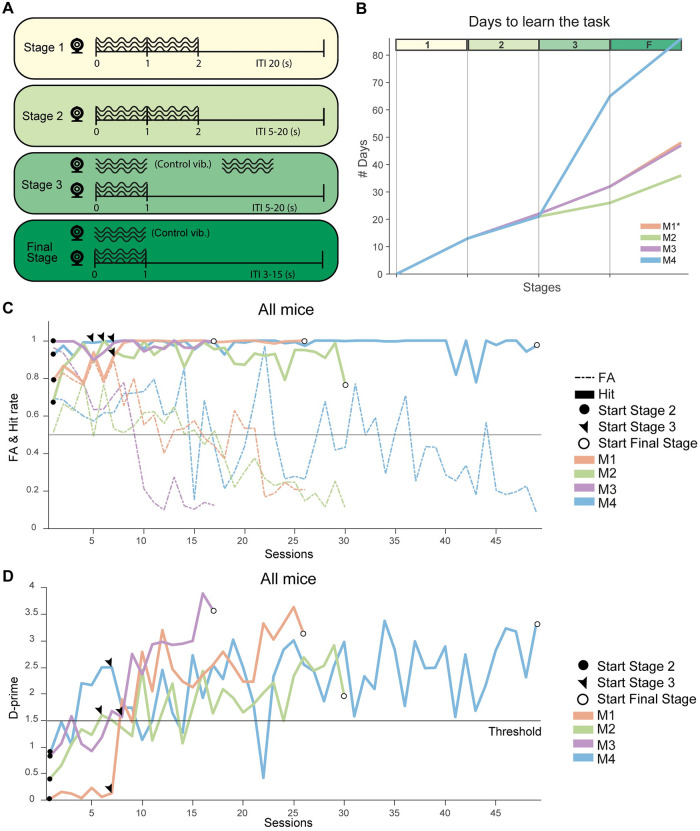
Throughout the last decades, understanding the neural mechanisms of sensory processing has been a key objective for neuroscientists. Many studies focused on uncovering the microcircuit-level architecture of somatosensation using the rodent whisker system as a model. Although these studies have significantly advanced our understanding of tactile processing, the question remains to what extent the whisker system can provide results translatable to the human somatosensory system. To address this, we developed a restrained vibrotactile detection task involving the limb system in mice. A vibrotactile stimulus was delivered to the hindlimb of head-fixed mice, who were trained to perform a Go/No-go detection task. Mice were able to learn this task with satisfactory performance and with reasonably short training times. In addition, the task we developed is versatile, as it can be combined with diverse neuroscience methods. Thus, this study introduces a novel task to study the neuron-level mechanisms of tactile processing in a system other than the more commonly studied whisker system.
Copyright: © 2023 Muller et al. This is an open access article distributed under the terms of the Creative Commons Attribution License, which permits unrestricted use, distribution, and reproduction in any medium, provided the original author and source are credited.
Conflict of interest statement
The authors have declared that no competing interests exist.
Figures
References
Publication types
MeSH terms
LinkOut - more resources
Full Text Sources
