


Immunogenic cell death in cancer immunotherapy
- PMID: 37081756
- PMCID: PMC10230015
- DOI: 10.5483/BMBRep.2023-0024
Immunogenic cell death in cancer immunotherapy
Abstract
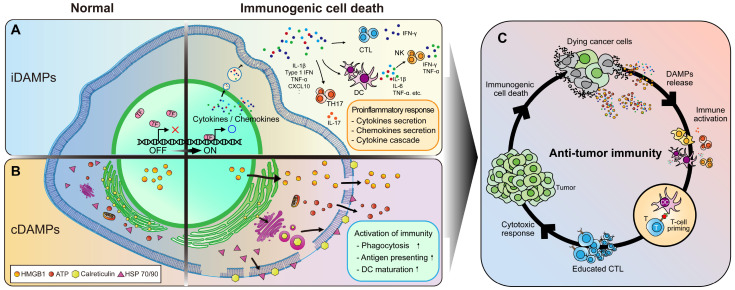
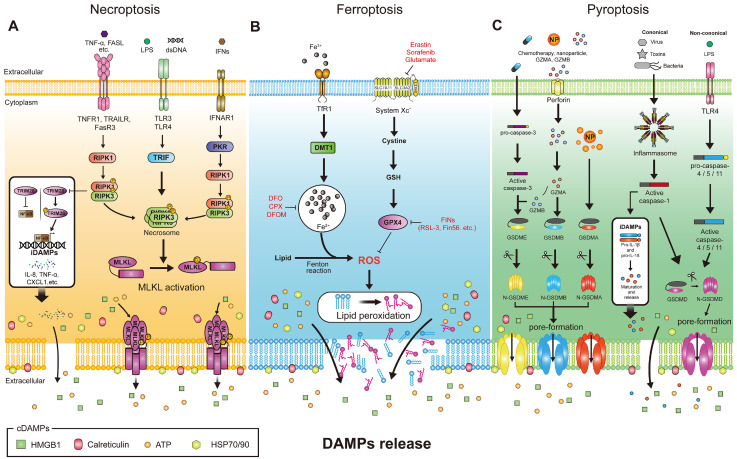
Cancer immunotherapy has been acknowledged as a new paradigm for cancer treatment, with notable therapeutic effects on certain cancer types. Despite their significant potential, clinical studies over the past decade have revealed that cancer immunotherapy has low response rates in the majority of solid tumors. One of the key causes for poor responses is known to be the relatively low immunogenicity of solid tumors. Because most solid tumors are immune desert 'cold tumors' with antitumor immunity blocked from the onset of innate immunity, combination therapies that combine validated T-based therapies with approaches that can increase tumor-immunogenicity are being considered as relevant therapeutic options. This review paper focuses on immunogenic cell death (ICD) as a way of enhancing immunogenicity in tumor tissues. We will thoroughly review how ICDs such as necroptosis, pyroptosis, and ferroptosis can improve anti-tumor immunity and outline clinical trials targeting ICD. Finally, we will discuss the potential of ICD inducers. as an adjuvant for cancer immunotherapy.[BMB Reports 2023; 56(5): 275-286].
Conflict of interest statement
The authors have no conflicting interests.
Figures
References
Publication types
MeSH terms
Substances
LinkOut - more resources
Full Text Sources
Medical
Miscellaneous
