TFAP2A promotes cervical cancer via a positive feedback pathway with PD‑L1
- PMID: 37083077
- PMCID: PMC10170487
- DOI: 10.3892/or.2023.8551
TFAP2A promotes cervical cancer via a positive feedback pathway with PD‑L1
Abstract
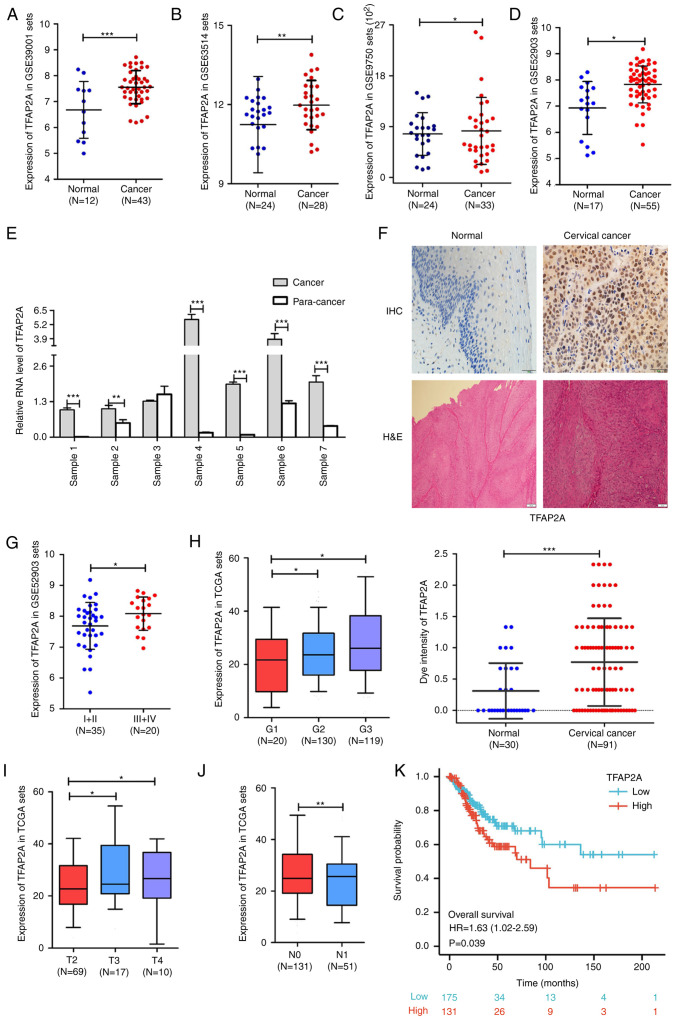
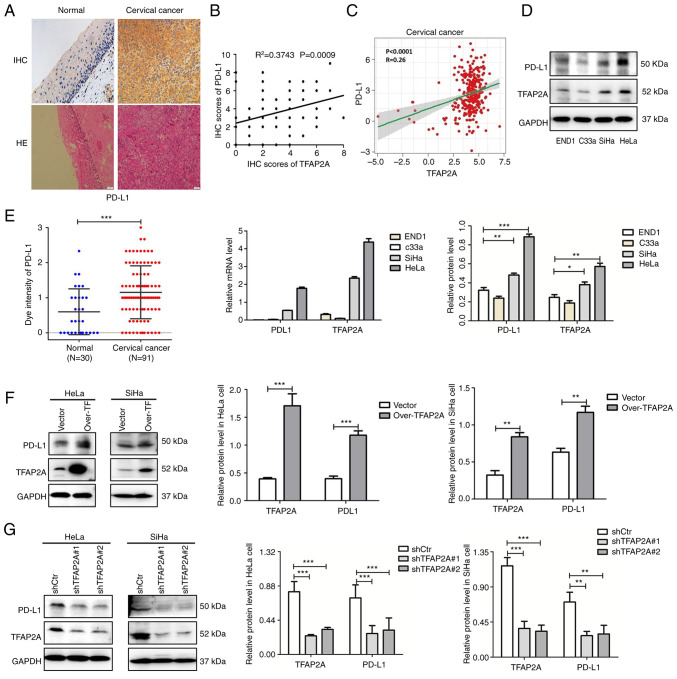
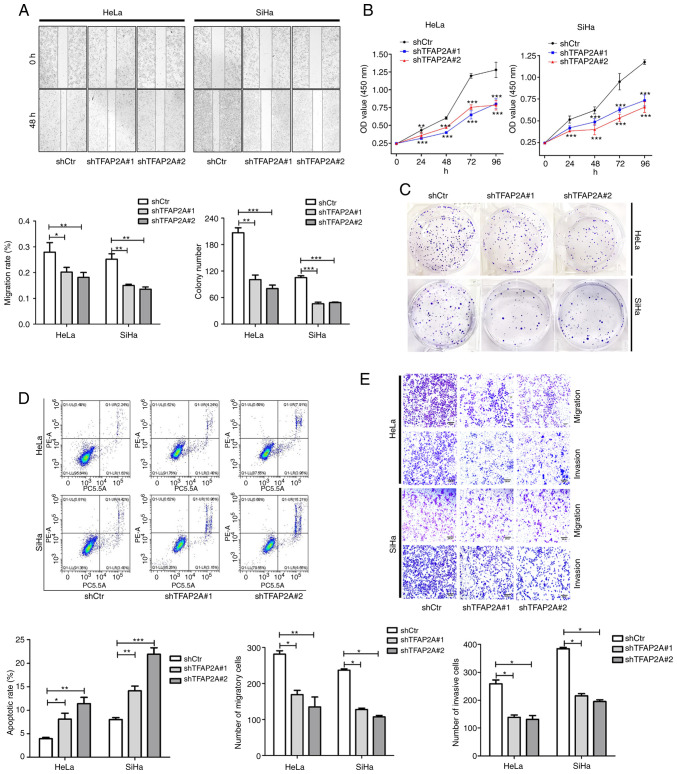
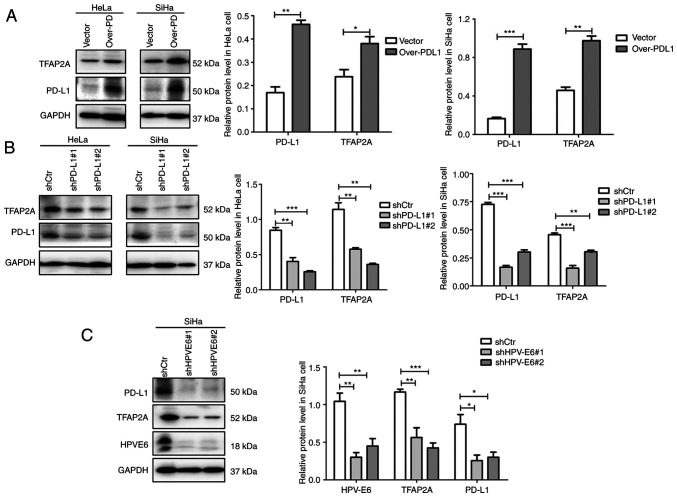
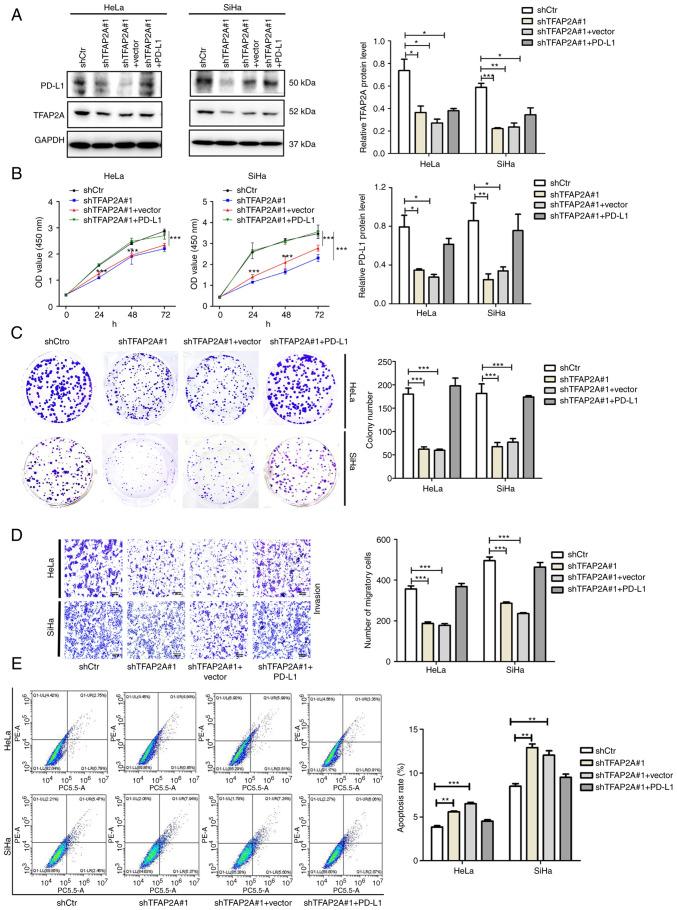
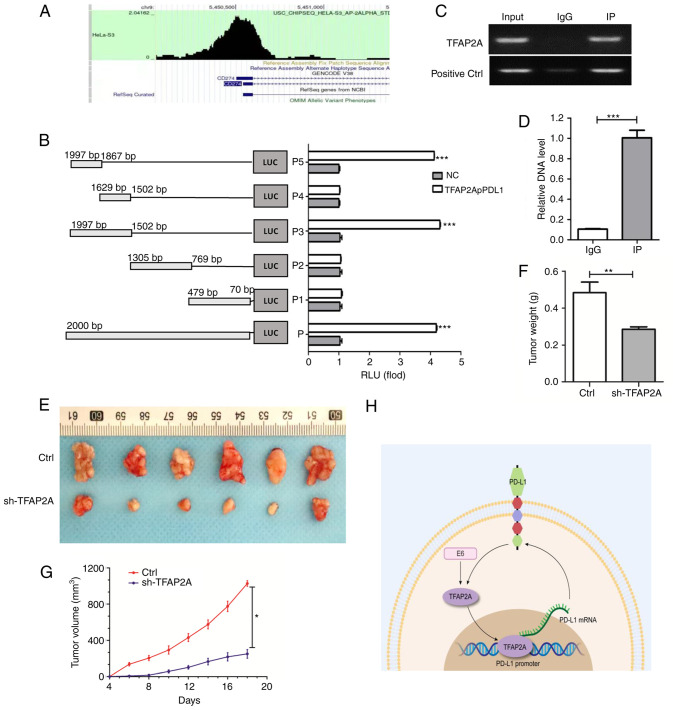
Transcription factor AP‑2 alpha (TFAP2A) is a critical cell growth regulator that is overexpressed in various tumor tissues. However, its role in the development of cervical cancer remains unknown. In the present study, public databases were thus explored and a higher expression of TFAP2A was found in cervical cancer. A total of 131 clinical samples were collected and it was also identified that TFAP2A was highly expressed in cervical tumor tissues. TFAP2A was also found to be associated with a higher tumor stage, lymph node metastasis and a poor patient survival. In vitro experiments revealed that the knockdown of TFAP2A inhibited the proliferation and migration of cervical cancer cells and promoted apoptosis. Furthermore, it was observed that TFAP2A could bind the programmed death‑ligand 1 (PD‑L1) promoter region and PD‑L1 rescued TFAP2A expression. In vivo experiments also revealed that TFAP2A promoted tumor growth. Collectively, in the present study it was demonstrated that TFAP2A is a transcription factor of PD‑L1 and a prognostic factor with clinical value, identifying a positive feedback loop of TFAP2A/PD‑L1.
Keywords: cervical cancer; migration; programmed death‑ligand 1; proliferation; transcription factor AP‑2 alpha.
Conflict of interest statement
The authors declare that they have no competing interests.
Figures
References
-
- Martínez-Rodríguez F, Limones-González JE, Mendoza-Almanza B, Esparza-Ibarra EL, Gallegos-Flores PI, Ayala-Luján JL, Ayala-Luján JL, Godina-González S, Salinas E, Mendoza-Almanza G. Understanding cervical cancer through proteomics. Cells. 2021;10:1854. doi: 10.3390/cells10081854. - DOI - PMC - PubMed
-
- Yamashita H, Kawasawa YI, Shuman L, Zheng Z, Tran T, Walter V, Warrick JI, Chen G, Al-Ahmadie H, Kaag M, et al. Repression of transcription factor AP-2 alpha by PPARγ reveals a novel transcriptional circuit in basal-squamous bladder cancer. Oncogenesis. 2019;8:69. doi: 10.1038/s41389-019-0178-3. - DOI - PMC - PubMed
MeSH terms
Substances
LinkOut - more resources
Full Text Sources
Medical
Research Materials