Bacterial secretion system functions: evidence of interactions and downstream implications
- PMID: 37083586
- PMCID: PMC10202321
- DOI: 10.1099/mic.0.001326
Bacterial secretion system functions: evidence of interactions and downstream implications
Abstract
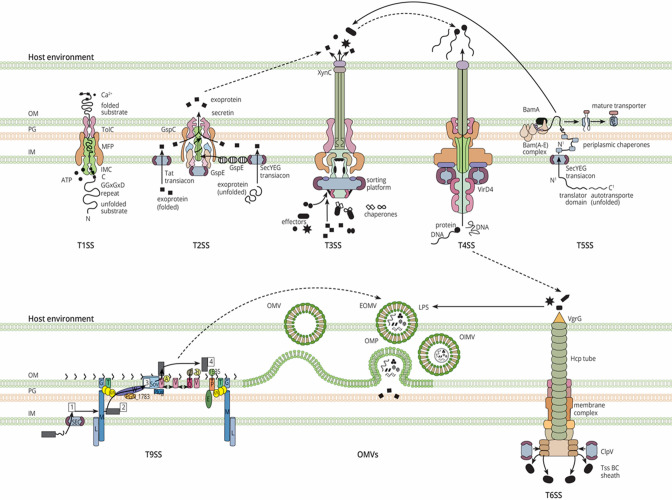
Unprecedented insights into the biology and functions of bacteria have been and continue to be gained through studying bacterial secretion systems in isolation. This method, however, results in our understanding of the systems being primarily based on the idea that they operate independently, ignoring the subtleties of downstream interconnections. Gram-negative bacteria are naturally able to adapt to and navigate their frequently varied and dynamic surroundings, mostly because of the covert connections between secretion systems. Therefore, to comprehend some of the linked downstream repercussions for organisms that follow this discourse, it is vital to have mechanistic insights into how the intersecretion system functions in bacterial rivalry, virulence, and survival, among other things. To that purpose, this paper discusses a few key instances of molecular antagonistic and interdependent relationships between bacterial secretion systems and their produced functional products.
Keywords: bacteria-host interaction; horizontal gene transfer; intersecretion system crosstalk; Secretion systems; nutrient acquisition.
Conflict of interest statement
The authors declare that there are no conflicts of interest.
Figures
References
-
- Bowman L, Palmer T. The type VII secretion system of Staphylococcus . Annu Rev Microbiol. 2021;75:471–494. - PubMed
MeSH terms
Substances
LinkOut - more resources
Full Text Sources