


Evaluation of plan complexity and dosimetric plan quality of total marrow and lymphoid irradiation using volumetric modulated arc therapy
- PMID: 37085997
- PMCID: PMC10243326
- DOI: 10.1002/acm2.13931
Evaluation of plan complexity and dosimetric plan quality of total marrow and lymphoid irradiation using volumetric modulated arc therapy
Abstract
Purpose: To assess the impact of the planner's experience and optimization algorithm on the plan quality and complexity of total marrow and lymphoid irradiation (TMLI) delivered by means of volumetric modulated arc therapy (VMAT) over 2010-2022 at our institute.
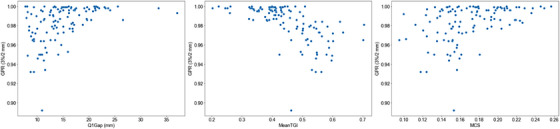
Methods: Eighty-two consecutive TMLI plans were considered. Three complexity indices were computed to characterize the plans in terms of leaf gap size, irregularity of beam apertures, and modulation complexity. Dosimetric points of the target volume (D2%) and organs at risk (OAR) (Dmean) were automatically extracted to combine them with plan complexity and obtain a global quality score (GQS). The analysis was stratified based on the different optimization algorithms used over the years, including a knowledge-based (KB) model. Patient-specific quality assurance (QA) using Portal Dosimetry was performed retrospectively, and the gamma agreement index (GAI) was investigated in conjunction with plan complexity.
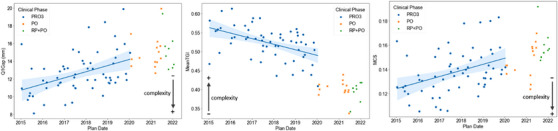
Results: Plan complexity significantly reduced over the years (r = -0.50, p < 0.01). Significant differences in plan complexity and plan dosimetric quality among the different algorithms were observed. Moreover, the KB model allowed to achieve significantly better dosimetric results to the OARs. The plan quality remained similar or even improved during the years and when moving to a newer algorithm, with GQS increasing from 0.019 ± 0.002 to 0.025 ± 0.003 (p < 0.01). The significant correlation between GQS and time (r = 0.33, p = 0.01) indicated that the planner's experience was relevant to improve the plan quality of TMLI plans. Significant correlations between the GAI and the complexity metrics (r = -0.71, p < 0.01) were also found.
Conclusion: Both the planner's experience and algorithm version are crucial to achieve an optimal plan quality in TMLI plans. Thus, the impact of the optimization algorithm should be carefully evaluated when a new algorithm is introduced and in system upgrades. Knowledge-based strategies can be useful to increase standardization and improve plan quality of TMLI treatments.
Keywords: plan complexity; plan quality; radiotherapy (RT); total marrow and lymphoid irradiation (TMLI); total marrow irradiation (TMI).
© 2023 The Authors. Journal of Applied Clinical Medical Physics published by Wiley Periodicals, LLC on behalf of The American Association of Physicists in Medicine.
Conflict of interest statement
The authors have no conflicts of interest to disclose.
Figures
References
-
- Wong JYC, Filippi AR, Scorsetti M, Hui S, Muren LP, Mancosu P. Total marrow and total lymphoid irradiation in bone marrow transplantation for acute leukaemia. Lancet Oncol. 2020;21(10):e477‐e487. - PubMed
-
- Blaise D, Maraninchi D, Michallet M, et al. Long‐term follow‐up of a randomized trial comparing the combination of cyclophosphamide with total body irradiation or busulfan as conditioning regimen for patients receiving HLA‐identical marrow grafts for acute myeloblastic leukemia in first complete remission. Blood. 2001;97(11):3669‐3671. - PubMed
-
- Bunin N, Aplenc R, Kamani N, Shaw K, Cnaan A, Simms S. Randomized trial of busulfan vs. total body irradiation containing conditioning regimens for children with acute lymphoblastic leukemia: a Pediatric Blood And Marrow Transplant Consortium study. Bone Marrow Transplant. 2003;32(6):543‐548. - PubMed
-
- Wong JYC, Filippi AR, Dabaja BS, Yahalom J, Specht L. Total Body Irradiation: guidelines from the International Lymphoma Radiation Oncology Group (ILROG). Int J Radiat Oncol Biol Phys. 2018;101(3):521‐529. - PubMed
MeSH terms
Grants and funding
LinkOut - more resources
Full Text Sources
Miscellaneous
