


Lived experience-centred word clouds may improve research uncertainty gathering in priority setting partnerships
- PMID: 37087419
- PMCID: PMC10122197
- DOI: 10.1186/s12874-023-01897-6
Lived experience-centred word clouds may improve research uncertainty gathering in priority setting partnerships
Abstract
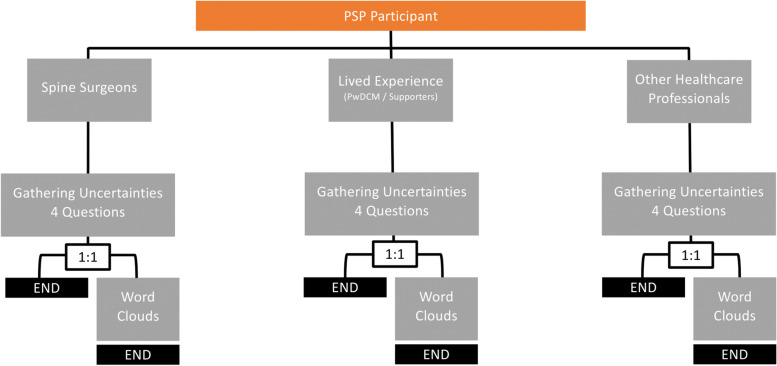
Introduction: AO Spine RECODE-DCM was a multi-stakeholder priority setting partnership (PSP) to define the top ten research priorities for degenerative cervical myelopathy (DCM). Priorities were generated and iteratively refined using a series of surveys administered to surgeons, other healthcare professionals (oHCP) and people with DCM (PwDCM). The aim of this work was to utilise word clouds to enable the perspectives of people with the condition to be heard earlier in the PSP process than is traditionally the case. The objective was to evaluate the added value of word clouds in the process of defining research uncertainties in National Institute for Health Research (NIHR) James Lind Alliance (JLA) Priority Setting Partnerships.
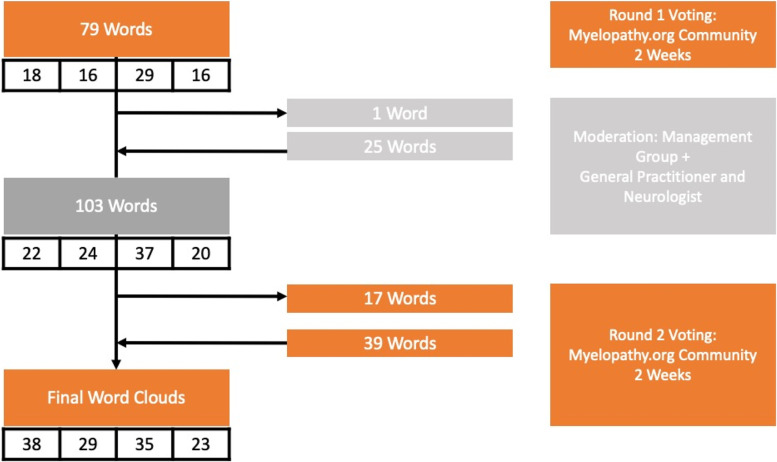
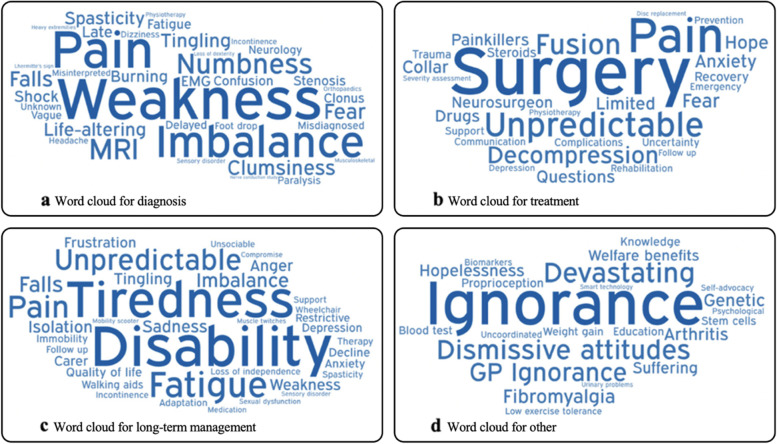
Methods: Patient-generated word clouds were created for the four survey subsections of the AO Spine RECODE-DCM PSP: diagnosis, treatment, long-term management and other issues. These were then evaluated as a nested methodological study. Word-clouds were created and iteratively refined by an online support group of people with DCM, before being curated by the RECODE-DCM management committee and expert healthcare professional representatives. The final word clouds were embedded within the surveys administered at random to 50% of participants. DCM research uncertainties suggested by participants were compared pre- and post-word cloud presentation.
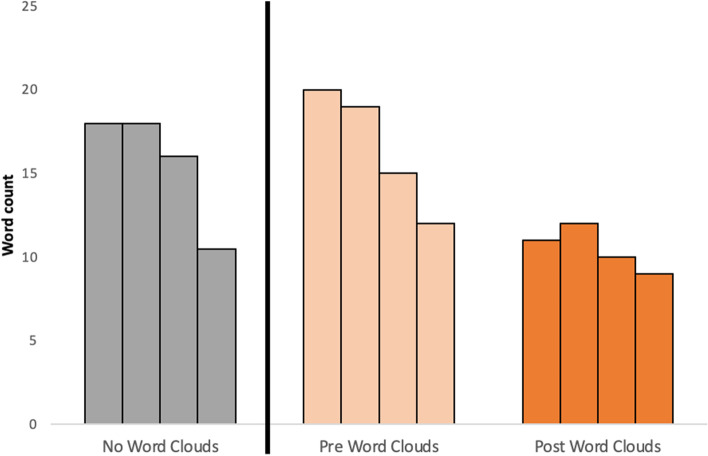
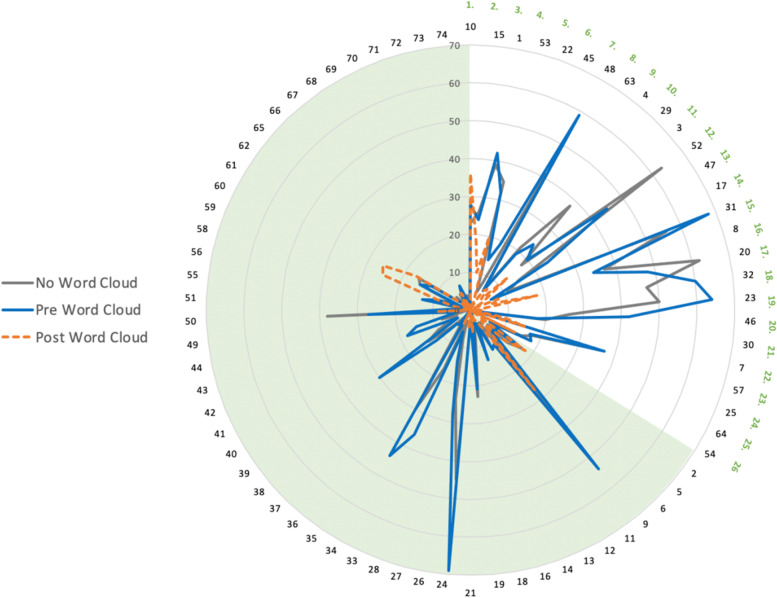
Results: A total of 215 (50.9%) participants were randomised to the word cloud stream, including 118 (55%) spinal surgeons, 52 (24%) PwDCM and 45 (21%) oHCP. Participants submitted 434 additional uncertainties after word cloud review: word count was lower and more uniform across each survey subsections compared to pre-word cloud uncertainties. Twenty-three (32%) of the final 74 PSP summary questions did not have a post-word cloud contribution and no summary question was formed exclusively on post-word cloud uncertainties. There were differences in mapping of pre- and post-word cloud uncertainties to summary questions, with greater mapping of post-word cloud uncertainties to the number 1 research question priority: raising awareness. Five of the final summary questions were more likely to map to the research uncertainties suggested by participants after having reviewed the word clouds.
Conclusions: Word clouds may increase the perspective of underrepresented stakeholders in the research question gathering stage of priority setting partnerships. This may help steer the process towards research questions that are of highest priority for people with the condition.
Keywords: Audit, Surveillance; Cervical; Cervical stenosis; Common data elements; Consensus; Disc herniation; Myelopathy; Ossification of posterior longitudinal ligament; Outcome; Research priorities; Spondylosis; Word cloud.
© 2023. The Author(s).
Conflict of interest statement
The authors declare no competing interests.
Figures
References
-
- Fehlings MG. et al. ‘A Clinical Practice Guideline for the Management of Patients With Degenerative Cervical Myelopathy: Recommendations for Patients With Mild, Moderate and Severe Disease and Nonmyelopathic Patients With Evidence of Cord Compression’. Global Spine J. 2017;7(3_suppl):70S83S. 10.1177/2192568217701914. - PMC - PubMed
-
- Davies BM, et al. ‘RE-CODE DCM (REsearch Objectives and Common Data Elements for Degenerative Cervical Myelopathy): A Consensus Process to Improve Research Efficiency in DCM. Through Establishment of a Standardized Dataset for Clinical Research and the Definition of the Research Priorities’. Global Spine J. 2019;9(1_suppl):65S-76S. 10.1177/2192568219832855. - PMC - PubMed
Publication types
MeSH terms
Grants and funding
LinkOut - more resources
Full Text Sources
Miscellaneous
