Review
. 2024 Dec;125(12):e30406.
doi: 10.1002/jcb.30406. Epub 2023 Apr 23.

Structure and function of the TPR-domain immunophilins FKBP51 and FKBP52 in normal physiology and disease

Affiliations
Review

Structure and function of the TPR-domain immunophilins FKBP51 and FKBP52 in normal physiology and disease

Olga B Soto et al. J Cell Biochem. 2024 Dec.

Abstract

Coordinated cochaperone interactions with Hsp90 and associated client proteins are crucial for a multitude of signaling pathways in normal physiology, as well as in disease settings. Research on the molecular mechanisms regulated by the Hsp90 multiprotein complexes has demonstrated increasingly diverse roles for cochaperones throughout Hsp90-regulated signaling pathways. Thus, the Hsp90-associated cochaperones have emerged as attractive therapeutic targets in a wide variety of disease settings. The tetratricopeptide repeat (TPR)-domain immunophilins FKBP51 and FKBP52 are of special interest among the Hsp90-associated cochaperones given their Hsp90 client protein specificity, ubiquitous expression across tissues, and their increasingly important roles in neuronal signaling, intracellular calcium release, peptide bond isomerization, viral replication, steroid hormone receptor function, and cell proliferation to name a few. This review summarizes the current knowledge of the structure and molecular functions of TPR-domain immunophilins FKBP51 and FKBP52, recent findings implicating these immunophilins in disease, and the therapeutic potential of targeting FKBP51 and FKBP52 for the treatment of disease.

Keywords: FKBP51; FKBP52; immunophilin.


Figures

Figure 1:
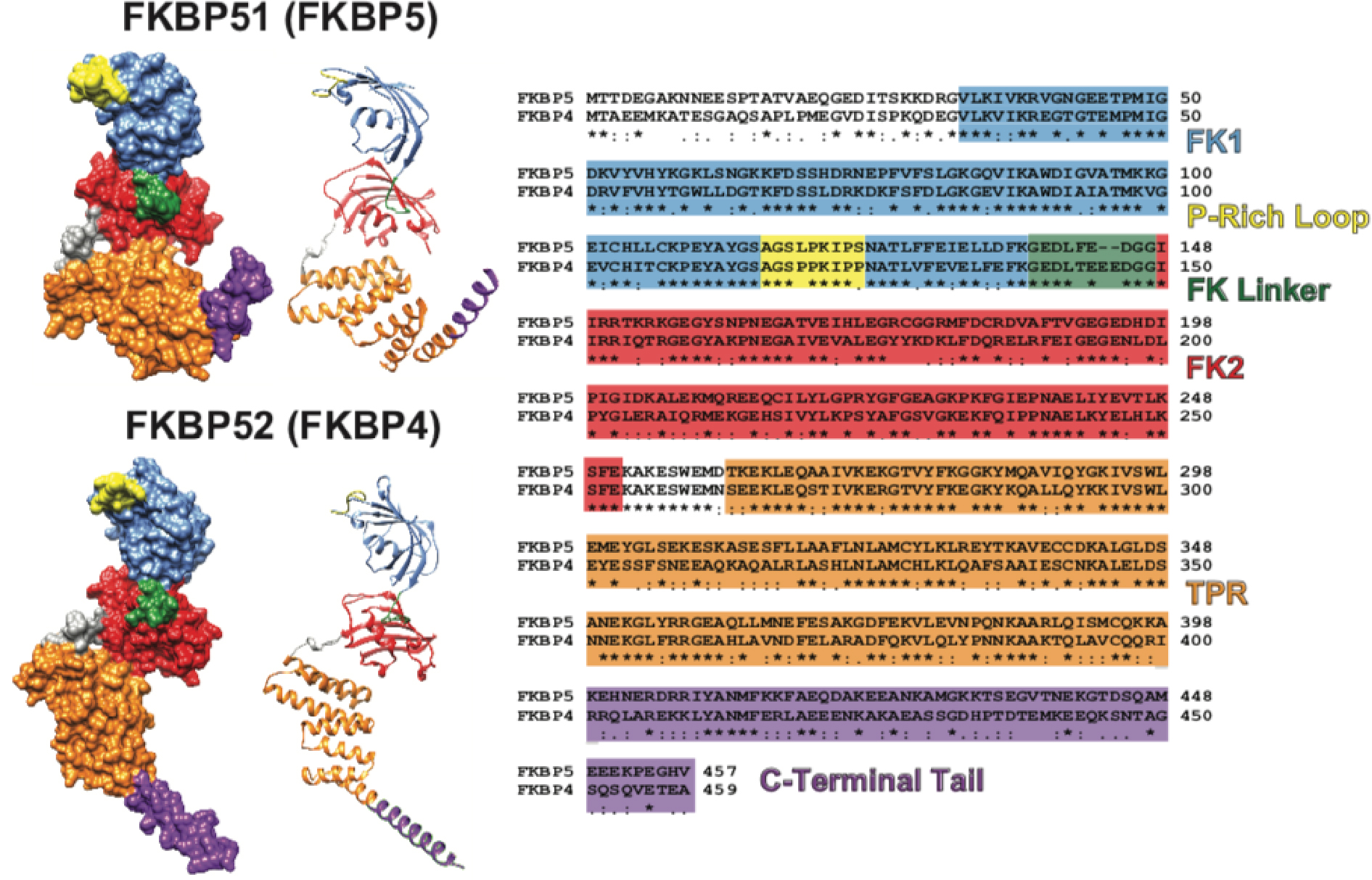
Figure 1:. FKBP51 and FKBP52 Structure and Sequence Comparisons.
Both the ribbon and molecular surface models of the human FKBP51 crystal structure (FKBP5; PDB ID 1KT0) and overlaid images of two partial human FKBP52 crystal structures (FKBP4; PDB ID 1Q1C and 1P5Q) are shown on the left. The visible difference in the orientation of the TPR (orange) and C-Terminal Tail (purple) between FKBP51 and FKBP52 may be an artifact given that FKBP52 has been only partially crystalized. A multiple sequence alignment comparing the FKBP51 and FKBP52 amino acid sequence is shown on the right with known functional domains and regions colored according to their location on the crystal structures (* denotes identical amino acids, : denotes highly conserved amino acids, and . denotes partially conserved amino acids). Human FKBP51 and FKBP52 are approximately 60% identical and approximately 70% similar. The functional domains and regions highlighted include: the FK506 binding domain 1 (FK1) that contains a functional PPIase active site to which FK506 binds (blue); the proline-rich loop that overhangs the PPIase pocket and serves as a functionally relevant surface for the regulation of steroid hormone receptors (yellow); the linker region that links the two FK domains and contains a casein kinase 2 phosphorylation site (T143) in FKBP52 that may regulate Hsp90 binding (green); the FK2 domain that is structurally similar to FK1, but lacks a functional PPIase active site (red); the tetratricopeptide repeat (TPR) domain that mediates binding to the C-terminal EEVD motif on Hsp90 (orange); and the C-terminal Tail containing the Charge-Y motif that has also been shown to influence Hsp90 binding (purple). It is important to note that FKBP51 and FKBP52 were crystalized without the last 45 C-terminal amino acids and 32 C-terminal amino acids respectively. Thus, the structures shown on the left are truncated within the C-Terminal Tail. UCSF Chimera candidate version 1.12 (build 41600) was used to generate the ribbon and molecular surface images. The multiple sequence alignment was generated by CLUSTALW prior to illustration.
Figure 2:
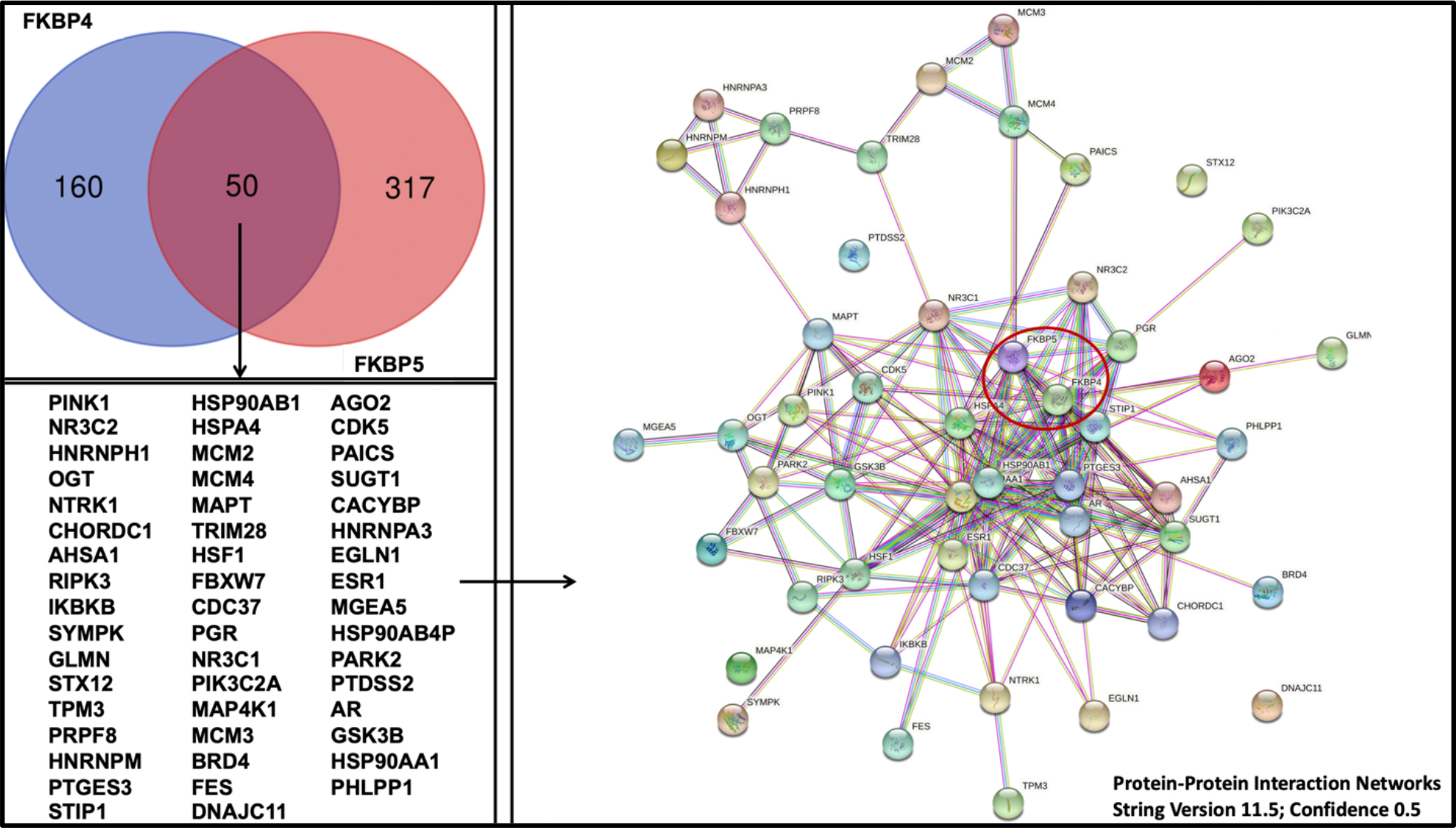
Figure 2:. Protein-Protein Interaction Network For Known Interactors of both FKBP5 and FKBP4.
The venn diagram (top left) collates interactors from the BioGRID protein interaction database for FKBP4 and FKBP5, respectively. TheBioGRID database was accessed 25 September 2022 at 2:32 AM UTC. Results were filtered by evidence type “Interactors with ONLY Physical Evidence (LTP or HTP)” and organism (H. sapiens). Interactors identified only in pre-publication datasets were excluded. Shared interactors (bottom left) were used to generate a PPI network using STRING v11.5 (1–ɑ ≥ 0.5). While interactors were filtered based on methodology detecting physical interaction, not all of these methodologies distinguish between direct interaction versus association through protein complexes. Thus, the interactors shown here may be associated with the FKBPs through larger protein complexes in some cases, but the figure highlights the fact that FKBP51 and FKBP52 have shared interactors as well as a significant number of distinct interactors.

References

    1. Acar N and Ustunel I (2015). “Expression of 52-kDa FK506-binding protein (FKBP52) in human placenta complicated by preeclampsia and intrauterine growth restriction.” Anal Quant Cytopathol Histpathol 37(2): 87–95. - PubMed
    1. Bailus BJ, Scheeler SM, Simons J, Sanchez MA, Tshilenge KT, Creus-Muncunill J, Naphade S, Lopez-Ramirez A, Zhang N, Lakshika Madushani K, Moroz S, Loureiro A, Schreiber KH, Hausch F, Kennedy BK, Ehrlich ME and Ellerby LM (2021). “Modulating FKBP5/FKBP51 and autophagy lowers HTT (huntingtin) levels.” Autophagy 17(12): 4119–4140. - PMC - PubMed
    1. Baker JD, Ozsan I, Rodriguez Ospina S, Gulick D and Blair LJ (2018). “Hsp90 Heterocomplexes Regulate Steroid Hormone Receptors: From Stress Response to Psychiatric Disease.” Int J Mol Sci 20(1). - PMC - PubMed
    1. Bauder M, Meyners C, Purder PL, Merz S, Sugiarto WO, Voll AM, Heymann T and Hausch F (2021). “Structure-Based Design of High-Affinity Macrocyclic FKBP51 Inhibitors.” J Med Chem 64(6): 3320–3349. - PubMed
    1. Binder EB, Bradley RG, Liu W, Epstein MP, Deveau TC, Mercer KB, Tang Y, Gillespie CF, Heim CM, Nemeroff CB, Schwartz AC, Cubells JF and Ressler KJ (2008). “Association of FKBP5 polymorphisms and childhood abuse with risk of posttraumatic stress disorder symptoms in adults.” JAMA 299(11): 1291–1305. - PMC - PubMed

Publication types

Substances

LinkOut - more resources