Review
. 2023 Apr;9(4):e15500.
doi: 10.1016/j.heliyon.2023.e15500. Epub 2023 Apr 17.

Oxygen therapy alternatives in COVID-19: From classical to nanomedicine

Affiliations
Review

Oxygen therapy alternatives in COVID-19: From classical to nanomedicine

Luis F T Pereira et al. Heliyon. 2023 Apr.

Abstract

Around 10-15% of COVID-19 patients affected by the Delta and the Omicron variants exhibit acute respiratory insufficiency and require intensive care unit admission to receive advanced respiratory support. However, the current ventilation methods display several limitations, including lung injury, dysphagia, respiratory muscle atrophy, and hemorrhage. Furthermore, most of the ventilatory techniques currently offered require highly trained professionals and oxygen cylinders, which may attain short supply owing to the high demand and misuse. Therefore, the search for new alternatives for oxygen therapeutics has become extremely important for maintaining gas exchange in patients affected by COVID-19. This review highlights and suggest new alternatives based on micro and nanostructures capable of supplying oxygen and/or enabling hematosis during moderate or acute COVID-19 cases.

Keywords: COVID-19; Hypoxia; Microbubbles; Nanobubbles; Nanotechnology; Oxygen therapy.


Conflict of interest statement

The authors declare that they have no known competing financial interests or personal relationships that could have appeared to influence the work reported in this paper.

Figures
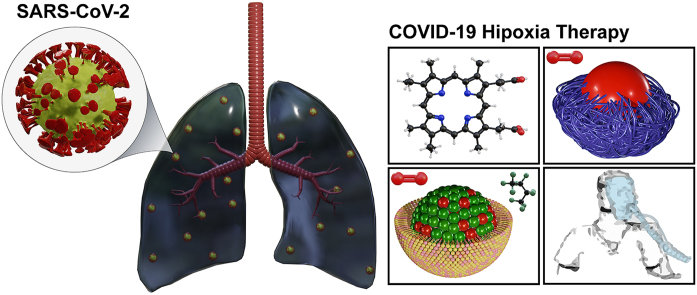
Image 1
Graphical abstract
Fig. 1
Fig. 1
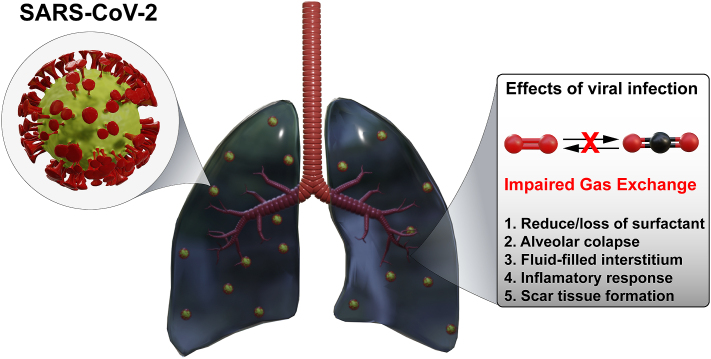
Schematic representation of the main mechanisms involved with the impairment of gas exchanged induced by SARS-CoV-2 infection.
Fig. 2
Fig. 2
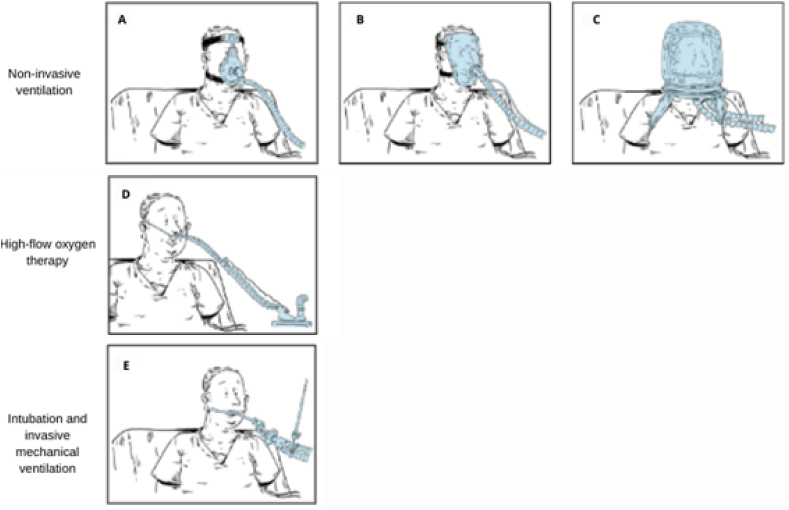
Oxygen Therapies - Non-invasive ventilation provides ventilator support without an endotracheal tube, using an oronasal (A) mask or modified snorkel (total face) (B) mask or a helmet (C). High Flow Nasal Cannula through Prongs or Nasal Cannulas (D) delivers accurate FiO2, PEEP and tidal volume at a flow equal to or greater than the patient's inspiratory flow demand. Nasal oxygen is delivered at a flow rate of up to 60 L/min. It is heated to the body's need and saturated to full moisture. Invasive mechanical ventilation (E) uses a tracheal tube inserted into the trachea under general anesthesia. The tube is then secured to the face or neck and connected to a ventilator. In patients with hypoxemic acute respiratory failure, such as COVID-19 patients, intubation and invasive mechanical ventilation are used after failure of non-invasive methods. Adapted from Ref. [34].
Fig. 3
Fig. 3
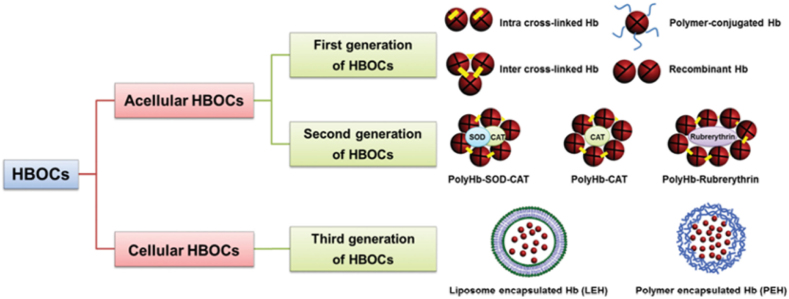
Schematic representation of HBOCs classification. 1st generation transporters, characterized as Hb molecules conjugated with each other and/or other materials. 2nd generation transporters, formed by materials conjugated and cross-linked materials of polymers and enzymes. 3rd generation transporters, which are characterized by Hb molecules encapsulated in nanostructures, such as liposomes or polymeric nanocapsules. Adapted from Ref. [66].
Fig. 4
Fig. 4
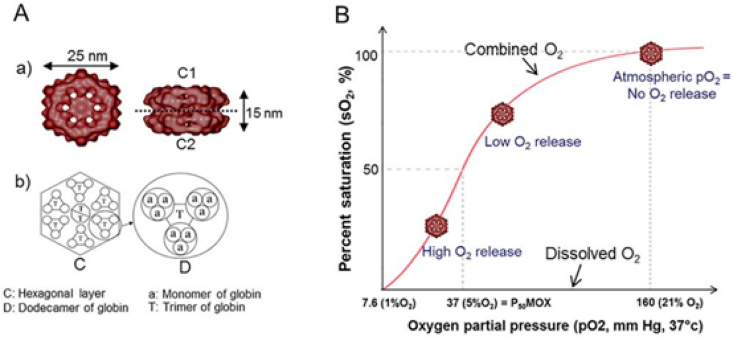
Structural representation of HEMOXCell® (A) with oxygen binding characteristics (B). Adapted from Ref. [79].
Fig. 5
Fig. 5
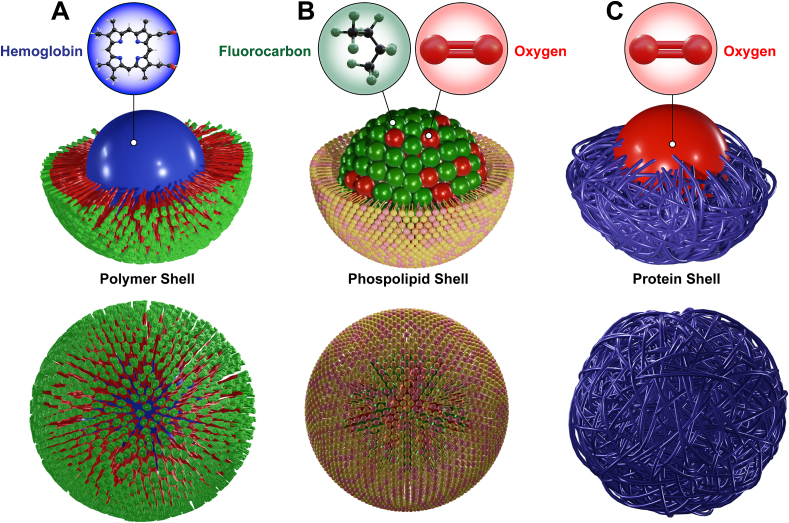
Schematic illustration of the shell (lipids, polymers and proteins) and core composed of hemoglobin (A), O2 (B) and perfluorocarbon (C) employed to formulate micro or nanocarriers to enhance pO2 in experimental studies.
Fig. 6
Fig. 6
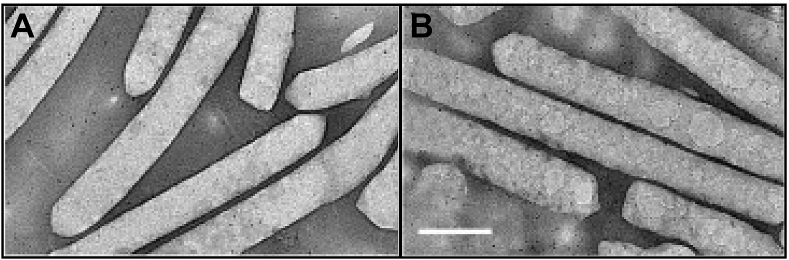
Transmission electron microscopy images of nanovesicles containing oxygen produced by the algae Anabaena flos-aquae before (A) and after the coating process (B). Adapted from Ref. [120].
Fig. 7
Fig. 7
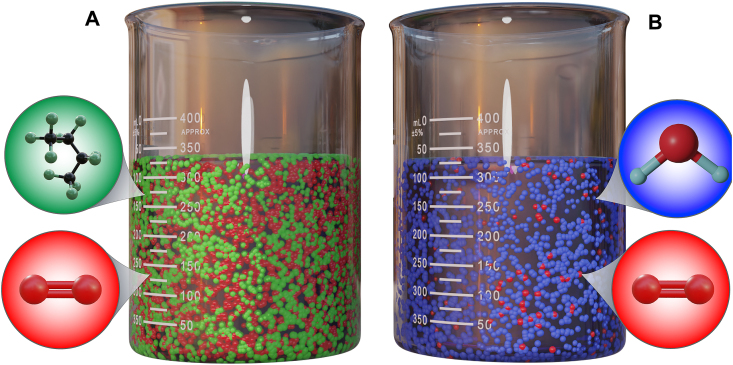
Comparative representation of the gaseous dissolution capacity between PFC (A) and water (B). PFCs are able dissolve ∼20× more O2 compared to water. Adapted from Ref. [124].

References

    1. Serebrovska Z.O., et al. Hypoxia, HIF-1α, and COVID-19: from pathogenic factors to potential therapeutic targets. Acta Pharmacol. Sin. 2020;41(12):1539–1546. - PMC - PubMed
    1. Østergaard L. SARS CoV-2 related microvascular damage and symptoms during and after COVID-19: consequences of capillary transit-time changes, tissue hypoxia and inflammation. Physiol. Rep. 2021;9(3) - PMC - PubMed
    1. Navas-Blanco J.R., Dudaryk R. Management of respiratory distress syndrome due to COVID-19 infection. BMC Anesthesiol. 2020;20(1):177. - PMC - PubMed
    1. Ackermann M., et al. Pulmonary vascular endothelialitis, thrombosis, and angiogenesis in Covid-19. N. Engl. J. Med. 2020;383(2):120–128. - PMC - PubMed
    1. Dhont S., et al. The pathophysiology of 'happy' hypoxemia in COVID-19. Respir. Res. 2020;21(1):198. - PMC - PubMed

LinkOut - more resources