


Metabolite Comparison between Spleen-Deficiency and Healthy Children
- PMID: 37089718
- PMCID: PMC10115538
- DOI: 10.1155/2023/5937308
Metabolite Comparison between Spleen-Deficiency and Healthy Children
Abstract
Objective: From the perspective of metabolomics, this study compares the metabolomics characteristics of feces and urine between children with spleen-deficiency and healthy children to explain the scientific connotation of children with spleen-deficiency susceptibility to digestive system diseases from the metabolic level and provide a scientific basis for further research.
Methods: This study included 20 children with spleen-deficiencies and 17 healthy children. Children's symptom scores, height, and weight were recorded in groups, and feces and urine samples were collected. The samples were detected using ultrahigh-performance liquid chromatography-mass spectrometry. The data were analyzed using multivariate statistical analysis such as principal component analysis (PCA) and partial least squares discriminant analysis (PLS-DA). Related differential metabolites were identified through database comparisons between two groups based on the MS and KEGG.
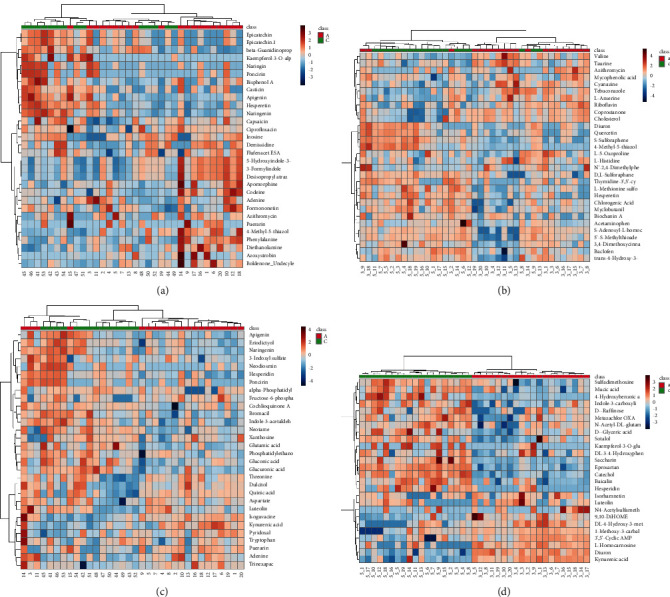
Results: Compared to healthy children, the metabolites glucuronic acid, xanthine, and indole-3-acetaldehyde tend to be reduced in children with spleen-deficiency. Moreover, these children showed an increase in metabolites such as quinic acid, adenine, 4-methyl-5-thiazole-ethanol, 3-formyl indole, and 5-hydroxy indole-3-acetic acid. The condition affected many of the critical metabolic pathways, including the metabolism of tryptophan, cysteine, methionine, and pentose phosphate.
Conclusion: The children with spleen-deficiency had disorders at the metabolic level, which might be due to factors such as diet, personal preferences, and genes, leading to various symptoms, making spleen-deficiency children more prone to suffer from digestive diseases than healthy children. The results set a basis for the research on children's TCM constitution, which can be a reference to further studies to deal with the spleen-deficiency.
Copyright © 2023 Zhiyi Liang et al.
Conflict of interest statement
The authors declare that they have no conflicts of interest.
Figures



References
-
- Liang X., Wang Q., Jiang Z., et al. Clinical research linking Traditional Chinese Medicine constitution types with diseases: a literature review of 1639 observational studies. Journal of Traditional Chinese Medicine . 2020;40(4):690–702. - PubMed
-
- Wang Q. Reconsideration of the three key scientific issues of TCM constitution and its prospect: speech at the 19th academic annual meeting of the TCM Constitution Branch, China Association of Chinese Medicine. Journal of Beijing University of Traditional Chinese Medicine . 2021;44(12):1061–1066.
LinkOut - more resources
Full Text Sources
