


Mild Encephalopathy With Partial Reversible Splenium Lesion Associated With SARS-CoV-2 Infection
- PMID: 37090308
- PMCID: PMC10115355
- DOI: 10.7759/cureus.36421
Mild Encephalopathy With Partial Reversible Splenium Lesion Associated With SARS-CoV-2 Infection
Abstract
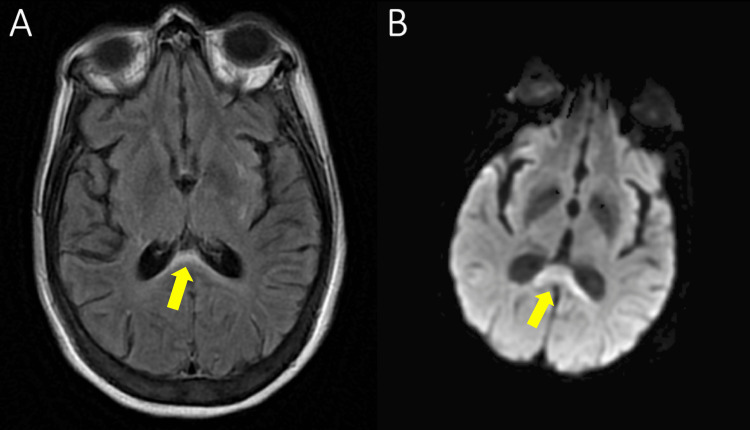
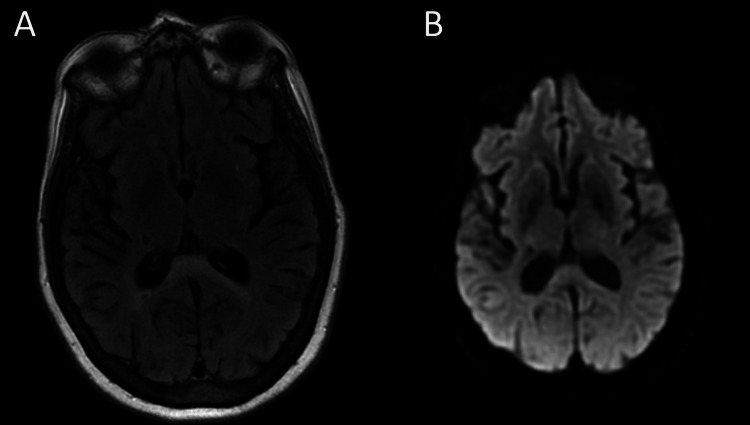
Viral-associated encephalitis/encephalopathy includes a wide spectrum of syndromes reported often in children. A rare form presents with mild encephalitis/encephalopathy and reversible splenial lesion(s). This report describes a case of this rare presentation associated with severe acute respiratory syndrome coronavirus 2 (SARS-CoV-2) infection in a 68-year-old woman. The patient presented to the hospital with altered mental status. Examination revealed mild encephalopathy with disorientation to date and time. Initial laboratory workup was significant for mild hypernatremia and acute kidney injury, and a polymerase chain reaction (PCR) test for SARS-CoV-2 was positive. MRI of the brain revealed an area of hyperintensity and water restriction in the corpus callosum. The patient was treated with tocilizumab, dexamethasone, and remdesivir. MRI of the brain five weeks later revealed partial resolution of the hyperintensity, and complete resolution of the restricted diffusion previously seen in the corpus callosum, which confirmed the diagnosis of mild encephalitis/encephalopathy with a reversible splenial lesion. We highlight the importance of recognizing this phenomenon in association with SARS-CoV-2 infection.
Keywords: covid-19; mild encephalopathy with reversible splenium; mild encephalopathy/aseptic encephalitis with reversible splenial lesion of the corpus callosum; neurology case report; sars-cov-2.
Copyright © 2023, Reyes et al.
Conflict of interest statement
The authors have declared that no competing interests exist.
Figures
References
Publication types
LinkOut - more resources
Full Text Sources
Miscellaneous