


Together in care: Lessons learned at the intersection of integrated care, quality improvement, and implementation practice in opioid treatment programs
- PMID: 37091088
- PMCID: PMC9924288
- DOI: 10.1177/26334895221135265
Together in care: Lessons learned at the intersection of integrated care, quality improvement, and implementation practice in opioid treatment programs
Abstract
Background: Integrated care programs that systematically and comprehensively address both behavioral and physical health may improve patient outcomes. However, there are few examples of such programs in addiction treatment settings. This article is a practical implementation report describing the implementation of an integrated care program into two opioid treatment programs (OTPs).
Method: Strategies used to implement integrated care into two OTPs included external facilitation, quality improvement (QI) processes, staff training, and an integrated organizational structure. Service, implementation, and client outcomes were examined using qualitative interviews with program staff (n = 16), program enrollment data, and client outcome data (n = 593) on mental health (MH), physical health, and functional indicators.
Results: Staff found the program to generally be acceptable and appropriate, but also noted that the new services added to already busy workflows and more staffing were needed to fully reach the program's potential. The program had a high level of penetration (∼60%-70%), enrolling over 1,200 clients. Staff noted difficulties in connecting clients with some services. Client general functioning and MH symptoms improved, and heavy smoking decreased. The organizational structure and QI activities provided a strong foundation for interactive problem-solving and adaptations that were needed during implementation.
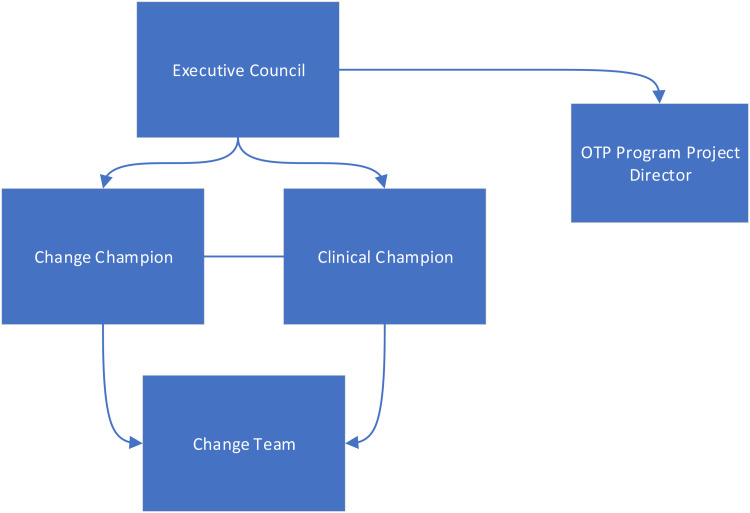
Conclusions: This article highlights an example of the intersection of QI and implementation practice. Simplified QI processes, consistent post-implementation meetings, and change teams and champions facilitated implementation; however, ongoing training and support, especially related to data are needed. The OTP setting provided a strong foundation to build integrated care, but careful consideration of new workflows and changes in philosophy for staff is necessary.Plain Language Summary: Providing medical and behavioral health treatment services in the same clinic using coordinated treatment teams, also known as integrated care, improves outcomes among those with chronic physical and behavioral health conditions. However, there are few practical examples of implementation of such programs in addiction treatment settings, which are promising, yet underutilized settings for integrated care programs. A multi-sectoral team used quality improvement (QI) and implementation strategies to implement integrated care into two opioid treatment programs (OTPs). The program enrolled over 1,200 clients and client general functioning and mental health (MH) symptoms improved, and heavy smoking decreased. Qualitative interviews provided important information about the barriers, facilitators, and context around implementation of this program. The OTP setting provided a strong foundation to build integrated care, but careful consideration of new workflows and changes in philosophy for staff, as well as ongoing training and supports for staff, are necessary. This project may help to advance the implementation of integrated care in OTPs by identifying barriers and facilitators to implementation, lessons learned, as well as providing a practical example of potentially useful QI and implementation strategies.
Keywords: implementation practice; integrated care; mental health; methadone maintenance; opioid treatment program; primary care; quality improvement.
© The Author(s) 2022.
Conflict of interest statement
The authors declared no potential conflicts of interest with respect to the research, authorship, and/or publication of this article.
Figures


References
-
- Berkman N. D., Wechsberg W. M. (2007). Access to treatment-related and support services in methadone treatment programs. Journal of Substance Abuse Treatment, 32(1), 97–104. https://doi.org/https://doi.org/10.1016/j.jsat.2006.07.004 - PubMed
-
- Boyd C., Leff B., Weiss C., Wolff J., Hamblin A., Martin L. (2010). Faces of Medicaid: Clarifying Multimorbidity Patterns to Improve Targeting and Delivery of Clinical Services for Medicaid Populations.
-
- Brooner R. K., Kidorf M. S., King V. L., Peirce J., Neufeld K., Stoller K., Kolodner K. (2013). Managing psychiatric comorbidity within versus outside of methadone treatment settings: A randomized and controlled evaluation. Addiction (Abingdon, England), 108(11), 1942–1951. https://doi.org/https://doi.org/10.1111/add.12269 - PMC - PubMed
LinkOut - more resources
Full Text Sources