


Variation in responses to incretin therapy: Modifiable and non-modifiable factors
- PMID: 37091864
- PMCID: PMC10119428
- DOI: 10.3389/fmolb.2023.1170181
Variation in responses to incretin therapy: Modifiable and non-modifiable factors
Abstract
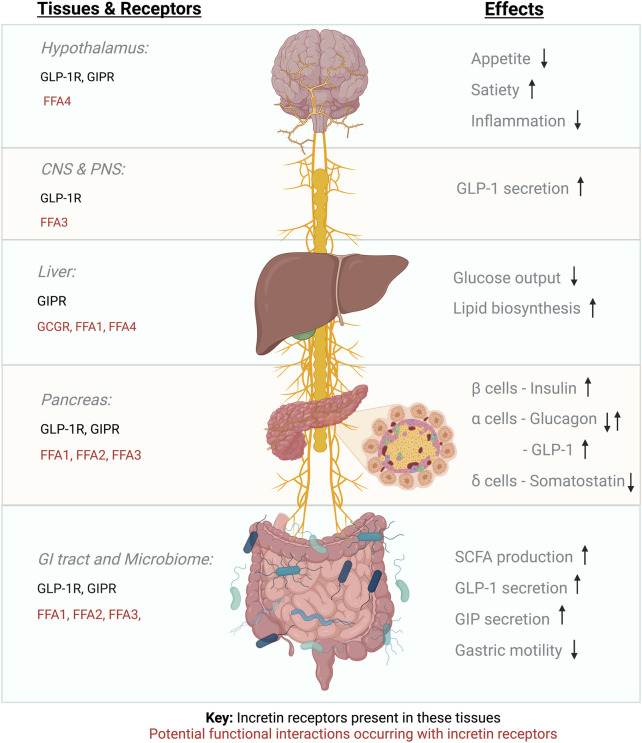
Type 2 diabetes (T2D) and obesity have reached epidemic proportions. Incretin therapy is the second line of treatment for T2D, improving both blood glucose regulation and weight loss. Glucagon-like peptide-1 (GLP-1) and glucose-stimulated insulinotropic polypeptide (GIP) are the incretin hormones that provide the foundations for these drugs. While these therapies have been highly effective for some, the results are variable. Incretin therapies target the class B G protein-coupled receptors GLP-1R and GIPR, expressed mainly in the pancreas and the hypothalamus, while some therapeutical approaches include additional targeting of the related glucagon receptor (GCGR) in the liver. The proper functioning of these receptors is crucial for incretin therapy success and here we review several mechanisms at the cellular and molecular level that influence an individual's response to incretin therapy.
Keywords: GIP (glucose-dependent insulinotropic polypeptide); GLP-1 (glucagon-like peptide-1); T2D (type 2 diabetes); incretin receptors; incretin—based therapy; obesity.
Copyright © 2023 Austin and Tomas.
Conflict of interest statement
The authors declare that the research was conducted in the absence of any commercial or financial relationships that could be construed as a potential conflict of interest.
Figures
References
-
- Al-Zaid B., Chacko S., Ezeamuzie C. I., Bünemann M., Krasel C., Karimian T., et al. (2022). Differential effects of glucose-dependent insulinotropic polypeptide receptor/glucagon-like peptide-1 receptor heteromerization on cell signaling when expressed in HEK-293 cells. Pharmacol. Res. Perspect. 10, e01013. 10.1002/prp2.1013 - DOI - PMC - PubMed
-
- Ambery P., Parker V. E., Stumvoll M., Posch M. G., Heise T., Plum-Moerschel L., et al. (2018). MEDI0382, a GLP-1 and glucagon receptor dual agonist, in obese or overweight patients with type 2 diabetes: A randomised, controlled, double-blind, ascending dose and phase 2a study. Lancet 391, 2607–2618. 10.1016/S0140-6736(18)30726-8 - DOI - PubMed
Publication types
Grants and funding
LinkOut - more resources
Full Text Sources
