


The association between headache presentation, normal examination and neuroimaging findings: a retrospective analysis of patients presenting to a tertiary referral centre
- PMID: 37092089
- PMCID: PMC10117478
- DOI: 10.4314/ahs.v22i4.31
The association between headache presentation, normal examination and neuroimaging findings: a retrospective analysis of patients presenting to a tertiary referral centre
Abstract
Background: There is a high worldwide burden of headaches. Selection of patients with headaches for neuroimaging, in the absence of traditional red flags, is imperative in guiding further management.
Objectives: Determine the yield of neuroimaging findings in patients with headache and normal examination; and potentially identifying additional red flags.
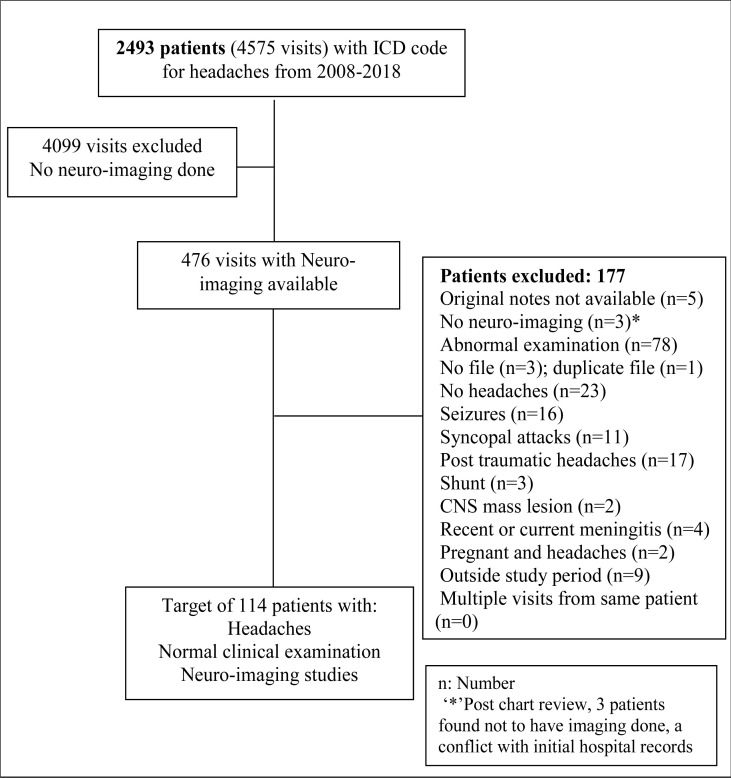
Methods: A retrospective consecutive chart review of patients with a main complaint of headaches and normal clinical examination were assessed at a tertiary hospital, over a 10-year period.
Results: Cohort consisted of 114 patients. Unexpected or normal variants found in 20.2% of patients (23/114) and 11.4% (13/114) required change in management. The absence of nausea and vomiting (p=0.009) and absence of sharp type headaches in unexpected or normal variants group (p=0.03) were statistically significant. There was a higher chance of an abnormal neuroimaging study in men and HIV seropositive patients.
Conclusions: Decision to neuroimage should be determined on an individual basis (demographic factors, history of headache and examination) as normal examination cannot preclude patients from unexpected findings on neuroimaging. Headache with nausea and vomiting in isolation may be associated with normal neuroimaging reflecting primary type headaches. Findings support a lower threshold to neuroimage men and HIV seropositive patients with headaches despite normal clinical examination.
Keywords: Headache; headache red flags; neuroimaging; normal clinical examination.
© 2022 Moodley S et al.
Conflict of interest statement
The author(s) declare that they have no financial or personal relationship(s) that may have inappropriately influenced them in writing this article
References
-
- WHO, author. Headache disorders. World Health Organization; 2016. (updated April 2016; cited 2017 6th October). 2016 http://www. who.int/ mediacentre/factsheets/fs277/en/. https://www.who.int/news-room/factsheets/detail/headache-disorders.
-
- Ahmed F. Headache disorders: differentiating and managing the common subtypes. British Journal of Pain. 2012;6(3):124–132. https://doi.org/10.1177%2F2049463712459691 . - PMC - PubMed
MeSH terms
LinkOut - more resources
Full Text Sources
Medical