


Clinical characteristics and treatment strategy of nocardiosis in lung transplant recipients: A single-center experience
- PMID: 37092136
- PMCID: PMC10119885
- DOI: 10.1016/j.idcr.2023.e01758
Clinical characteristics and treatment strategy of nocardiosis in lung transplant recipients: A single-center experience
Abstract
Objective: Nocardia are infrequent pathogens that disproportionately afflict organ transplant recipients. The present study aimed to summarize the clinical manifestations, diagnostic approaches, and treatment strategies of nocardiosis in lung transplant recipients.
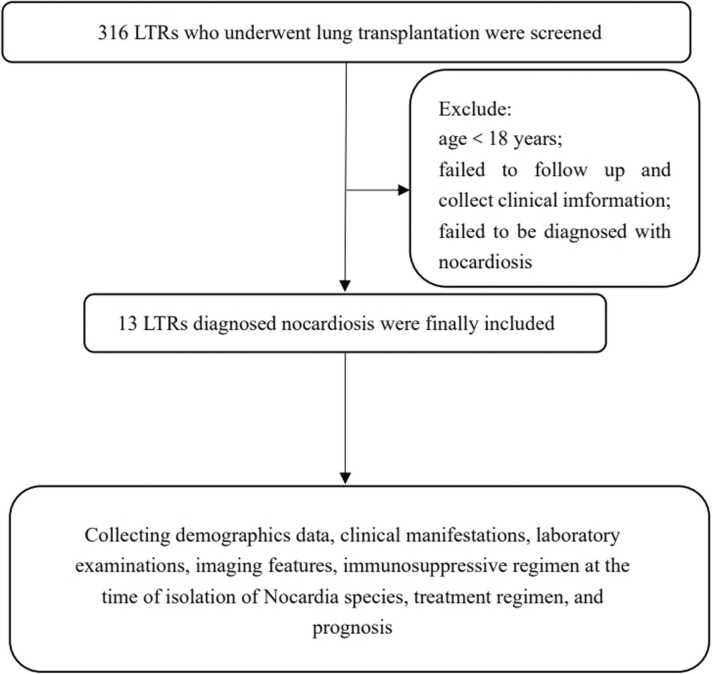
Methods: This retrospective study reviewed the clinical data of adult lung transplant recipients who were complicated with nocardiosis between January 2018 and December 2021 at the largest lung transplant center in South China.
Results: The incidence of nocardiosis was 4.2% (13/316), including 9 cases of pulmonary nocardiosis and 4 disseminated nocardiosis (blood, pulmonary and intracranial). The accuracy in diagnosing nocardiosis was 77.8% by culture and 100% by metagenomic next-generation sequencing (mNGS). Nocardia farcinica was the most common causative pathogen. Trimethoprim-sulfamethoxazole-based combination therapy was administered initially, followed by a single antibiotic as the maintained therapy, lasting for 4-8 months.
Conclusions: mNGS is more accurate than culture in diagnosing nocardiosis. Most patients responded well to the antibiotic therapy with combined antibiotics at the initial stage followed by a single antibiotic treatment.
Keywords: Infection; Lung transplantation; Metagenomic next-generation sequencing.
© 2023 The Authors.
Conflict of interest statement
The authors declare that the research was conducted in absence of any commercial or financial relationships that may constitute a potential conflict of interest.
Figures

References
-
- Lerner P.I. Nocardiosis. Clin Infect Dis Publ Infect Dis Soc Am. 1996;22:891–903. - PubMed
-
- Restrepo A., Clark N.M. Nocardia infections in solid organ transplantation: Guidelines from the Infectious Diseases Community of Practice of the American Society of Transplantation. Clin Transplant. 2019;33 - PubMed
LinkOut - more resources
Full Text Sources
