


The Family's Contribution to Patient Safety
- PMID: 37092484
- PMCID: PMC10123717
- DOI: 10.3390/nursrep13020056
The Family's Contribution to Patient Safety
Abstract
Background: Person- and family-centered care is one of the recommendations to achieve quality of care and patient safety. However, many health professionals associate the family with insecurity in care.
Objective: To analyze, based on nurses' statements, the advantages and disadvantages of the family's presence in hospitals for the safety of hospitalized patients.
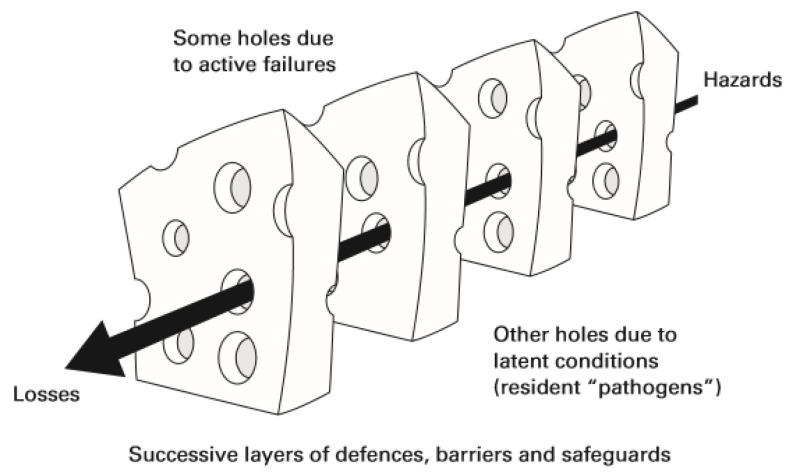
Methods: This was a qualitative interpretative study based on James Reason's risk model, conducted through semi-structured interviews with 10 nurses selected by convenience. A content analysis was performed using Bardin's methodology and MAXQDA Plus 2022 software.
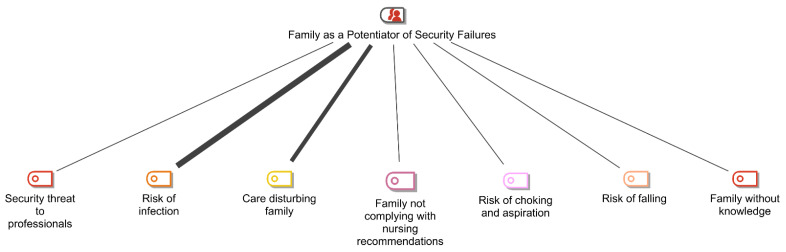
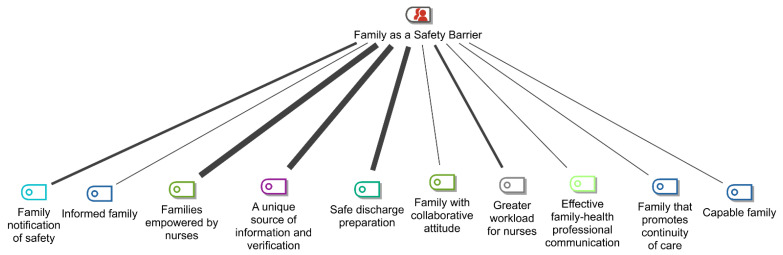
Results: We identified 17 categories grouped according to the representation of the family in patient safety: The family as a Potentiator of Security Failures (7) and Family as a Safety Barrier (10).
Conclusions: The higher number of categories identified under Family as a Safety Barrier shows that nurses see strong potential in the family's involvement in patient safety. By identifying the need to intervene with and for families so that their involvement is safe, we observed an increase in the complexity of nursing care, which suggests the need to improve nursing ratios, according to the participants.
Keywords: family nursing; family-centered care; hospitalization; patient safety; safety management.
Conflict of interest statement
The authors declare no conflict of interest.
Figures
References
-
- World Health Organization . Final Draft Global Patient Safety Action Plan 2021–2030: Towards Eliminating Avoidable Harm in Health Care. WHO; Geneva, Switzerland: 2021. p. 90.
-
- World Health Organization Patient Safety. [(accessed on 8 February 2023)]; Available online: https://www.who.int/news-room/facts-in-pictures/detail/patient-safety.
-
- World Health Organization . Patient Safety: Global Action on Patient Safety. WHO; Geneva, Switzerland: 2018. p. 8.
-
- World Health Organization . Conceptual Framework for the International Classification for Patient Safety. WHO; Geneva, Switzerland: 2009. p. 154.
LinkOut - more resources
Full Text Sources
