


Collaboration to improve cross-race face identification: Wisdom of the multi-racial crowd?
- PMID: 37093063
- PMCID: PMC10592228
- DOI: 10.1111/bjop.12657
Collaboration to improve cross-race face identification: Wisdom of the multi-racial crowd?
Abstract
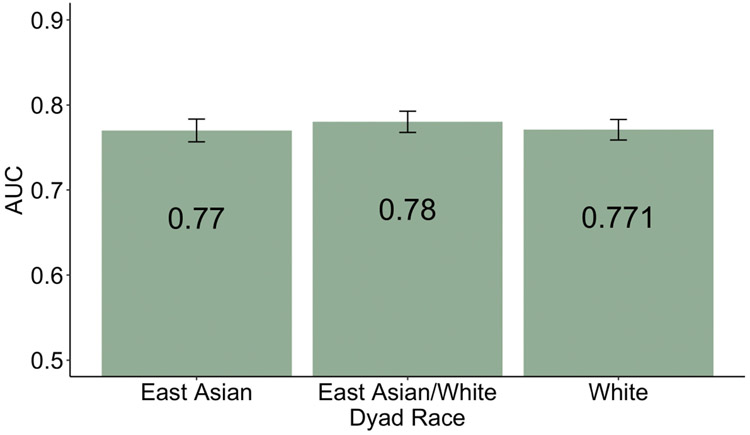
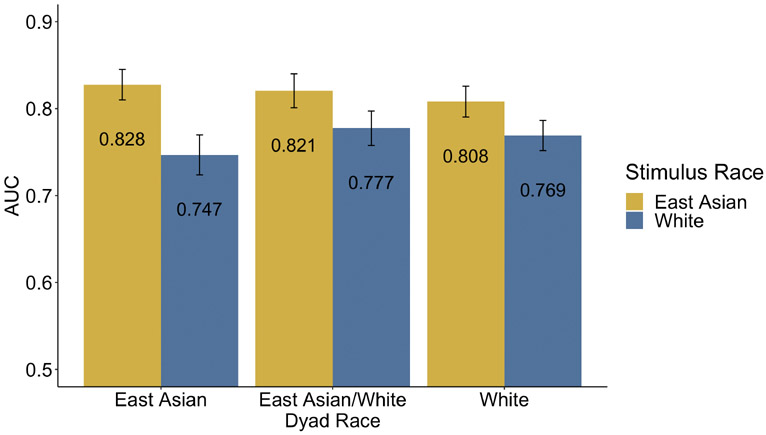
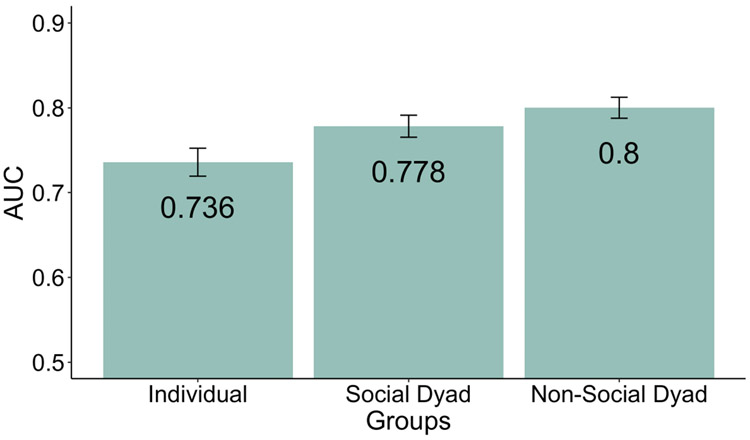
Face identification is particularly prone to error when individuals identify people of a race other than their own - a phenomenon known as the other-race effect (ORE). Here, we show that collaborative "wisdom-of-crowds" decision-making substantially improves face identification accuracy for own- and other-race faces over individuals working alone. In two online experiments, East Asian and White individuals recognized own- and other-race faces as individuals and as part of a collaborative dyad. Collaboration never proved more beneficial in a social setting than when individual identification decisions were combined computationally. The reliable benefit of non-social collaboration may stem from its ability to avoid the potential negative outcomes of group diversity such as conflict. Consistent with this benefit, the racial diversity of collaborators did not influence either general or race-specific face identification accuracy. Our findings suggest that collaboration between two individuals is a promising strategy for improving cross-race face identification that may translate effectively into forensic and eyewitness settings.
Keywords: collaboration; face-identity matching; group diversity; other-race effect; wisdom-of-crowds.
© 2023 The Authors. British Journal of Psychology published by John Wiley & Sons Ltd on behalf of The British Psychological Society.
Conflict of interest statement
CONFLICT OF INTEREST STATEMENT
There are no conflicts of interest to declare.
Figures
References
-
- Bruce V, Henderson Z, Newman C, & Burton AM (2001). Matching identities of familiar and unfamiliar faces caught on cctv images. Journal of Experimental Psychology: Applied, 7(3), 207. - PubMed
MeSH terms
Grants and funding
LinkOut - more resources
Full Text Sources
