


Engineering lanthipeptides by introducing a large variety of RiPP modifications to obtain new-to-nature bioactive peptides
- PMID: 37096385
- PMCID: PMC10373908
- DOI: 10.1093/femsre/fuad017
Engineering lanthipeptides by introducing a large variety of RiPP modifications to obtain new-to-nature bioactive peptides
Abstract
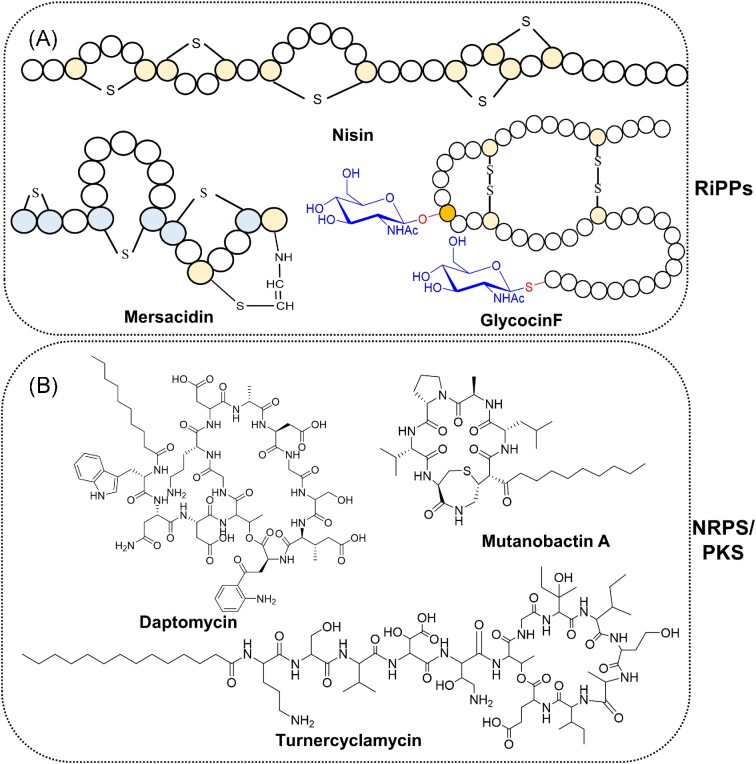
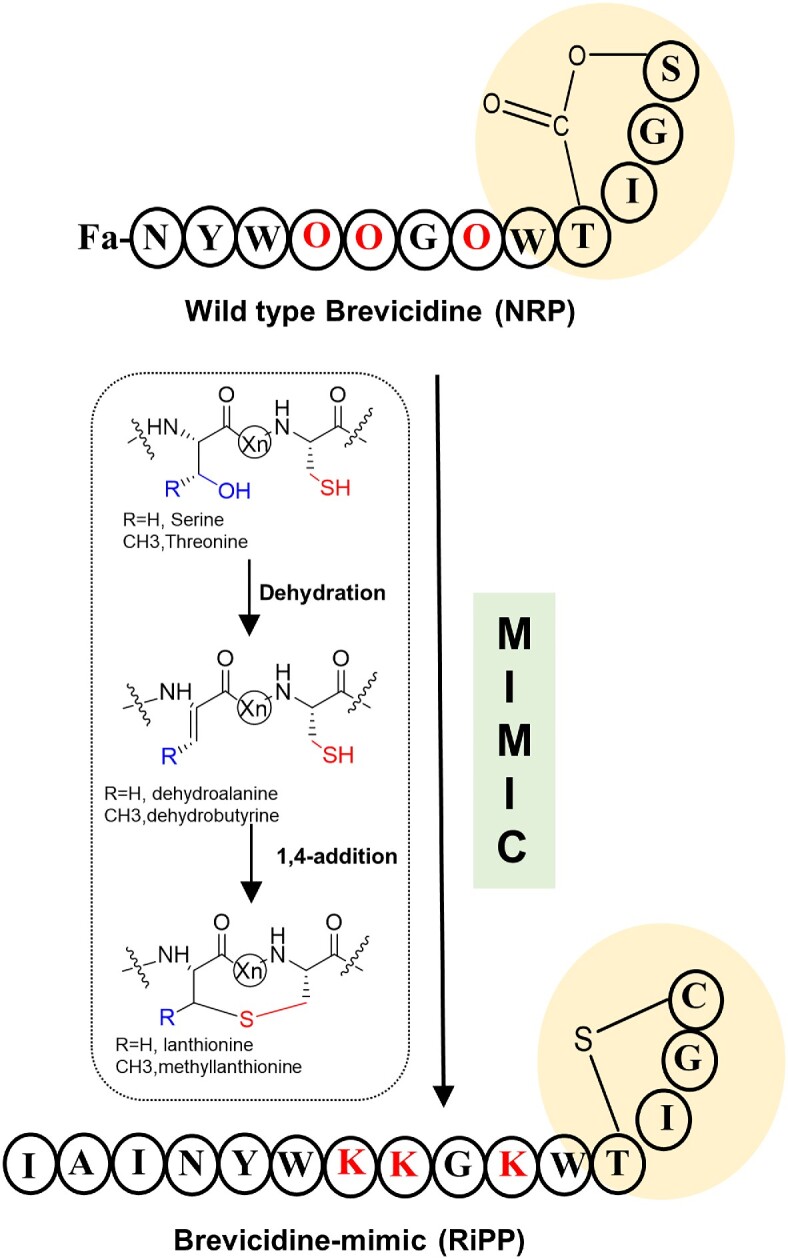
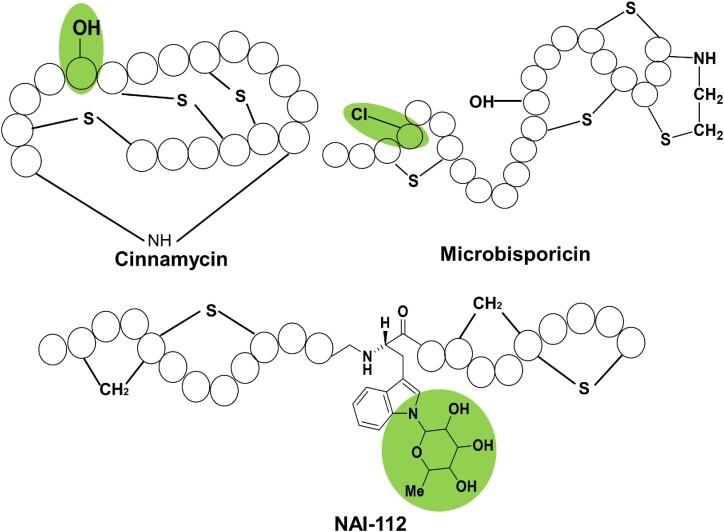
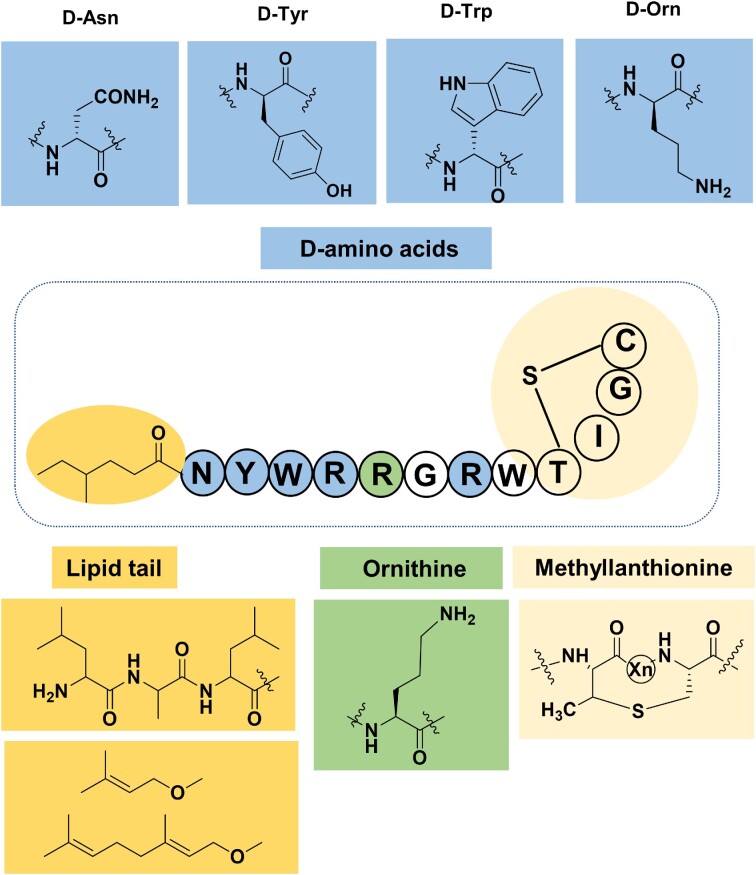
Natural bioactive peptide discovery is a challenging and time-consuming process. However, advances in synthetic biology are providing promising new avenues in peptide engineering that allow for the design and production of a large variety of new-to-nature peptides with enhanced or new bioactivities, using known peptides as templates. Lanthipeptides are ribosomally synthesized and post-translationally modified peptides (RiPPs). The modularity of post-translational modification (PTM) enzymes and ribosomal biosynthesis inherent to lanthipeptides enables their engineering and screening in a high-throughput manner. The field of RiPPs research is rapidly evolving, with many novel PTMs and their associated modification enzymes being identified and characterized. The modularity presented by these diverse and promiscuous modification enzymes has made them promising tools for further in vivo engineering of lanthipeptides, allowing for the diversification of their structures and activities. In this review, we explore the diverse modifications occurring in RiPPs and discuss the potential applications and feasibility of combining various modification enzymes for lanthipeptide engineering. We highlight the prospect of lanthipeptide- and RiPP-engineering to produce and screen novel peptides, including mimics of potent non-ribosomally produced antimicrobial peptides (NRPs) such as daptomycin, vancomycin, and teixobactin, which offer high therapeutic potential.
Keywords: Engineering; NRPs mimics; lanthipeptides; post-translational modification; ripps; synthetic biology.
© The Author(s) 2023. Published by Oxford University Press on behalf of FEMS.
Conflict of interest statement
None declared.
Figures
References
-
- Alexandru-Crivac CN, Umeobika C, Leikoski Net al. Cyclic peptide production using a macrocyclase with enhanced substrate promiscuity and relaxed recognition determinants. Chem Commun. 2017;53:10656–9. - PubMed
-
- Amacher DE. The primary role of hepatic metabolism in idiosyncratic drug-induced liver injury. Exp Opin Drug Metabol Toxicol. 2012;8:335–47. - PubMed
Publication types
MeSH terms
Substances
LinkOut - more resources
Full Text Sources
Molecular Biology Databases
Miscellaneous
