The Diagnosis and Treatment of Osteosarcoma and Ewing's Sarcoma in Children and Adolescents
- PMID: 37097079
- PMCID: PMC10437036
- DOI: 10.3238/arztebl.m2023.0079
The Diagnosis and Treatment of Osteosarcoma and Ewing's Sarcoma in Children and Adolescents
Abstract
Background: Osteosarcoma and Ewing's sarcoma in children and adolescents require age-specific interdisciplinary diagnosis and treatment to achieve optimal therapeutic outcomes.
Methods: The diagnosis and treatment of malignant bone tumors in childhood and adolescence are presented in the light of publications retrieved by a selective search, pertinent guidelines, and the authors' extensive experience in an interdisciplinary cancer center.
Results: Bone sarcomas make up approximately 5% of all malignancies in children and adolescents; the most common types are Ewing's sarcoma and osteosarcoma. Patients are often not referred to a specialized center until long after the onset of symptoms, as they and their physicians rarely consider the possibility of a bone tumor, and the symptoms are often trivialized. Bone pain of unknown origin, swelling, and functional limitations should be investigated with conventional x-rays. Lesions of unclear origin should be biopsied after a meticulous clinical and radiologic evaluation. Multimodal treatment consists of neo - adjuvant chemotherapy, limb-preserving resection if possible, and radiotherapy where indicated. In multicenter studies, patients with osteosarcoma achieve event-free survival in 64% of cases if their disease is localized, and 28% if it is metastatic; the corresponding figures for patients with Ewing's sarcoma are 80% and 27%, respectively.
Conclusion: With implementation of the current treatment recommendations, most children and adolescents with malignant bone tumors can be treated successfully with curative intent. These patients should be referred to a sarcoma center for diagnosis and treatment.
Figures
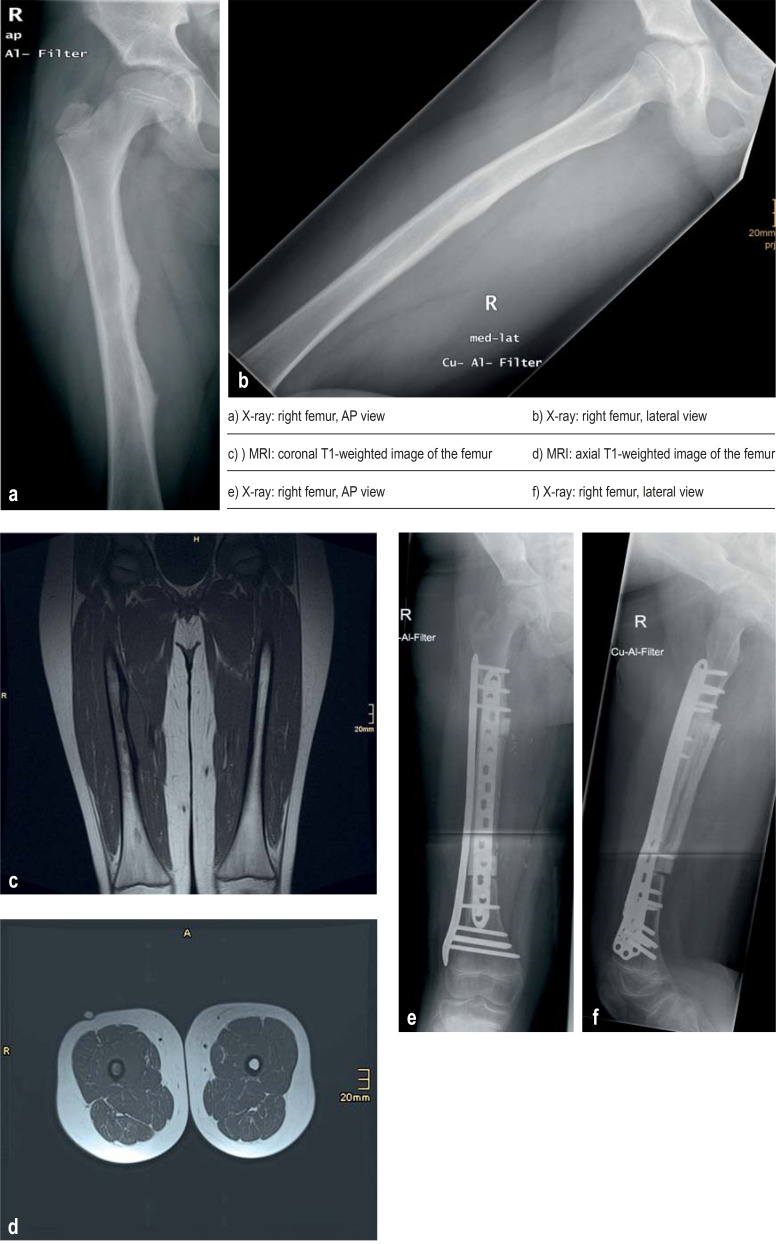
References
-
- Erdmann FKP, Grabow D, Spix C. German Childhood Cancer Registry—Annual Report 2019 (1980-2018) Institute of Medical Biostatistics, Epidemiology and Informatics (IMBEI) at the University Medical Center of the Johannes Gutenberg University. 2020
-
- (WHO) WHOCoTEB. WHO. Lyon, France: 2020. WHO classification of tumours. Soft tissue and bone tumors. 5th edition Volume 3. International Agency for Research on Cancer.
-
- Esiashvili N, Goodman M, Marcus RB Jr. Changes in incidence and survival of Ewing sarcoma patients over the past 3 decades: surveillance epidemiology and end results data. J Pediatr Hematol Oncol. 2008;30:425–430. - PubMed
-
- Bielack SS, Kempf-Bielack B, Delling G, et al. Prognostic factors in high-grade osteosarcoma of the extremities or trunk: an analysis of 1,702 patients treated on neoadjuvant cooperative osteosarcoma study group protocols. J Clin Oncol. 2002;20:776–790. - PubMed
-
- Le Deley MC, Delattre O, Schaefer KL, et al. Impact of EWS-ETS fusion type on disease progression in Ewing’s sarcoma/peripheral primitive neuroectodermal tumor: prospective results from the cooperative Euro-E.W.I.N.G. 99 trial. J Clin Oncol. 2010;28:1982–1988. - PubMed
MeSH terms
LinkOut - more resources
Full Text Sources
Medical