


A study on the equity of self-rated health of older adults at the family level
- PMID: 37098613
- PMCID: PMC10131322
- DOI: 10.1186/s12939-023-01895-6
A study on the equity of self-rated health of older adults at the family level
Abstract
Background: The self-rated health of older adults (SHOA) plays an important role in enhancing their medical service utilization and quality of life. However, the determinants and magnitude variations in SHOA at the family level (SHOAFL) remain unknown. The purpose of this study was to assess the status and equitable level of SHOAFL in China, as well as to analyze the influencing factors and the precise nature and scope of their impacts.
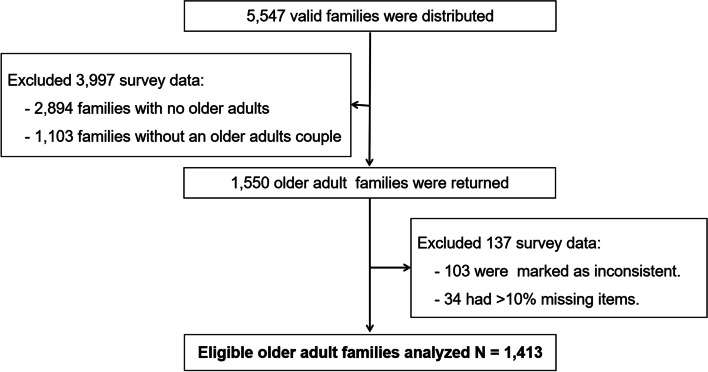
Methods: This study analyzed the data from the "Chinese residents' health service needs survey in the New Era", and included a total of 1413 families with older adults. The status and influencing factors of SHOAFL were analyzed using mean comparison and Logistic regression (LR) models. The Concentration Index method was used to explore the equity of the distribution of SHOAFL. The relationship between differences in personal characteristics among family members and differences in SHOA was determined by the method of Coupling Coordination Degree (CCD).
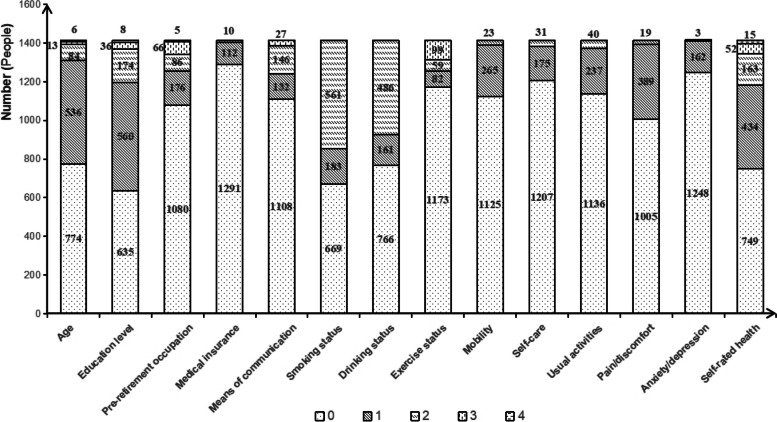
Results: The total score of SHOAFL was 66.36 ± 15.47, and LR results revealed that the factors with a significant impact on SHOAFL were number of people living in family, distance to the nearest medical service institution, travel time to the nearest medical service institution, annual family income, yearly family medical and health expenditures, average age, and residence (all P < 0.05). The Concentration index of SHOAFL ranged from -0.0315 to 0.0560. CCD of the differences between SHOA and medical insurance and smoking status were 0.9534 and 0.7132, respectively.
Conclusion: The SHOAFL was found to be generally but more inclined towards urban families with high incomes and a short time to medical service institution. The observed disparities in SHOA among family members were mostly attributable to differences in health insurance and pre-retirement occupations. The status and equality of SHOAFL may be improved if policymakers prioritize making services more accessible to older rural residents with low incomes. Concurrently, reducing the existing discrepancy in health insurance coverage between older couples may also enhance their health.
Keywords: Coupling coordination; Equity; Family; Older adult; Self-rated health.
© 2023. The Author(s).
Conflict of interest statement
The authors declare that they have no competing interests.
Figures
References
-
- Mathers CD, Stevens GA, Boerma T, White RA, Tobias MI. Causes of international increases in older age life expectancy. Lancet. 2015; 385(9967):540–548. https://www.sciencedirect.com/science/article/pii/S0140673614605699. - PubMed
-
- Office of the leading group for the Seventh National Population Census of the state council . Main data of the Seventh National Population Census in 2020. Beijing: China Statistics Press Co., Ltd; 2020.
-
- National Bureau of Statistics. 2021 China statistical yearbook. Beijing; 2021. http://www.stats.gov.cn/tjsj/ndsj/. Accessed 9 Sept 2022.
-
- Tur-Sinai A, Paz A, Doron I. Self-rated health and socioeconomic status in old age: the role of gender and the moderating effect of time and welfare regime in Europe. Sustainability. 2022;14(7):4240. https://ideas.repec.org/a/gam/jsusta/v14y2022i7p4240-d786060.html.
-
- Liu SH. Analysis of the influencing factors of health self-rated among old adults in China. Jilin: Jilin University; 2022.
Publication types
MeSH terms
LinkOut - more resources
Full Text Sources
