


Morbidity, mortality, and socioeconomics in Klinefelter syndrome and 47,XYY syndrome: a comparative review
- PMID: 37098811
- PMCID: PMC10160544
- DOI: 10.1530/EC-23-0024
Morbidity, mortality, and socioeconomics in Klinefelter syndrome and 47,XYY syndrome: a comparative review
Abstract
Context: Klinefelter syndrome (KS, 47,XXY) and 47,XYY syndrome are genetic conditions characterized by a supernumerary sex chromosome. The conditions share many traits, but considerable phenotypic differences are seen between the two. Focusing on morbidity, mortality, and socioeconomics, this review highlights similarities and differences.
Methods: Relevant literature was identified through PubMed with the following search terms; 'Klinefelter', '47,XXY', '47,XYY', and 'Jacobs syndrome'. Included journal articles were chosen at the authors' discretion.
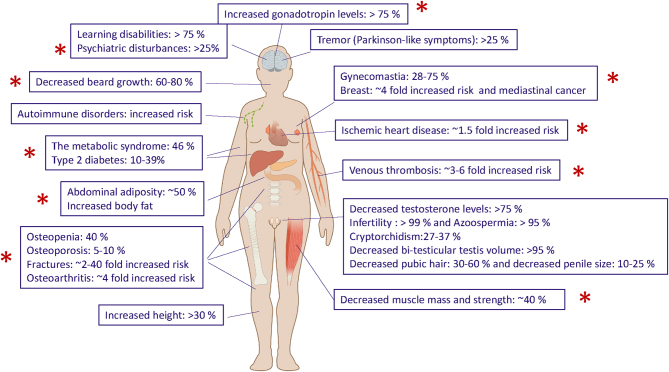
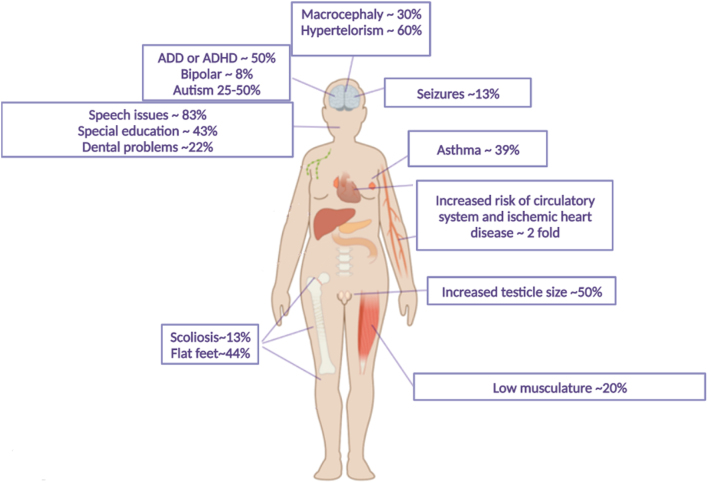
Results: KS and 47,XYY are the most common sex chromosome disorders in males, with an expected prevalence of 152 and 98 per 100,000 newborn males, respectively. Non-diagnosis is extensive, as only about 38% of KS and 18% of 47,XYY are diagnosed. Both conditions are associated with an increased mortality risk and increased risk of a variety of diseases and other health-related problems affecting virtually every organ system. Early diagnosis seems to predict a lesser comorbidity burden. Neurocognitive deficits as well as social and behavioral problems are commonly described. Both syndromes are associated with poor socioeconomicfor example, lower income and educational level and higher rates of crime. Infertility is a hallmark of KS, but fertility seems also reduced in 47,XYY.
Conclusion: Being born as a boy with an extra X or Y chromosome is associated with increased mortality and excess morbidity, partially expressed in a sex chromosome-specific pattern.Both syndromes continue to be greatly underdiagnosed, even thoughearly intervention may improve the overall outcome. Earlier diagnosis to initiate timely counseling and treatment should be emphasized.
Keywords: 47,XYY; Jacobs syndrome; Klinefelter syndrome; morbidity; mortality.
Conflict of interest statement
The authors declare that there is no conflict of interest that could be perceived as prejudicing the impartiality of the research reported.
Figures
References
-
- Berglund A Viuff MH Skakkebæk A Chang S Stochholm K & Gravholt CH. Changes in the cohort composition of turner syndrome and severe non-diagnosis of Klinefelter, 47,XXX and 47,XYY syndrome: a nationwide cohort study. Orphanet Journal of Rare Diseases 201914 16. (10.1186/s13023-018-0976-2) - DOI - PMC - PubMed
-
- Zitzmann M, Aksglaede L, Corona G, Isidori AM, Juul A, T'Sjoen G, Kliesch S, D'Hauwers K, Toppari J, Słowikowska-Hilczer J, et al.European academy of andrology guidelines on Klinefelter Syndrome Endorsing Organization: European Society of Endocrinology. Andrology 20219145–167. (10.1111/andr.12909) - DOI - PubMed
Publication types
LinkOut - more resources
Full Text Sources
