


Polarity in skin development and cancer
- PMID: 37100522
- PMCID: PMC10288382
- DOI: 10.1016/bs.ctdb.2023.02.003
Polarity in skin development and cancer
Abstract
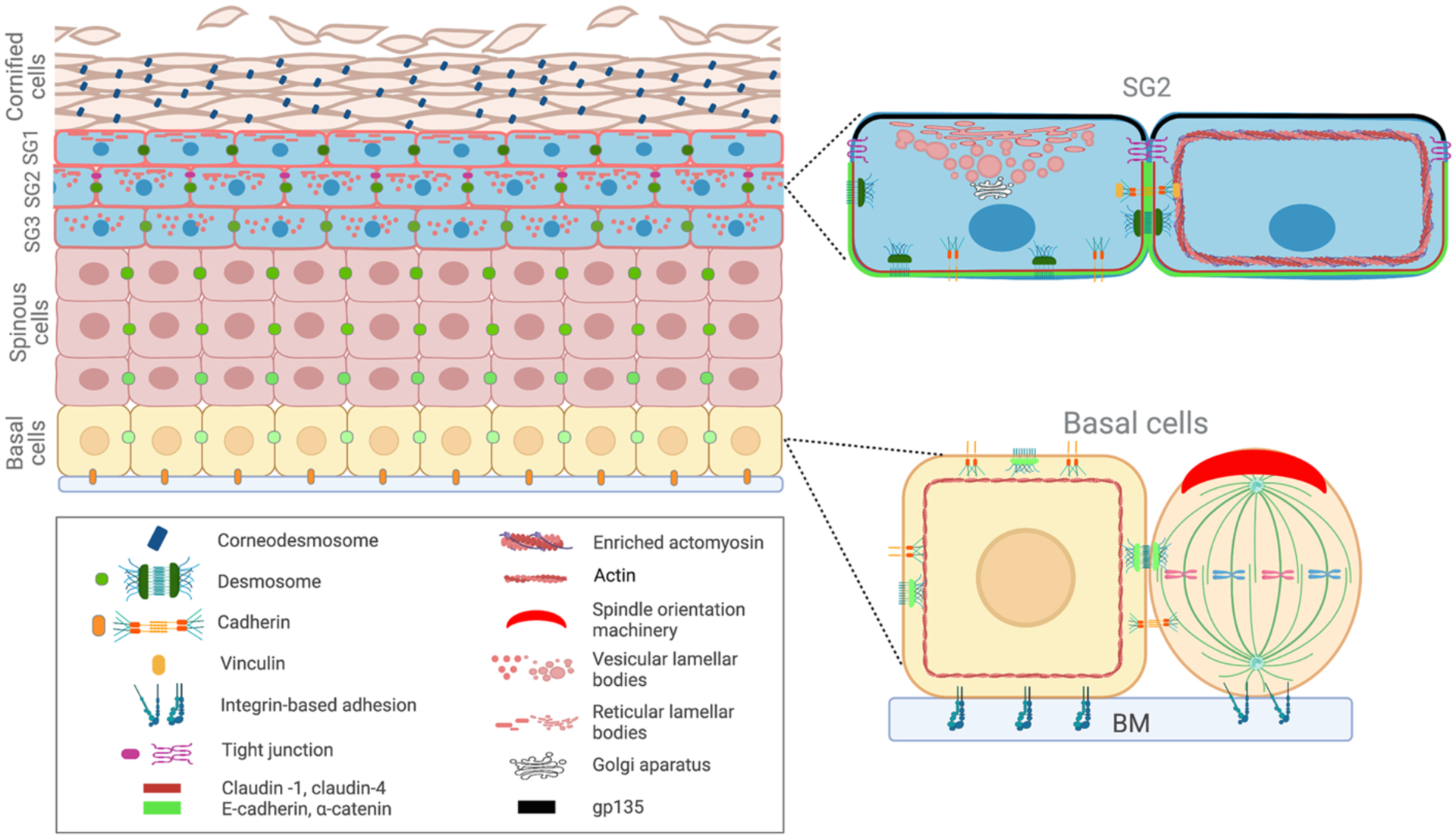
The epidermis is a stratified squamous epithelium that forms the outermost layer of the skin. Its primary function is to act as a barrier, keeping pathogens and toxins out and moisture in. This physiological role has necessitated major differences in the organization and polarity of the tissue as compared to simple epithelia. We discuss four aspects of polarity in the epidermis - the distinctive polarities of basal progenitor cells as well as differentiated granular cells, the polarity of adhesions and the cytoskeleton across the tissue as keratinocytes differentiate, and the planar cell polarity of the tissue. These distinctive polarities are essential for the morphogenesis and the function of the epidermis and have also been implicated in regulating tumor formation.
Keywords: Asymmetric cell division; Barrier; Basal cell; Cancer; Epidermis; Epithelia; Granular cell; Planar cell polarity; Polarity; Skin.
Copyright © 2023 Elsevier Inc. All rights reserved.
Figures
References
-
- Ali NJA, Dias Gomes M, Bauer R, Brodesser S, Niemann C, & Iden S (2016). Essential Role of Polarity Protein Par3 for Epidermal Homeostasis through Regulation of Barrier Function, Keratinocyte Differentiation, and Stem Cell Maintenance. J Invest Dermatol, 136(12), 2406–2416. 10.1016/j.jid.2016.07.011 - DOI - PubMed
-
- Beck B, Driessens G, Goossens S, Youssef KK, Kuchnio A, Caauwe A, Sotiropoulou PA, Loges S, Lapouge G, Candi A, Mascre G, Drogat B, Dekoninck S, Haigh JJ, Carmeliet P, & Blanpain C (2011). A vascular niche and a VEGF-Nrp1 loop regulate the initiation and stemness of skin tumours. Nature, 478(7369), 399–403. 10.1038/nature10525 - DOI - PubMed
MeSH terms
Grants and funding
LinkOut - more resources
Full Text Sources
Medical
