


Stem cell-derived exosomes: emerging therapeutic opportunities for wound healing
- PMID: 37101197
- PMCID: PMC10134577
- DOI: 10.1186/s13287-023-03345-0
Stem cell-derived exosomes: emerging therapeutic opportunities for wound healing
Abstract
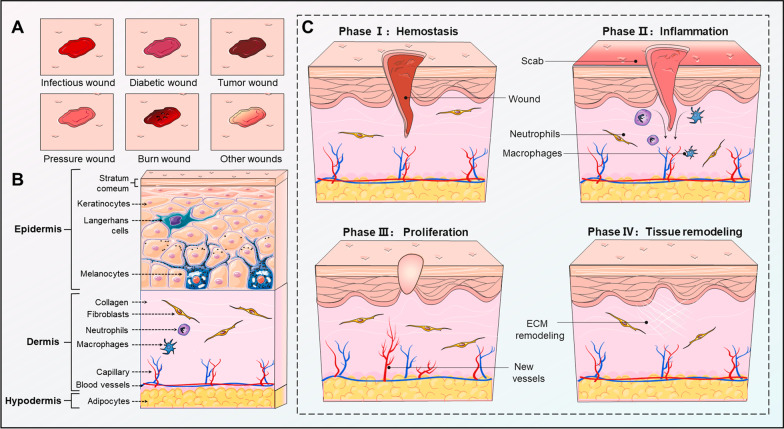
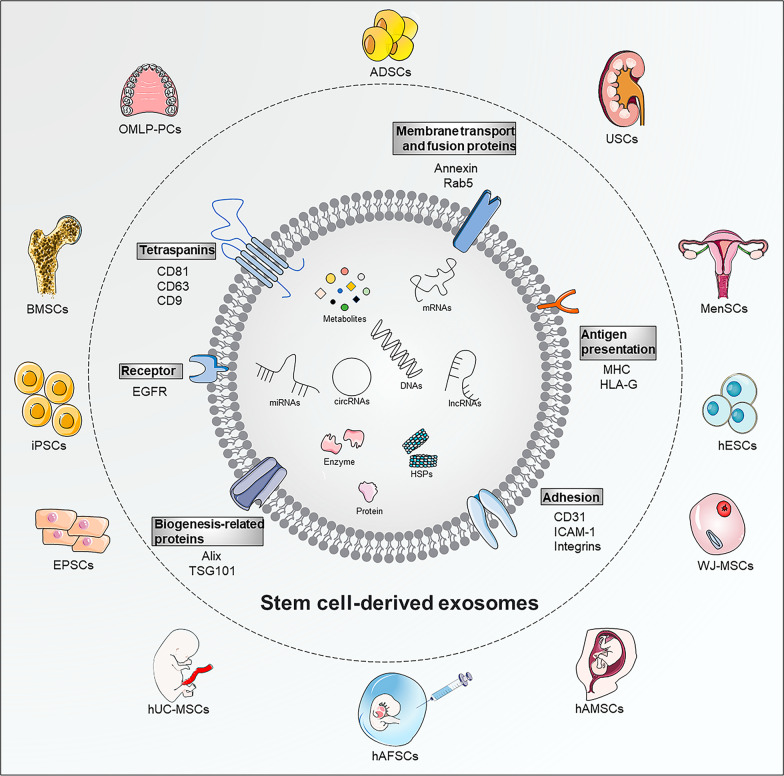
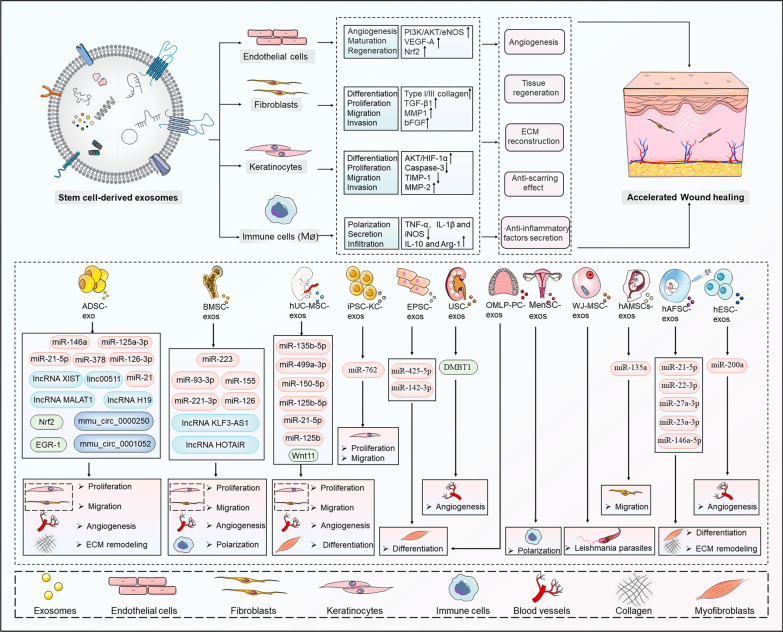
Wound healing is a dynamic and highly sequential process involving a series of overlapping spatial and temporal phases, including hemostasis, inflammation, proliferation, and tissue remodeling. Mesenchymal stem cells (MSCs) are multipotent stem cells with self-renewal, multidirectional differentiation potential, and paracrine regulation. Exosomes are subcellular vesicular components 30-150 nm in size and are novel carriers of intercellular communication in regulating the biological behaviors of skin cells. Compared to MSCs, MSC-derived exosomes (MSC-exos) possess lower immunogenicity, easy storage, and highly effective biological activity. MSC-exos, mainly derived from adipose-derived stem cells (ADSCs), bone marrow-derived MSCs (BMSCs), human umbilical cord MSCs (hUC-MSCs), and other stem cell types, play a role in shaping the activity of fibroblasts, keratinocytes, immune cells, and endothelial cells in diabetic wounds, inflammatory wound repair, and even wound-related keloid formation. Therefore, this study focuses on the specific roles and mechanisms of different MSC-exos in wound healing, as well as the current limitations and various perspectives. Deciphering the biological properties of MSC-exos is crucial to providing a promising cell-free therapeutic tool for wound healing and cutaneous regeneration.
Keywords: Exosomes; Regeneration; Stem cells; Wound healing; lncRNA; miRNA.
© 2023. The Author(s).
Conflict of interest statement
The authors declare that they have no competing interests.
Figures
References
Publication types
MeSH terms
LinkOut - more resources
Full Text Sources
