


In vitro erythrocyte production using human-induced pluripotent stem cells: determining the best hematopoietic stem cell sources
- PMID: 37101221
- PMCID: PMC10132444
- DOI: 10.1186/s13287-023-03305-8
In vitro erythrocyte production using human-induced pluripotent stem cells: determining the best hematopoietic stem cell sources
Abstract
Background: Blood transfusion is an essential part of medicine. However, many countries have been facing a national blood crisis. To address this ongoing blood shortage issue, there have been efforts to generate red blood cells (RBCs) in vitro, especially from human-induced pluripotent stem cells (hiPSCs). However, the best source of hiPSCs for this purpose is yet to be determined.
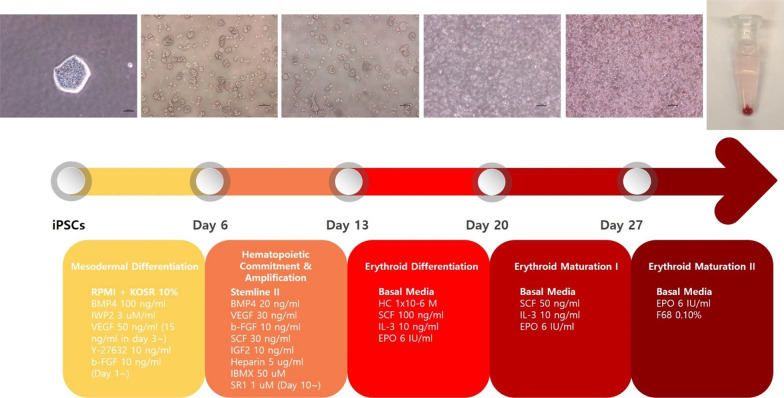
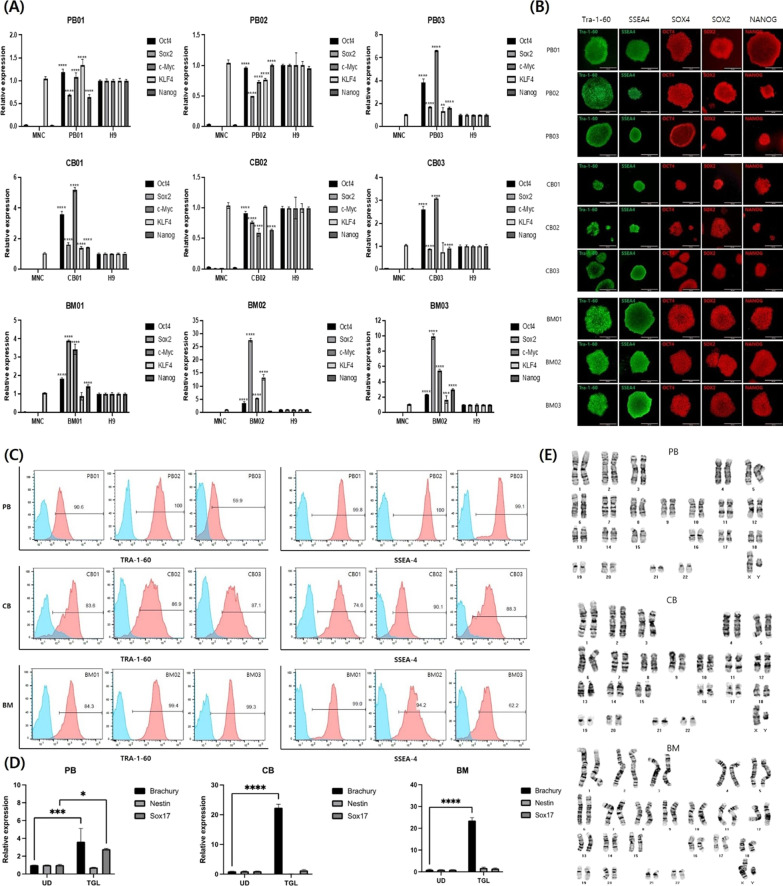
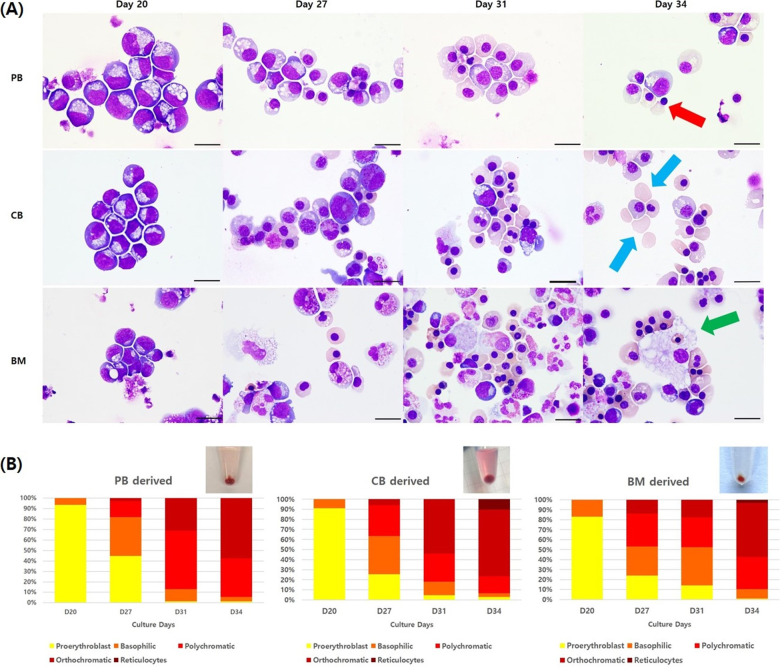
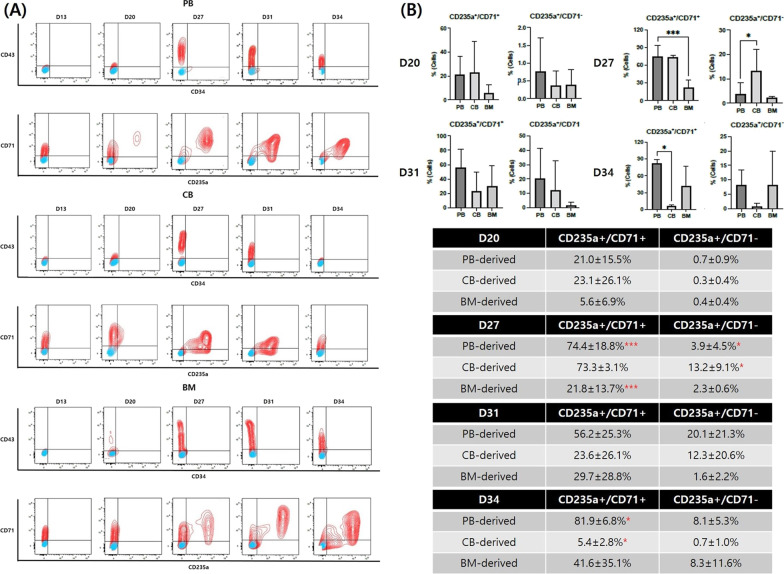
Methods: In this study, hiPSCs were established from three different hematopoietic stem cell sources-peripheral blood (PB), cord blood (CB) and bone marrow (BM) aspirates (n = 3 for each source)-using episomal reprogramming vectors and differentiated into functional RBCs. Various time-course studies including immunofluorescence assay, quantitative real-time PCR, flow cytometry, karyotyping, morphological analysis, oxygen binding capacity analysis, and RNA sequencing were performed to examine and compare the characteristics of hiPSCs and hiPSC-differentiated erythroid cells.
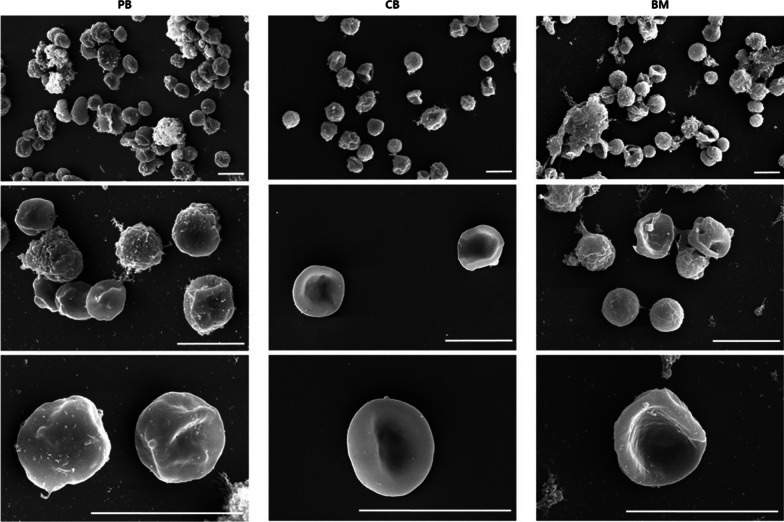
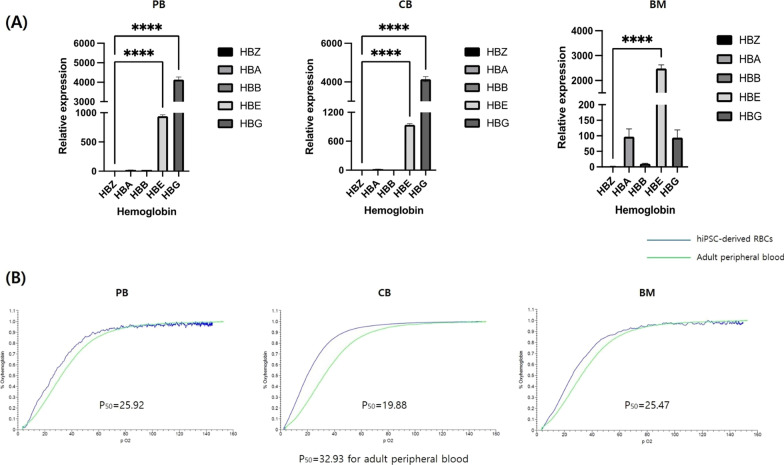
Results: hiPSC lines were established from each of the three sources and were found to be pluripotent and have comparable characteristics. All hiPSCs differentiated into erythroid cells, but there were discrepancies in differentiation and maturation efficiencies: CB-derived hiPSCs matured into erythroid cells the fastest while PB-derived hiPSCs required a longer time for maturation but showed the highest degree of reproducibility. BM-derived hiPSCs gave rise to diverse types of cells and exhibited poor differentiation efficiency. Nonetheless, erythroid cells differentiated from all hiPSC lines mainly expressed fetal and/or embryonic hemoglobin, indicating that primitive erythropoiesis occurred. Their oxygen equilibrium curves were all left-shifted.
Conclusions: Collectively, both PB- and CB-derived hiPSCs were favorably reliable sources for the clinical production of RBCs in vitro, despite several challenges that need to be overcome. However, owing to the limited availability and the large amount of CB required to produce hiPSCs, and the results of this study, the advantages of using PB-derived hiPSCs for RBC production in vitro may outweigh those of using CB-derived hiPSCs. We believe that our findings will facilitate the selection of optimal hiPSC lines for RBC production in vitro in the near future.
Keywords: Erythropoiesis; Hematopoietic stem cells; Human-induced pluripotent stem cell; Red blood cell.
© 2023. The Author(s).
Conflict of interest statement
The authors declare that they have no competing interests.
Figures
References
-
- Korean Red Cross. Blood statistics. Korean Red Cross; 2021. https://www.bloodinfo.net/bloodstats_statistics.do. Accessed 10 Oct 2021.
-
- Lee H-J, Shin K-H, Song D, Lee S-M, Kim I-S, Chang C, et al. Analysis of blood donors in a tertiary care hospital as a fixed collection site. Korean J Blood Transfus. 2017;28:28–35. doi: 10.17945/kjbt.2017.28.1.28. - DOI
-
- The American National Red Cross. American Red Cross faces severe blood shortage as coronavirus outbreak threatens availability of nation’s supply. Washington, D.C.; 2020.
Publication types
MeSH terms
LinkOut - more resources
Full Text Sources
Molecular Biology Databases
