


Acupuncture for chemotherapy-associated insomnia in breast cancer patients: an assessor-participant blinded, randomized, sham-controlled trial
- PMID: 37101228
- PMCID: PMC10134666
- DOI: 10.1186/s13058-023-01645-0
Acupuncture for chemotherapy-associated insomnia in breast cancer patients: an assessor-participant blinded, randomized, sham-controlled trial
Abstract
Background: Insomnia is a highly prevalent symptom occurred during and post-chemotherapy. Acupuncture may have beneficial effects in the management of chemotherapy-associated insomnia. This study was conducted to determine the efficacy and safety of acupuncture in improving chemotherapy-associated insomnia in breast cancer patients.
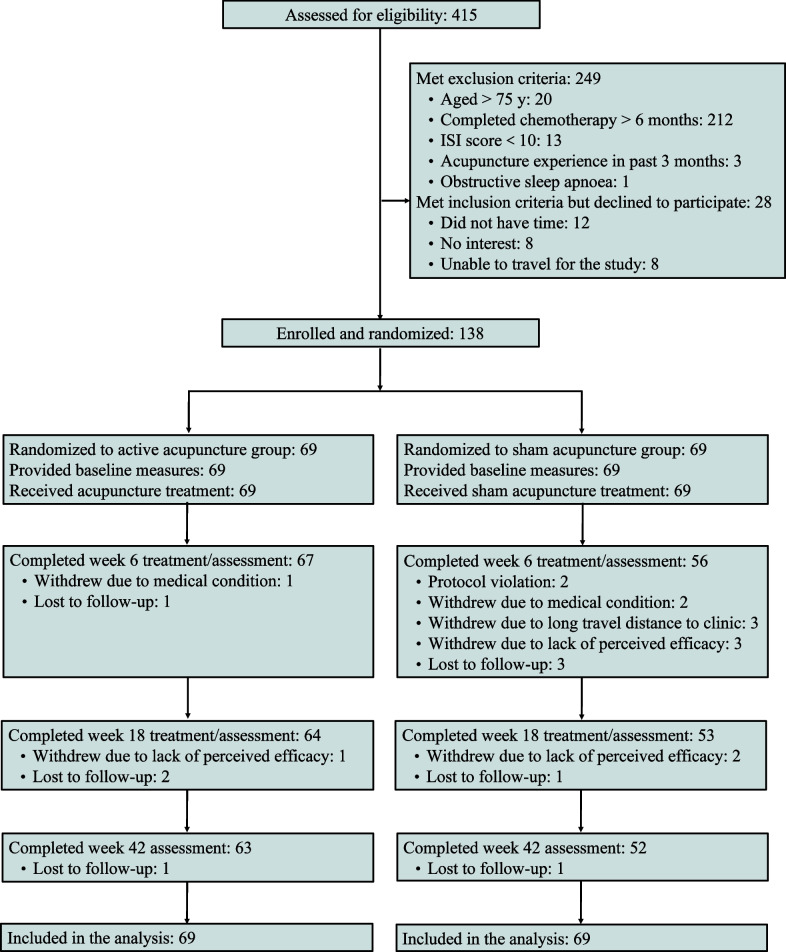
Methods: This assessor-participant blinded, randomized, sham-controlled trial was conducted from November 2019 to January 2022 (follow-up completed July 2022). Participants were referred by oncologists from two Hong Kong hospitals. Assessments and interventions were conducted at the outpatient clinic of School of Chinese Medicine, the University of Hong Kong. The 138 breast cancer patients with chemotherapy-associated insomnia were randomly assigned to receive either 15 sessions of active acupuncture regimen by combining needling into body acupoints and acupressure on auricular acupoints or sham acupuncture control (69 each) for 18 weeks, followed by 24 weeks of follow-up. The primary outcome was measured using Insomnia Severity Index (ISI). Secondary outcomes included the Pittsburgh Sleep Quality Index, Actiwatch and sleep diary for sleep parameters, depression and anxiety, fatigue and pain, and quality of life.
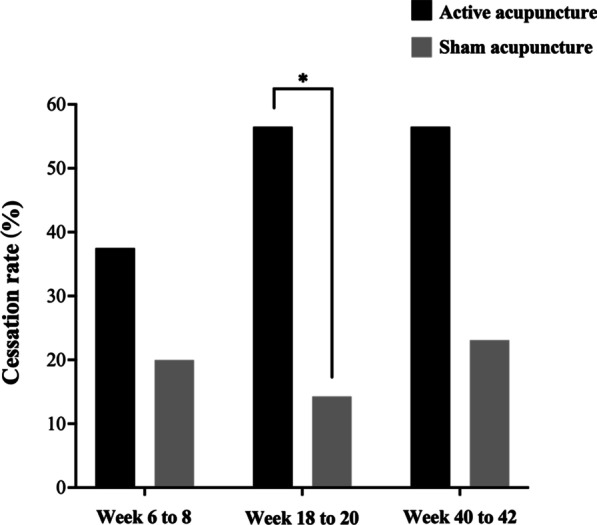
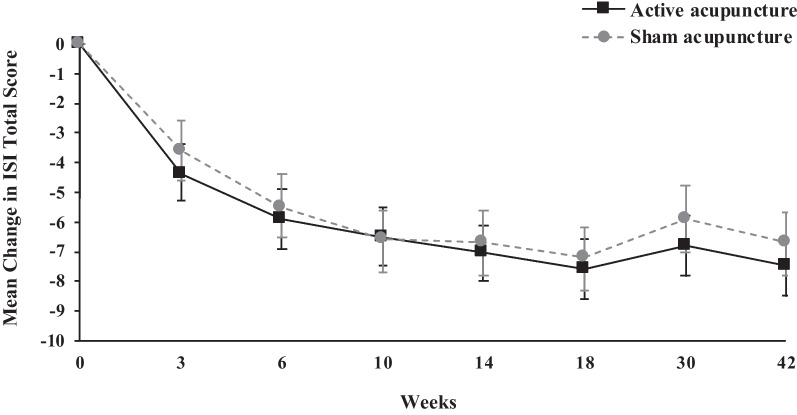
Results: There were 87.7% (121/138) participants who completed the primary endpoint (week-6). The active acupuncture regimen was not superior to the sham control in reducing ISI score from baseline to 6 weeks (mean difference: - 0.4, 95% CI - 1.8-1.1; P = 0.609), but produced short-term treatment and long-term follow-up better outcomes in improving sleep onset latency, total sleep time, sleep efficiency, anxiety, depression, and quality of life. Participants of the active acupuncture group had a pronouncedly higher cessation rate of sleeping medications than the sham control (56.5% vs. 14.3%, P = 0.011). All treatment-related adverse events were mild. No participants discontinued treatments due to adverse events.
Conclusion: The active acupuncture regimen could be considered as an effective option for the management of chemotherapy-associated insomnia. It also could serve as a tapering approach to reduce and even replace the use of sleeping medications in breast cancer patients. Trial registration Clinicaltrials.gov : NCT04144309. Registered 30 October 2019.
Keywords: Acupuncture; Breast cancer; Cessation rate of sleeping medications; Chemotherapy-associated insomnia.
© 2023. The Author(s).
Conflict of interest statement
The authors declared no potential competing interests with respect to the research, authorship, and publication of this article.
Figures
References
Publication types
MeSH terms
Associated data
LinkOut - more resources
Full Text Sources
Medical
