


The impact of the COVID-19 pandemic on eating disorders risk and symptoms: a retrospective study
- PMID: 37101237
- PMCID: PMC10132438
- DOI: 10.1186/s13052-023-01443-6
The impact of the COVID-19 pandemic on eating disorders risk and symptoms: a retrospective study
Abstract
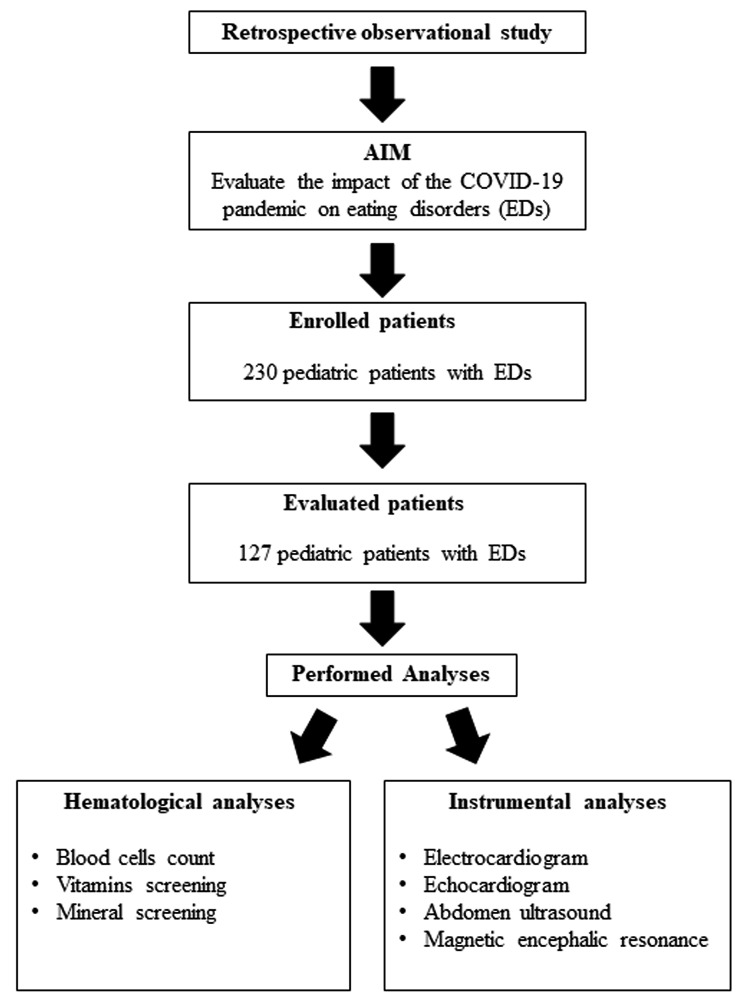
Background: Social distancing and quarantine imposed by the authority during the COVID-19 pandemic caused restrictions, which had a negative impact on eating behavior, especially among adolescents. We proposed a retrospective study aimed to evaluate the effect of the COVID-19 pandemic on eating disorders risk and symptoms.
Methods: In this study, a group of 127 pediatric patients (117 females and 10 males) with eating disorders admitted to the Bambino Gesù Children's Hospital of Rome (Italy), in the period between August 2019 and April 2021, was analyzed. All patient data were collected from patients' electronic medical records.
Results: We found that 80.3% of patients were at the onset of eating disorders and that 26% of patients had familiarity for psychotic disorders. Often these patients had comorbidities and alterations in blood parameters such as leukocytopenia, neutropenia, hypovitaminosis and hormonal problems that could affect their future.
Conclusions: Our findings could provide a framework for developing clinical and educational interventions to mitigate the short- and long-term negative impact of the pandemic on adolescent future health.
Keywords: Comorbidity; Covid-19; Eating disorders; Pandemic.
© 2023. The Author(s).
Conflict of interest statement
The authors declare no conflict of interest.
Figures

References
-
- Torales J, O’Higgins M, Castaldelli-Maia JM, Ventriglio A. The outbreak of COVID-19 active food intake disorder. Curr Opin Psychiatry. 2018;31:425–30.
-
- Kambanis PE, Kuhnle MC, Wons OB, Jo JH, Keshishian AC, Hauser K, et al. Prevalence and correlates of psychiatric comorbidities in children and adolescents with full and subthreshold avoidant/restrictive food intake disorder. Int J Eat Disord. 2020;53:256–65. doi: 10.1002/eat.23191. - DOI - PMC - PubMed
MeSH terms
LinkOut - more resources
Full Text Sources
Medical
Miscellaneous
