


Short and medium-term effects of the COVID-19 lockdowns on child and parent accelerometer-measured physical activity and sedentary time: a natural experiment
- PMID: 37101270
- PMCID: PMC10132917
- DOI: 10.1186/s12966-023-01441-1
Short and medium-term effects of the COVID-19 lockdowns on child and parent accelerometer-measured physical activity and sedentary time: a natural experiment
Abstract
Background: The COVID-19 pandemic has resulted in marked impacts on children's physical activity, with large reductions in moderate-to-vigorous physical activity (MVPA) reported during lockdowns. Previous evidence showed children's activity levels were lower and sedentary time higher immediately post-COVID lockdown, while there was little change in parental physical activity. We need to know if these patterns persist.
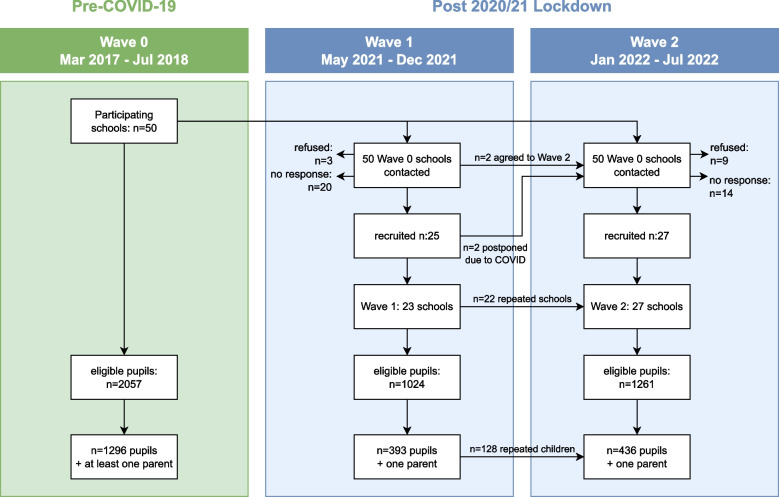
Methods: Active-6 is a natural experiment using repeated cross-sectional data conducted in two waves. Accelerometer data were collected on 393 children aged 10-11 and their parents from 23 schools in Wave 1 (June 2021-December 2021), and 436 children and parents from 27 schools in Wave 2 (January 2022-July 2022). These were compared to a pre-COVID-19 comparator group (March 2017-May 2018) of 1,296 children and parents in the same schools. Mean minutes of accelerometer-measured MVPA and sedentary time were derived for week- and weekend-days and compared across waves via linear multilevel models. We also analysed the date of data collection as a time series, to explore temporal patterns via generalised additive mixed models.
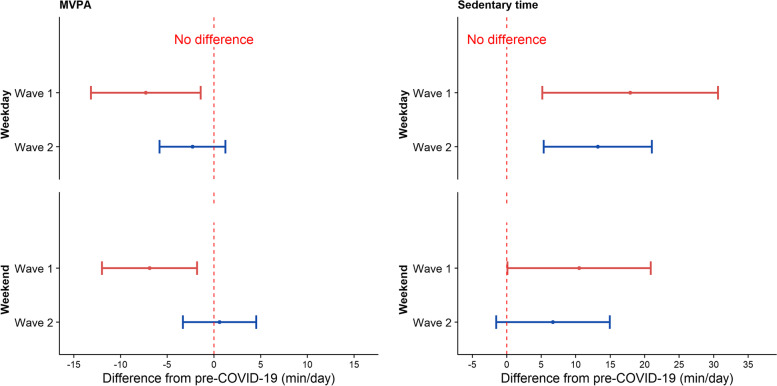
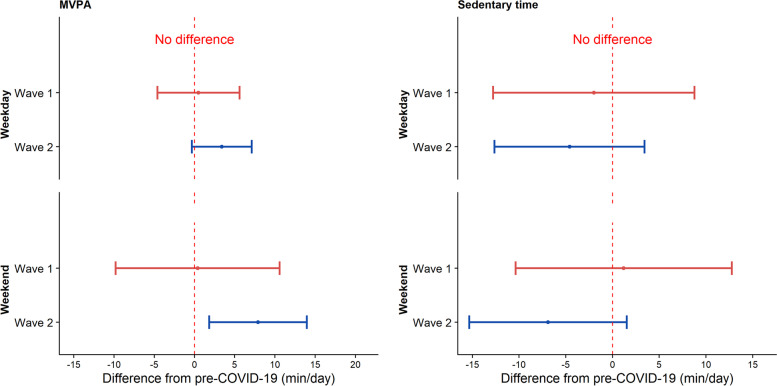
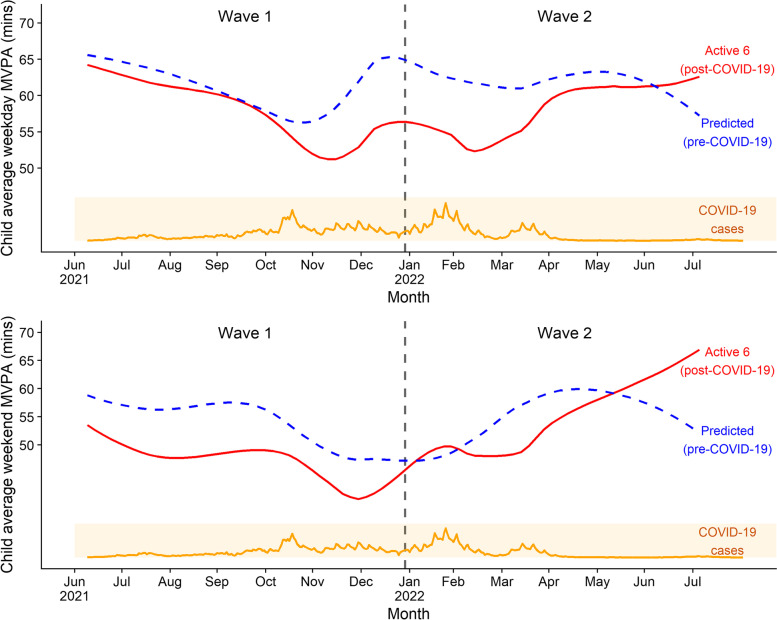
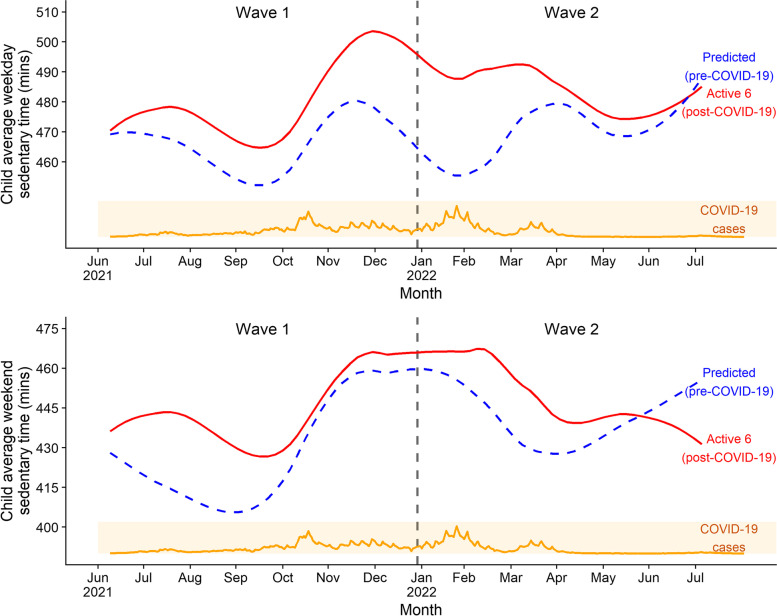
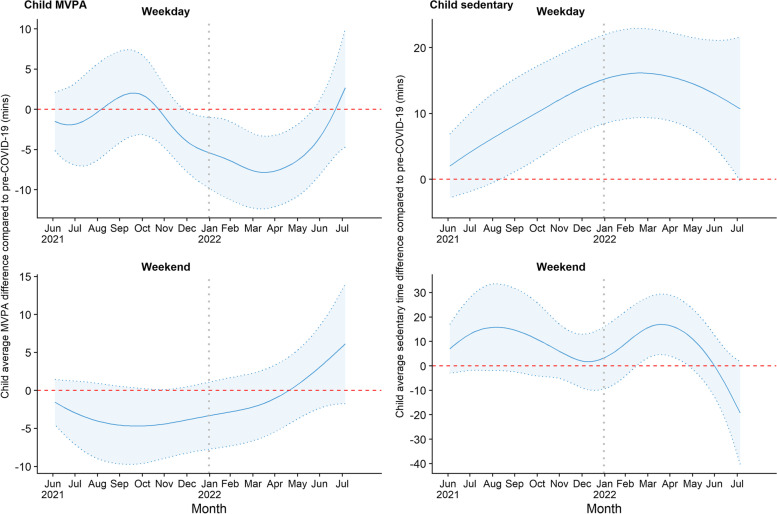
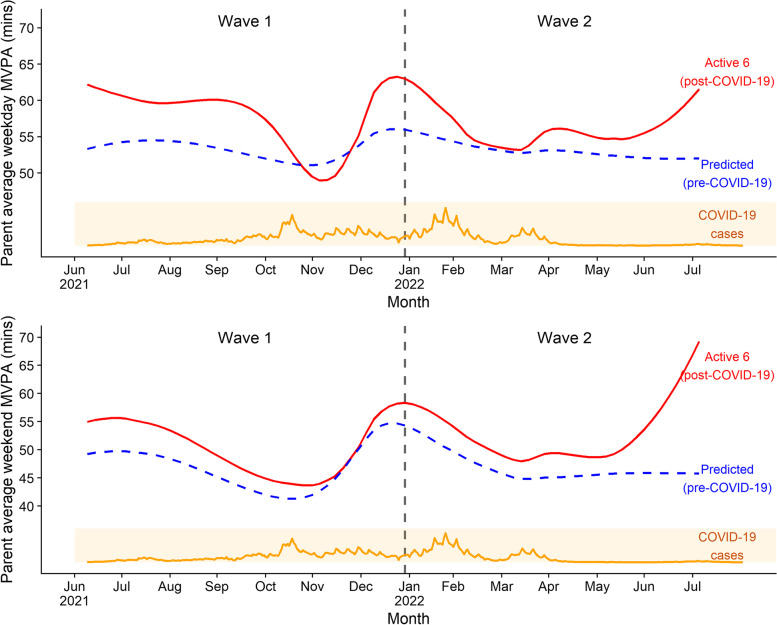
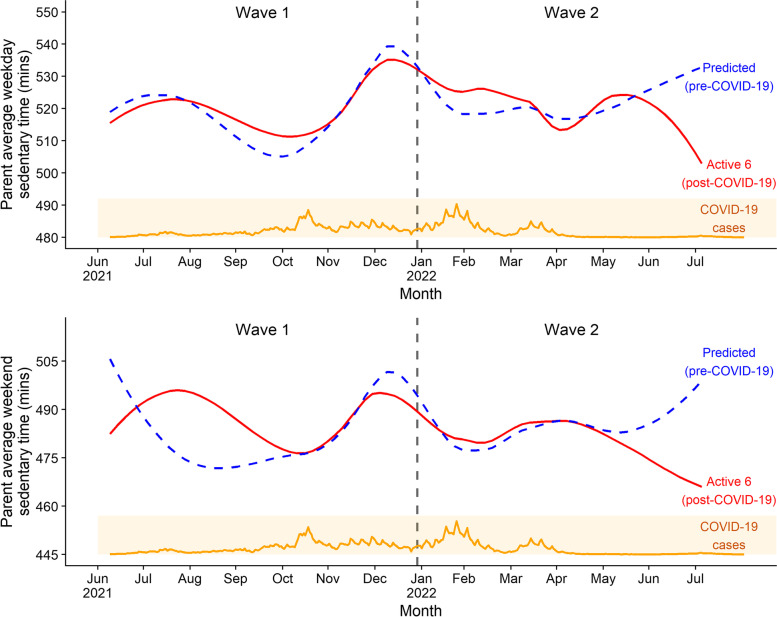
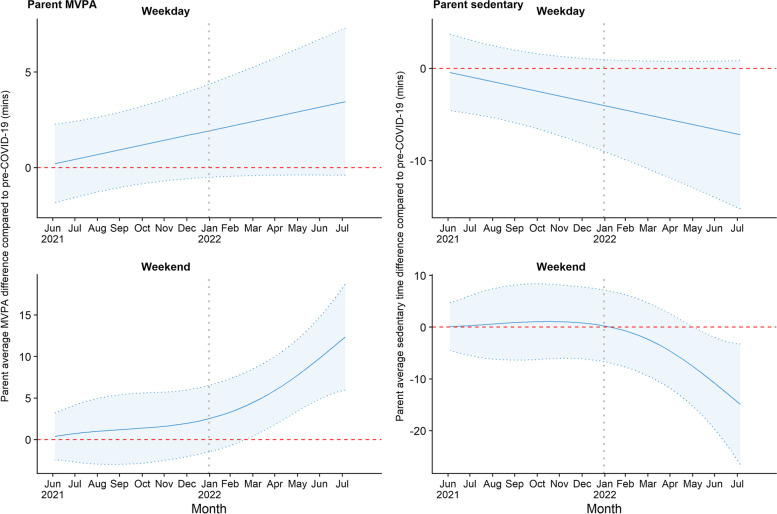
Results: There was no difference in children's mean MVPA in Wave 2 (weekdays: -2.3 min; 95% CI: -5.9, 1.3 and weekends: 0.6 min; 95% CI: -3.5, 4.6) when compared to the pre-COVID-19 data. Sedentary time remained higher than pre-pandemic by 13.2 min (95% CI:5.3, 21.1) on weekdays. Differences compared to pre-COVID-19 changed over time, with children's MVPA decreasing over winter, coinciding with COVID-19 outbreaks, and only returning to pre-pandemic levels towards May/June 2022. Parents' sedentary time and weekday MVPA was similar to pre-COVID-19 levels, with MVPA higher than pre-pandemic by 7.7 min (95% CI: 1.4, 14.0) on weekends.
Conclusion: After an initial drop, children's MVPA returned to pre-pandemic levels by July 2022, while sedentary time remained higher. Parents' MVPA remained higher, especially at weekends. The recovery in physical activity is precarious and potentially susceptible to future COVID-19 outbreaks or changes in provision, and so robust measures to protect against future disruptions are needed. Furthermore, many children are still inactive, with only 41% meeting UK physical activity guidelines, and so there is still a need to increase children's physical activity.
Keywords: COVID-19; Children; Natural experiment; Parents; Physical activity.
© 2023. The Author(s).
Conflict of interest statement
At the time that this work was conducted and the initial draft of the publication prepared for submitted for peer review, Prof Foster was a full-time employee of the University of Bristol. Prof Foster left the University of Bristol in December 2022 to take up a role as Clinical Director of Corporate Wellness at Vhi Healthcare in Dublin with an Honorary post at the University of Bristol. We have no other competing interests to declare.
Figures
References
-
- Chaput JP, Willumsen J, Bull F, Chou R, Ekelund U, Firth J, Jago R, Ortega FB, Katzmarzyk PT. 2020 WHO guidelines on physical activity and sedentary behaviour for children and adolescents aged 5–17 years: summary of the evidence. Int J Behav Nutr Phys Act. 2020;17(1):141. doi: 10.1186/s12966-020-01037-z. - DOI - PMC - PubMed
-
- UK Chief Medical Officers: UK Chief Medical Officers’ Physical Activity Guidelines. London: Department of Health and Social Care; 2019.
Publication types
MeSH terms
Grants and funding
LinkOut - more resources
Full Text Sources
Medical
