


PROMIS-25 Reliability and Validity Among Children Living with Burn Injury: A Burn Model System National Database Study
- PMID: 37101360
- PMCID: PMC10600322
- DOI: 10.1093/jbcr/irad061
PROMIS-25 Reliability and Validity Among Children Living with Burn Injury: A Burn Model System National Database Study
Abstract
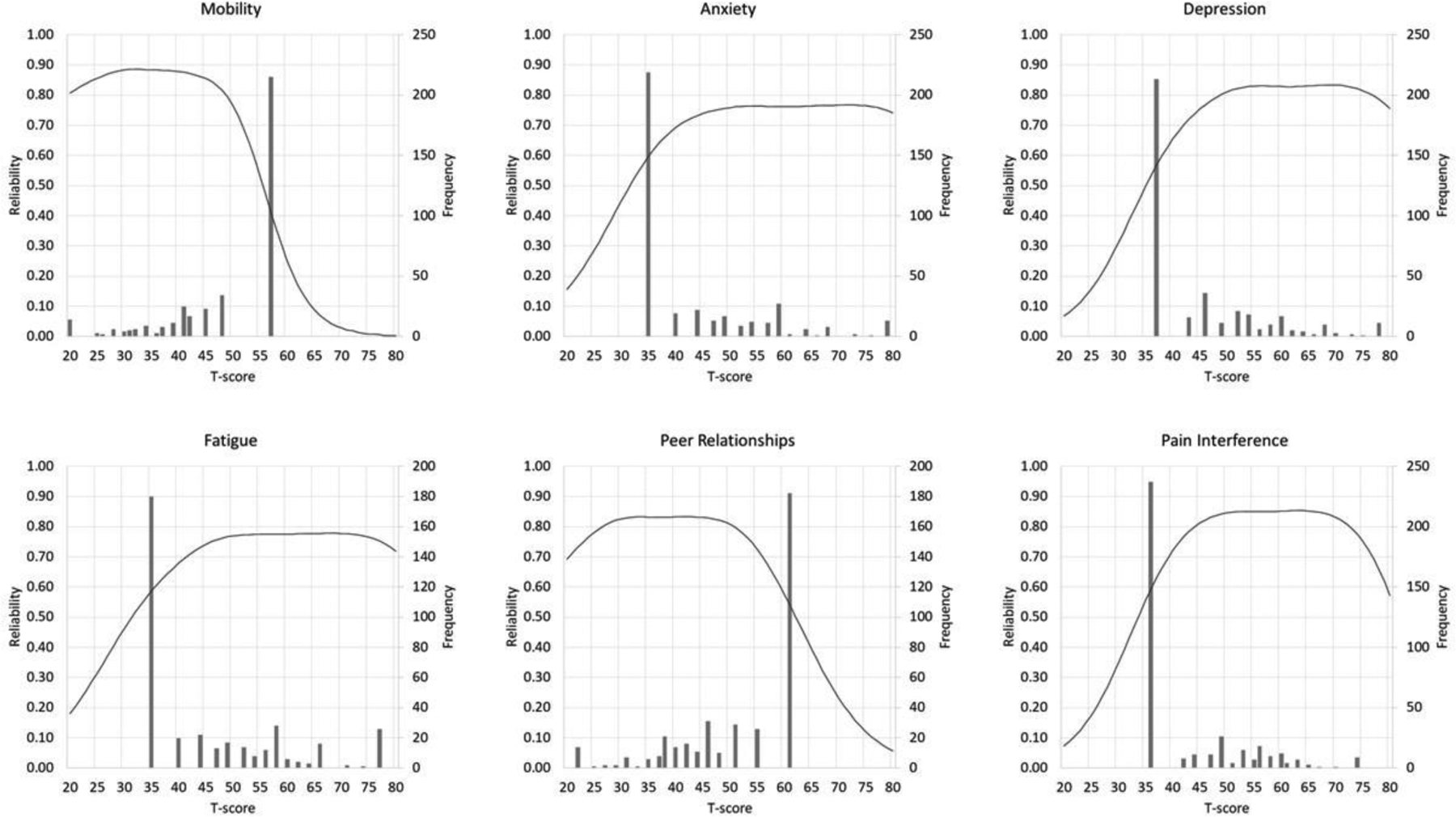
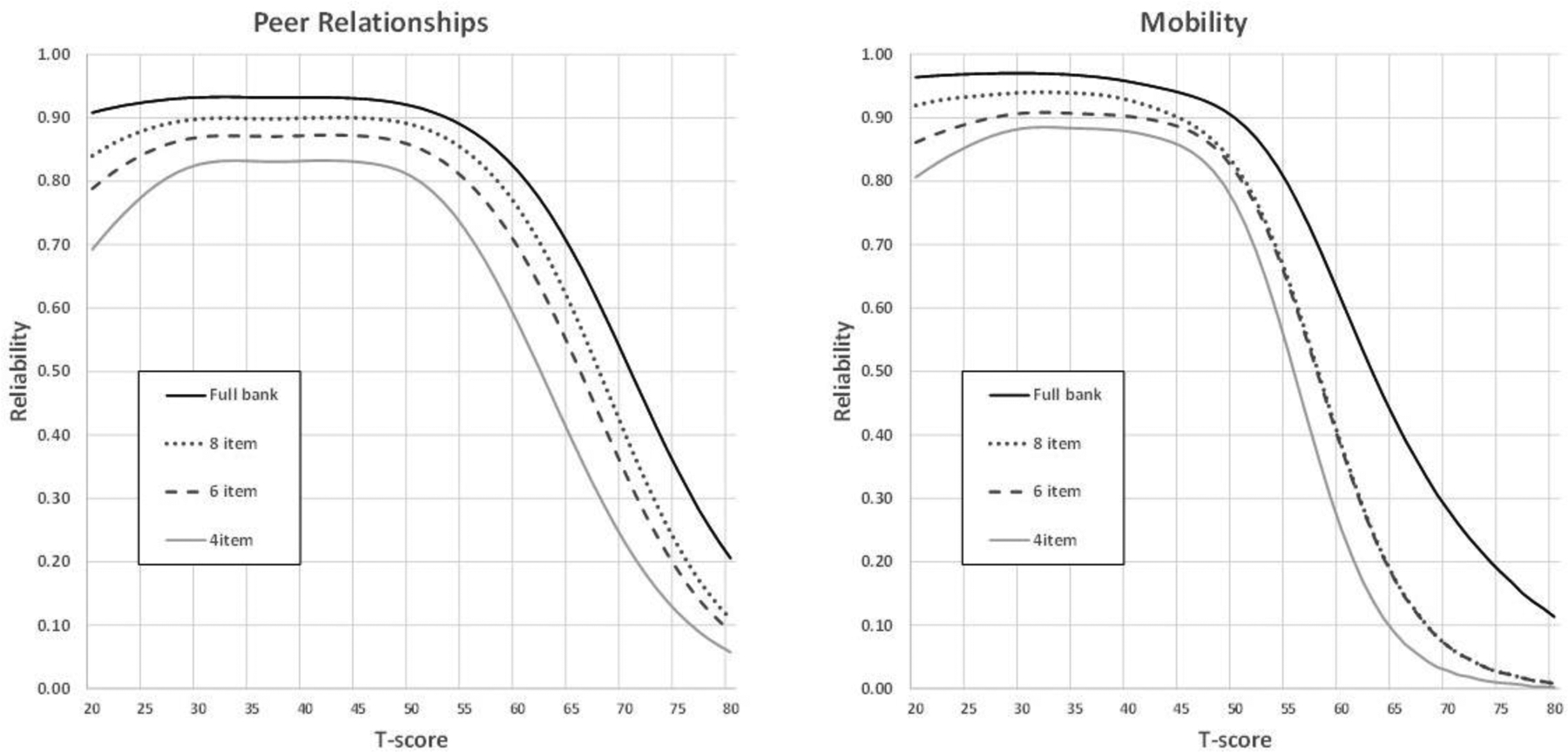
This study examined the reliability and validity of the Patient Reported Outcomes Measurement System (PROMIS)-25, a profile instrument consisting of four-item fixed short forms for six health domains, in children living with burn injury. Data were provided by children participating in a multi-center longitudinal study of outcomes after burn injury. Floor and ceiling effects, unidimensionality, internal consistency, reliability, and differential item functioning (DIF) of the PROMIS-25 Profile v.2.0 were examined. Correlations with other established measures were calculated to assess concurrent validity. Children (n = 256) between the ages of 8-18 years with moderate to severe injury provided responses on PROMIS-25 domains. All PROMIS-25 domains showed high internal consistency. Substantial portions of the sample reported no symptoms (anxiety [58.2%], depressive symptoms [54.6%], fatigue [50.8%], pain [60.1%]). There was a large ceiling effect on peer relationships (46.8%) and physical function mobility (57.5%). One-factor confirmatory factor analyses supported unidimensionality for all domains. Reliability was sufficient for group mean comparisons (>0.8) across at least some trait levels for most domains except fatigue and anxiety. No DIF with respect to burn status was detected when comparing the burn sample to the PROMIS pediatric general U.S. population testing sample. These results provide evidence of reliability and validity of PROMIS-25 scores among children living with burn injury. Reliability of domains was low to moderate and would likely be improved, and ceiling effects reduced for some domains, by administering the PROMIS-37, which includes six items per domain.
© The Author(s) 2023. Published by Oxford University Press on behalf of the American Burn Association. All rights reserved. For permissions, please e-mail: journals.permissions@oup.com.
Conflict of interest statement
This work was supported by the National Institute on Disability, Independent Living, and Rehabilitation Research (NIDILRR) (Grant Numbers: 90DPGE0004, 90DPBU0001, 90DPBU0003, and 90DPBU0004). The authors have no other conflicts of interest to report.
Figures
References
-
- American Burn Association. National Burn Repository 2017 Update. Report of data from 2008–2017. 2017. Chicago, IL: American Burn Association.
Publication types
MeSH terms
Grants and funding
LinkOut - more resources
Full Text Sources
Medical
