Review
. 2023 Apr 17:2023:6210885.
doi: 10.1155/2023/6210885. eCollection 2023.

Regulatory Effect of Inflammatory Mediators in Intervertebral Disc Degeneration

Affiliations
Review

Regulatory Effect of Inflammatory Mediators in Intervertebral Disc Degeneration

Zhangfu Li et al. Mediators Inflamm. .

Abstract

Intervertebral disc degeneration (IDD) is a major contributor to back, neck, and radicular pain. It is related to changes in tissue structure and function, including the breakdown of the extracellular matrix (ECM), aging, apoptosis of the nucleus pulposus, and biomechanical tissue impairment. Recently, an increasing number of studies have demonstrated that inflammatory mediators play a crucial role in IDD, and they are being explored as potential treatment targets for IDD and associated disorders. For example, interleukins (IL), tumour necrosis factor-α (TNF-α), chemokines, and inflammasomes have all been linked to the pathophysiology of IDD. These inflammatory mediators are found in high concentrations in intervertebral disc (IVD) tissues and cells and are associated with the severity of LBP and IDD. It is feasible to reduce the production of these proinflammatory mediators and develop a novel therapy for IDD, which will be a hotspot of future research. In this review, the effects of inflammatory mediators in IDD were described.


Conflict of interest statement

The authors declare that they have no competing interests.

Figures
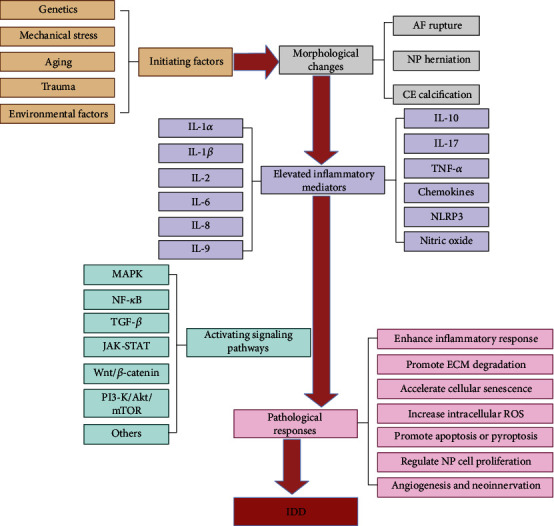
Figure 1
Figure 1
Diagram of IDD upstream and downstream regulation networks.
Figure 2
Figure 2
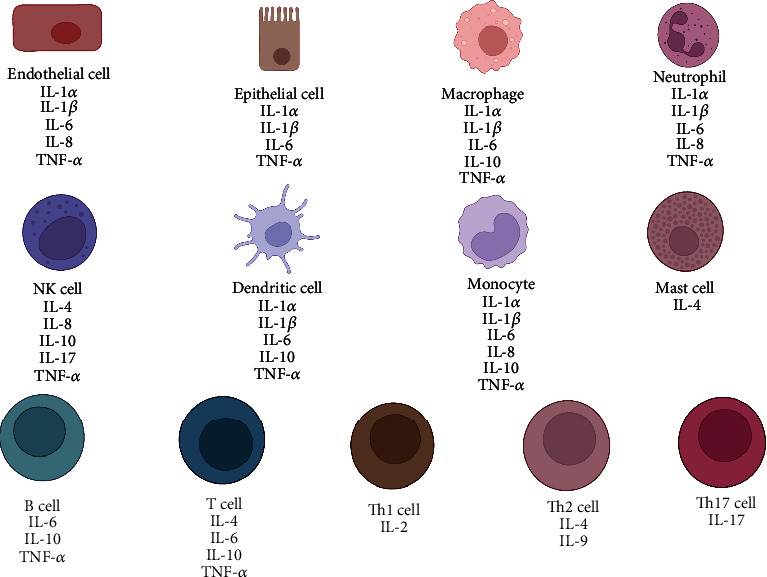
Schematic illustration of different cells expressing various cytokines.
Figure 3
Figure 3
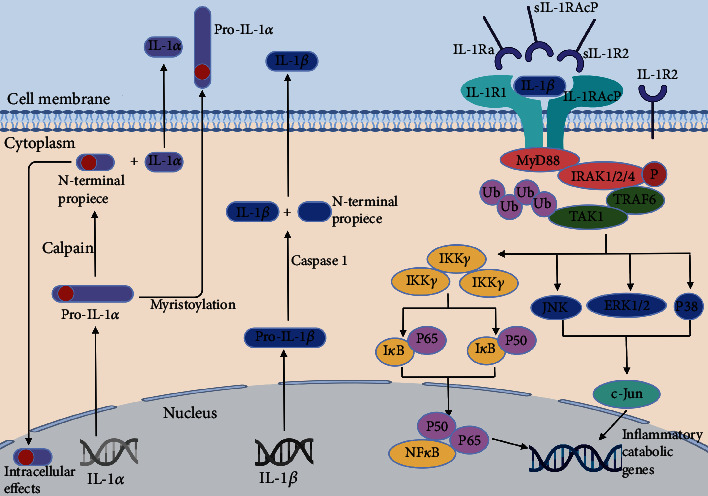
IL-1α and IL-1β synthesis and signal transduction pathways.
Figure 4
Figure 4
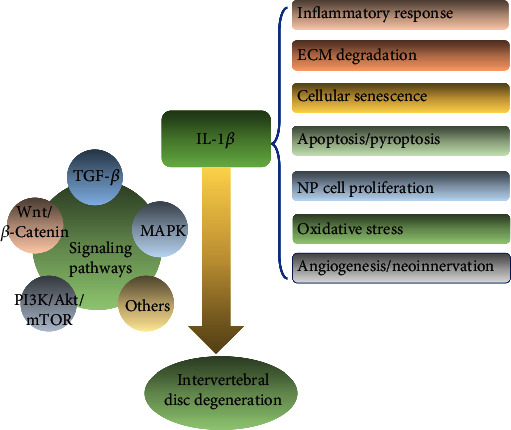
IL-1β is involved in multiple pathological processes of intervertebral disc degeneration.
Figure 5
Figure 5
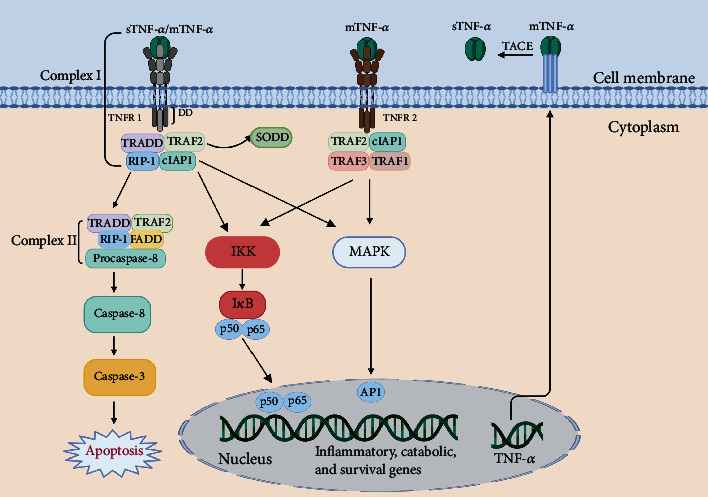
TNF-α signalling pathway.
Figure 6
Figure 6
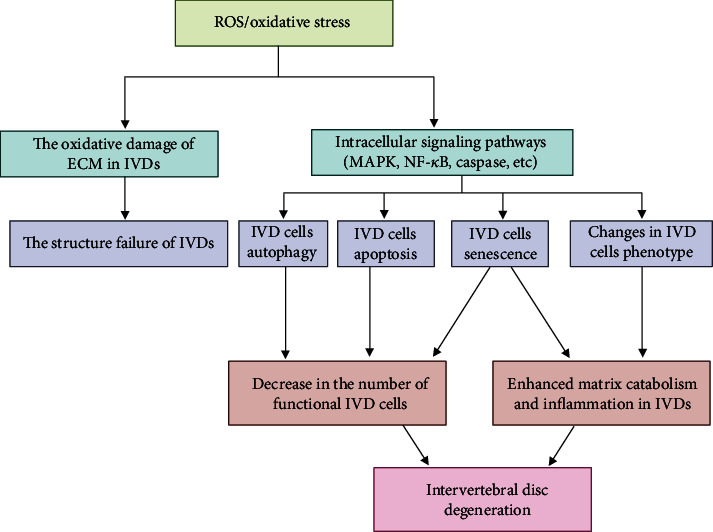
The role of ROS/oxidative stress in the development of IDD.

References

    1. Roberts S., Evans H., Trivedi J., Menage J. Histology and pathology of the human intervertebral disc. Journal of Bone and Joint Surgery . 2006;88(Supplement 2):10–14. doi: 10.2106/JBJS.F.00019. - DOI - PubMed
    1. Pfirrmann C. W., Metzdorf A., Zanetti M., Hodler J., Boos N. Magnetic resonance classification of lumbar intervertebral disc degeneration. Spine . 2001;26(17):1873–1878. doi: 10.1097/00007632-200109010-00011. - DOI - PubMed
    1. Barrey C., Jund J., Noseda O., Roussouly P. Sagittal balance of the pelvis-spine complex and lumbar degenerative diseases. A comparative study about 85 cases. European Spine Journal . 2007;16(9):1459–1467. doi: 10.1007/s00586-006-0294-6. - DOI - PMC - PubMed
    1. Gopal D., Ho A. L., Shah A., Chi J. H. Advances in Experimental Medicine and Biology . Springer; 2012. Molecular basis of intervertebral disc degeneration; pp. 114–133. - DOI - PubMed
    1. Sakai D. Future perspectives of cell-based therapy for intervertebral disc disease. European Spine Journal . 2008;17(Supplement 4):452–458. doi: 10.1007/s00586-008-0743-5. - DOI - PMC - PubMed

MeSH terms

Substances

LinkOut - more resources