


Controversies in the management of active Charcot neuroarthropathy
- PMID: 37101723
- PMCID: PMC10123890
- DOI: 10.1177/20420188231160406
Controversies in the management of active Charcot neuroarthropathy
Abstract
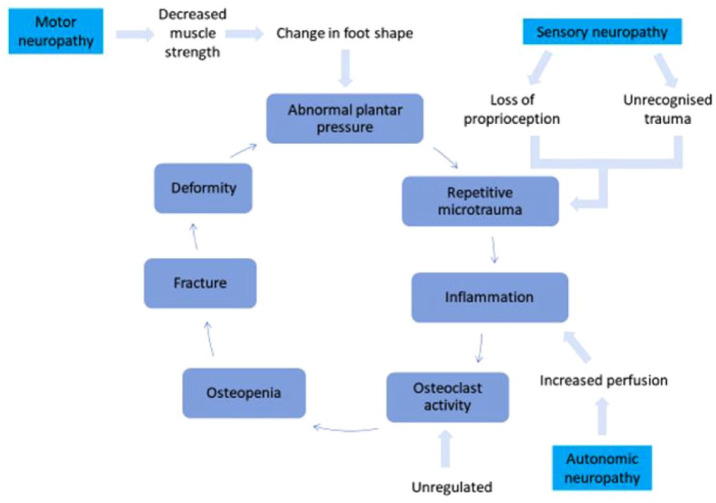
Charcot neuroarthropathy (CN) was first described over 150 years ago. Despite this there remains uncertanity around the factors that contribute to its development, and progression. This article will discuss the current controversies around the pathogenesis, epidemiology, diagnosis, assessment and management of the condition. The exact pathogenesis of CN is not fully understood, and it is likely to be multifactorial, with perhaps currently unknown mechanisms contributing to its development. Further studies are needed to examine opportunities to help screen for and diagnose CN. As a result of many of these factors, the true prevalence of CN is still largely unknown. Almost all of the recommendations for the assessment and treatment of CN are based on low-quality level III and IV evidence. Despite recommendations to offer people with CN nonremovable devices, currently only 40-50% people are treated with this type of device. Evidence is also lacking about the optimal duration of treatment; reported outcomes range from 3 months to more than a year. The reason for this variation is not entirely clear. A lack of standardised definitions for diagnosis, remission and relapse, heterogeneity of populations, different management approaches, monitoring techniques with unknown diagnostic precision and variation in follow-up times prevent meaningful comparison of outcome data. If people can be better supported to manage the emotional and physical consequences of CN, then this could improve people's quality of life and well-being. Finally, we highlight the need for an internationally coordinated approach to research in CN.
Keywords: charcot neuroathropathy; controversies; diabetes.
© The Author(s), 2023.
Conflict of interest statement
The authors declared no potential conflicts of interest with respect to the research, authorship and/or publication of this article.
Figures
References
-
- Jeffcoate W, Game F. The Charcot foot reflects a response to injury that is critically distorted by preexisting nerve damage: an imperfect storm. Diabetes Care 2022; 45: 1691–1697. - PubMed
-
- Sanders LJ. The charcot foot: historical perspective 1827-2003. Diabetes Metab Res Rev 2004; 20(Suppl. 1): S4–S8. - PubMed
-
- Dhatariya K, Gooday C, Murchison R, et al.. Pedal neuroarthropathy in a nondiabetic patient as a result of long-term amiodarone use. J Foot Ankle Surg 2009; 48: 362–364. - PubMed
Publication types
LinkOut - more resources
Full Text Sources
Research Materials
