


Spanish-Speaking Patients Have Limited Access Scheduling Outpatient Orthopaedic Appointments Compared With English-Speaking Patients Across the United States
- PMID: 37101862
- PMCID: PMC10123429
- DOI: 10.1016/j.asmr.2023.01.015
Spanish-Speaking Patients Have Limited Access Scheduling Outpatient Orthopaedic Appointments Compared With English-Speaking Patients Across the United States
Abstract
Purpose: To evaluate whether Spanish-speaking patients can obtain appointments to outpatient orthopaedic surgery clinics across the United States at a similar rate as English-speaking patients and to examine the language interpretation services available at those clinics.
Methods: Orthopaedic offices nationwide were called by a bilingual investigator to request an appointment with a pre-established script. The investigators called in English asking for an appointment for an English-speaking patient (English-English), called in English requesting an appointment for a Spanish-speaking patient (English-Spanish), and called in Spanish asking for an appointment for a Spanish-speaking patient (Spanish-Spanish) in a random order. During each call whether an appointment was given, the number of days to the offered appointment, the mechanism of interpretation available in clinic, and whether the patient's citizenship or insurance information was requested was collected.
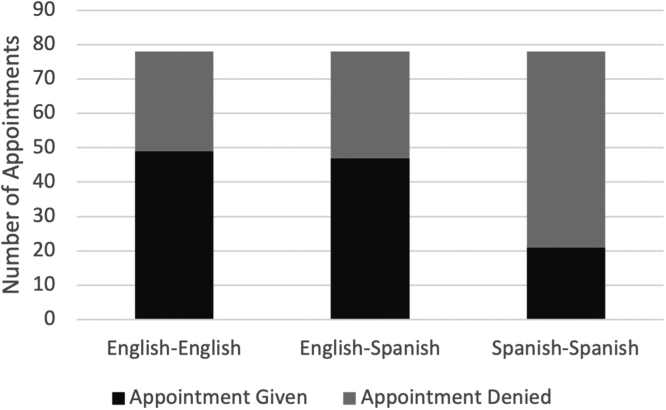
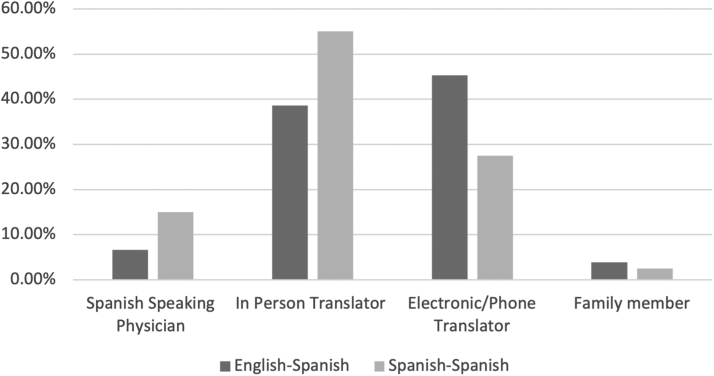
Results: A total of 78 clinics included in the analysis. There was a statistically significant decrease in access to scheduling an orthopaedic appointment in the Spanish-Spanish group (26.3%) compared with English-English (61.3%) or English-Spanish (58.8%) groups (P < .001). There was no significant difference in access to appointment between rural and urban areas. Patients in the Spanish-Spanish group who made an appointment were offered in-person interpretation 55% of the time. There was no statistically significant difference in time from call to offered appointment or the request for citizenship status between the 3 groups.
Conclusions: This study detected a considerable disparity regarding access to orthopaedic clinics nationwide in the individuals who called to establish an appointment in Spanish. Patients in the Spanish-Spanish group were able to make an appointment less often but had in-person interpreters available for interpretation services.
Clinical relevance: With a large Spanish-speaking population in the United States, it is important to understand how lack of proficiency with the English language may affect access to orthopaedic care. This study uncovers variables associated with difficulties scheduling appointments for Spanish-speaking patients.
© 2023 The Authors.
Figures
References
-
- Census - Table Results https://data.census.gov/cedsci/table?q=spanish%20speak&tid=ACSST1Y2019.S...
-
- Title VI of the Civil Rights Act of 1964 42 U.S.C. § 2000d Et Seq. https://www.justice.gov/crt/fcs/titlevi-overview Published August 6, 2015.
-
- Brandl E.J., Schreiter S., Schouler-Ocak M. Are trained medical interpreters worth the cost? A review of the current literature on cost and cost-effectiveness. J Immigr Minor Health. 2020;22:175–181. - PubMed
LinkOut - more resources
Full Text Sources
Miscellaneous
