. 2023 Sep 30;56(3):308-312.
doi: 10.5115/acb.23.022. Epub 2023 Apr 26.

The notch of the mandible: what do different fields call it?

Affiliations

The notch of the mandible: what do different fields call it?

Norio Kitagawa et al. Anat Cell Biol. .

Abstract

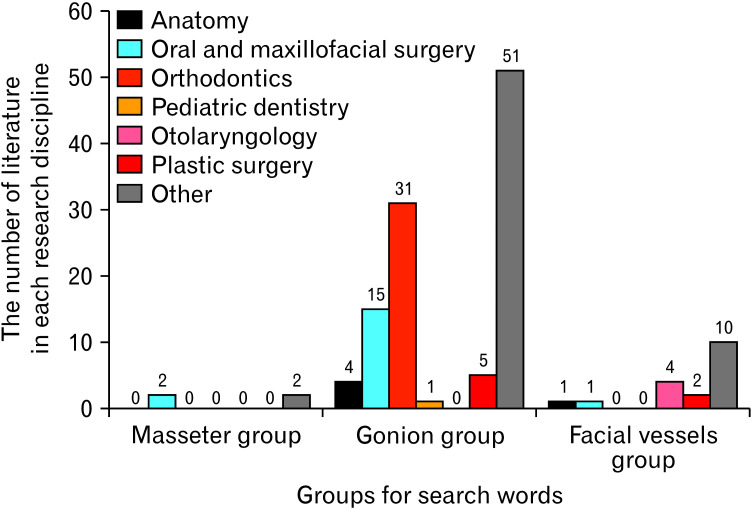
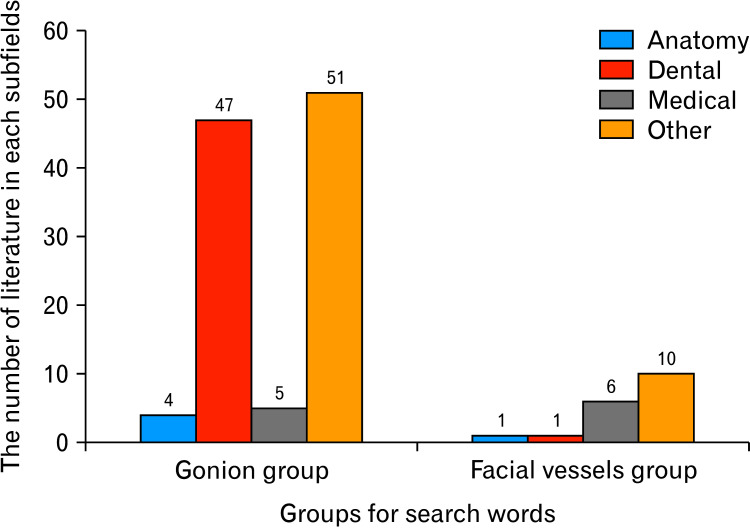
The bony notch on the inferior border of the mandible, anterior to the attachment of the masseter muscle, where the facial vessels commonly pass, has been called different names in the literature, e.g., premasseteric notch, antegonial notch, and notch for the facial vessels. Interestingly, various disciplines have leaned toward different names for this notch. Therefore, to aid in consistent communication among professionals, the present study aimed to analyze usage of these varied terms and make recommendations for the best terminology. Based on the adjacent anatomical structures used to name this notch, three groups were analyzed in this study, a group using masseter in the term, a group using gonion in the term, and a group using facial vessels in the term. A literature search found that the group using gonion in the term was found most in the literature. The orthodontics field used gonion in the term the most (29.0%: 31/107) followed by the oral and maxillofacial surgery field (14.0%: 15/107), the plastic surgery field (4.7%: 5/107), and the anatomy field (3.7%: 4/107). The dental field used gonion in this term the most (43.9%: 47/107) and the medical field used facial vessels in the term the most (33.3%: 6/18). Based on these results, the use of gonial terms for this notch seems to be preferred.

Keywords: Facial artery; Gonion; Mandible; Masseter; Terminology.


Conflict of interest statement

Conflicts of Interest

No potential conflict of interest relevant to this article was reported.

Figures
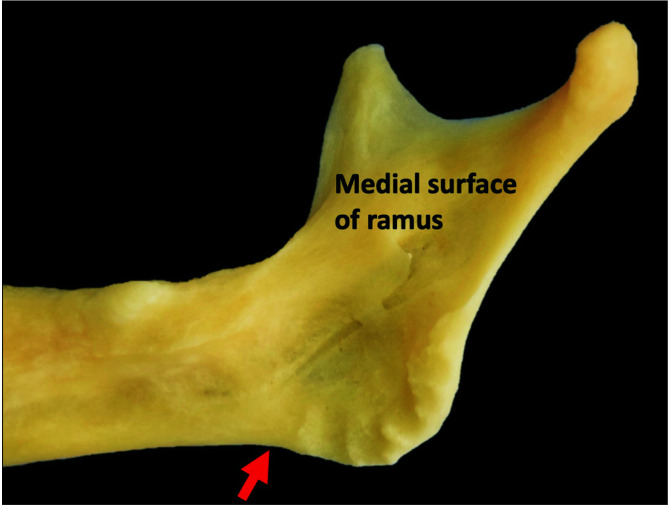
Fig. 1
Fig. 1
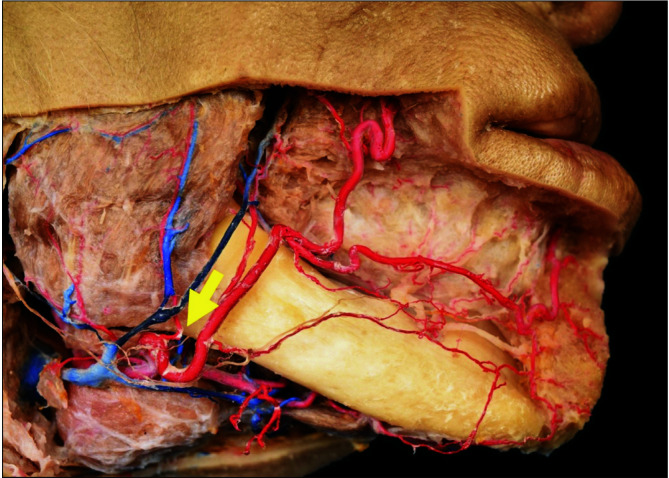
A bony notch located on the inferior border of the mandible (arrow).
Fig. 2
Fig. 2
A bony notch located on the inferior border of the mandible and anterior to the attachment of the masseter muscle (arrow). Note the facial vessels runs adjacent to the notch.
Fig. 3
Fig. 3
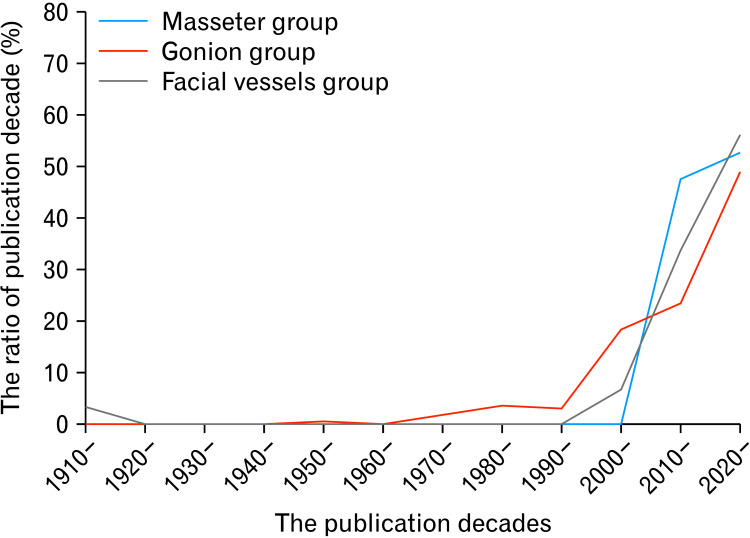
The ratio of publication decades for each group. The indicated value for 2020–2022 is a value adjusted to a value of a decade by multiplying 10/3.
Fig. 4
Fig. 4
The number of reports in the literature for fields of expertise in each group.
Fig. 5
Fig. 5
The ratio of usage in the dental and medical subfields for the gonion and facial vessels groups.

References

    1. Iwanaga J, Shiromoto K, Tubbs RS. Releasing incisions of the buccal periosteum adjacent to the lower molar teeth can injure the facial artery: an anatomical study. Surg Radiol Anat. 2020;42:31–4. doi: 10.1007/s00276-019-02319-3. - DOI - PubMed
    1. Takeshita Y, Ibaragi S, Yutori H, Kusukawa J, Tubbs RS, Kawazu T, Asaumi J, Iwanaga J. The potential for facial artery injury during mandibular third molar extraction. An anatomical study using contrast-enhanced computed tomography. Clin Anat. 2021;34:1215–23. doi: 10.1002/ca.23779. - DOI - PubMed
    1. Kikuta S, Iwanaga J, Kusukawa J, Tubbs RS. The mental artery: anatomical study and literature review. J Anat. 2020;236:564–9. doi: 10.1111/joa.13113. - DOI - PMC - PubMed
    1. Kolodziej RP, Southard TE, Southard KA, Casko JS, Jakobsen JR. Evaluation of antegonial notch depth for growth prediction. Am J Orthod Dentofacial Orthop. 2002;121:357–63. doi: 10.1067/mod.2002.121561. - DOI - PubMed
    1. Schütz C, Denes BJ, Kiliaridis S, Antonarakis GS. Mandibular antegonial notch depth in postpubertal individuals: a longitudinal cohort study. Clin Exp Dent Res. 2022;8:923–30. doi: 10.1002/cre2.577.fa344733a6b14af68fb398af3c78e391 - DOI - PMC - PubMed

LinkOut - more resources