


Can Neutrophils Prevent Nosocomial Pneumonia after Serious Injury?
- PMID: 37108790
- PMCID: PMC10141656
- DOI: 10.3390/ijms24087627
Can Neutrophils Prevent Nosocomial Pneumonia after Serious Injury?
Abstract
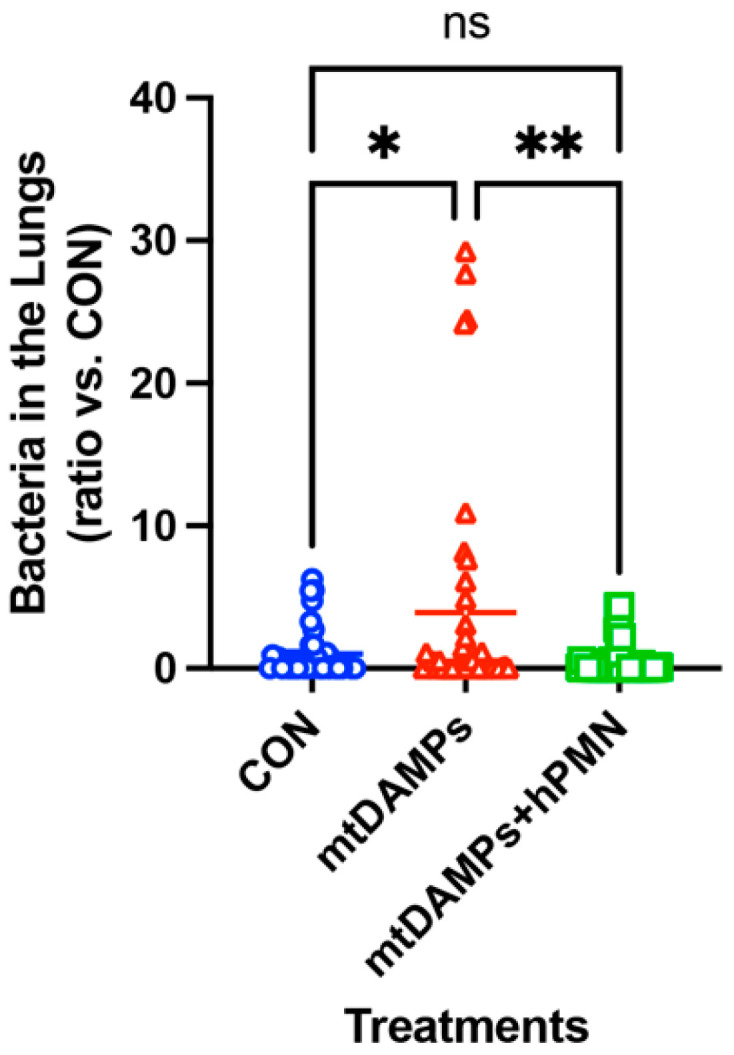
Nosocomial pneumonia is a leading cause of critical illness and mortality among seriously injured trauma patients. However, the link between injury and the development of nosocomial pneumonia is still not well recognized. Our work strongly suggests that mitochondrial damage-associated molecular patterns (mtDAMPs), especially mitochondrial formyl peptides (mtFPs) released by tissue injury, play a significant role in developing nosocomial pneumonia after a serious injury. Polymorphonuclear leukocytes (neutrophils, PMN) migrate toward the injury site by detecting mtFPs through formyl peptide receptor 1 (FPR1) to fight/contain bacterial infection and clean up debris. Activation of FPR1 by mtFPs enables PMN to reach the injury site; however, at the same time it leads to homo- and heterologous desensitization/internalization of chemokine receptors. Thus, PMN are not responsive to secondary infections, including those from bacteria-infected lungs. This may enable a progression of bacterial growth in the lungs and nosocomial pneumonia. We propose that the intratracheal application of exogenously isolated PMN may prevent pneumonia coupled with a serious injury.
Keywords: FPR1; infection; injury; innate immunity; neutrophils; nosocomial pneumonia; trauma.
Conflict of interest statement
The authors declare no conflict of interest.
Figures
References
-
- Chevret S., Hemmer M., Carlet J., Langer M. Incidence and risk factors of pneumonia acquired in intensive care units. Results from a multicenter prospective study on 996 patients. European Cooperative Group on Nosocomial Pneumonia. Intensive Care Med. 1993;19:256–264. - PubMed
MeSH terms
Substances
Grants and funding
LinkOut - more resources
Full Text Sources
Medical
