. 2023 Apr 10;13(4):649.
doi: 10.3390/jpm13040649.

Chlorogenic Acid Attenuates Doxorubicin-Induced Oxidative Stress and Markers of Apoptosis in Cardiomyocytes via Nrf2/HO-1 and Dityrosine Signaling

Affiliations

Chlorogenic Acid Attenuates Doxorubicin-Induced Oxidative Stress and Markers of Apoptosis in Cardiomyocytes via Nrf2/HO-1 and Dityrosine Signaling

Betul Cicek et al. J Pers Med. .

Abstract

(1) Background: Doxorubicin (DOX) is extensively used for cancer treatments; however, its clinical application is limited because of its cardiotoxic adverse effects. A combination of DOX and agents with cardioprotective properties is an effective strategy to ameliorate DOX-related cardiotoxicity. Polyphenolic compounds are ideal for the investigation of novel cardioprotective agents. Chlorogenic acid (CGA), an essential dietary polyphenol found in plants, has been previously reported to exert antioxidant, cardioprotective, and antiapoptotic properties. The current research evaluated CGA's in vivo cardioprotective properties in DOX-induced cardiotoxicity and the probable mechanisms underlying this protection. (2) Methods: CGA's cardioprotective properties were investigated in rats that were treated with CGA (100 mg/kg, p.o.) for fourteen days. The experimental model of cardiotoxicity was induced with a single intraperitoneal (15 mg/kg i.p.) injection of DOX on the 10th day. (3) Results: Treatment with CGA significantly improved the DOX-caused altered cardiac damage markers (LDH, CK-MB, and cTn-T), and a marked improvement in cardiac histopathological features accompanied this. DOX downregulated the expression of Nrf2/HO-1 signaling pathways, and the CGA reversed this effect. Consistently, caspase-3, an apoptotic-related marker, and dityrosine expression were suppressed, while Nrf2 and HO-1 expressions were elevated in the cardiac tissues of DOX-treated rats after treatment with the CGA. Furthermore, the recovery was confirmed by the downregulation of 8-OHdG and dityrosine (DT) expressions in immunohistochemical findings. (4) Conclusions: CGA demonstrated a considerable cardioprotective effect against DOX-induced cardiotoxicity. One of the possible mechanisms for these protective properties was the upregulation of the Nrf2/HO-1-dependent pathway and the downregulation of DT, which may ameliorate oxidative stress and cardiomyocyte apoptosis. These findings suggest that CGA may be cardioprotective, particularly in patients receiving DOX-based chemotherapy.

Keywords: Nrf2/HO-1; cardiotoxicity; chlorogenic acid; doxorubicin; oxidative stress.


Conflict of interest statement

Konstantinos Tsarouhas is a member of the Editorial Board of the Journal of Personalized Medicine, but has no personal involvement in the reviewing process or any influence in terms of adjudicating the final decision for this article. The other authors declare that they have no conflict of interest.

Figures

Figure 1
Figure 1
The flowchart of the experiment design.
Figure 2
Figure 2
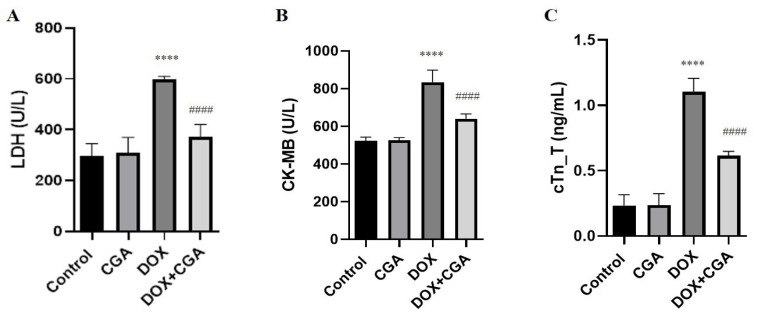
Serum cardiac damage marker levels. The serum levels of (A) LDH, (B) CK-MB, and (C) cTn-T were markedly decreased with CGA treatment. Data are presented as the means ± SD. **** p < 0.0001 vs. the control group, #### p < 0.0001 vs. the DOX group (n = 7). CGA: Chlorogenic acid (100 mg/kg); DOX: Doxorubicin (15 mg/kg).
Figure 3
Figure 3
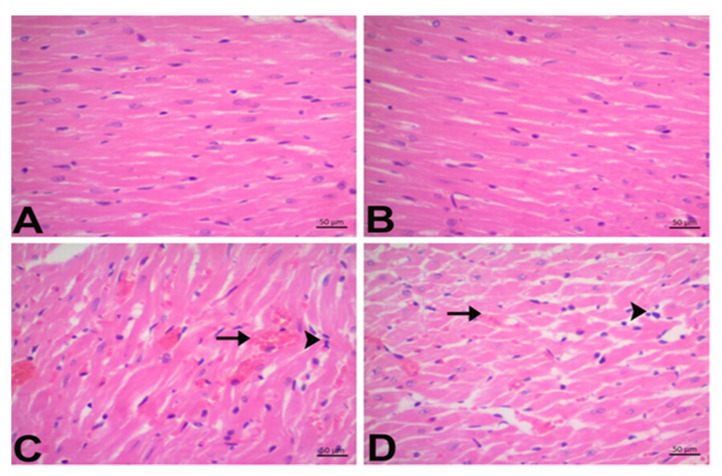
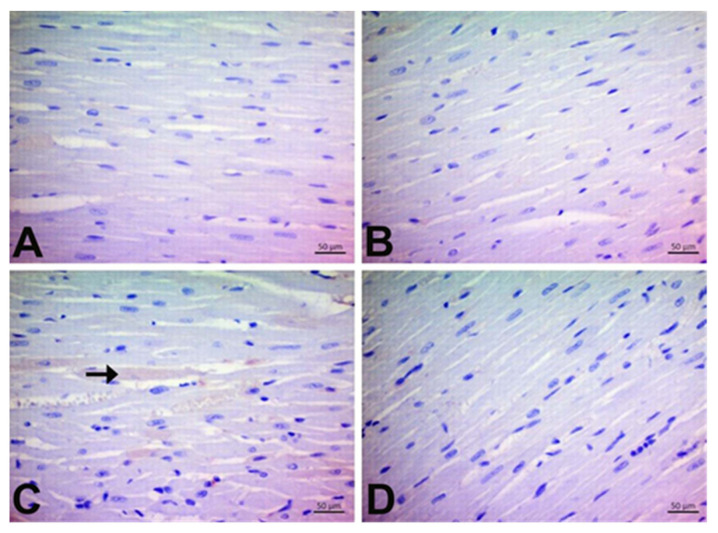
Effects of CGA on histopathological changes in DOX-treated cardiac tissue by H&E staining (magnification, ×400). (A) Control, (B) CGA, (C) DOX, and (D) DOX + CGA. Arrowhead: Mn cell infiltration score, Arrow: Hemorrhage. Data are expressed as the means ± SD. CGA: Chlorogenic acid (100 mg/kg); DOX: Doxorubicin (15 mg/kg). Arrowhead: Mn cell infiltration score, Arrow: Hemorrhage.
Figure 4
Figure 4
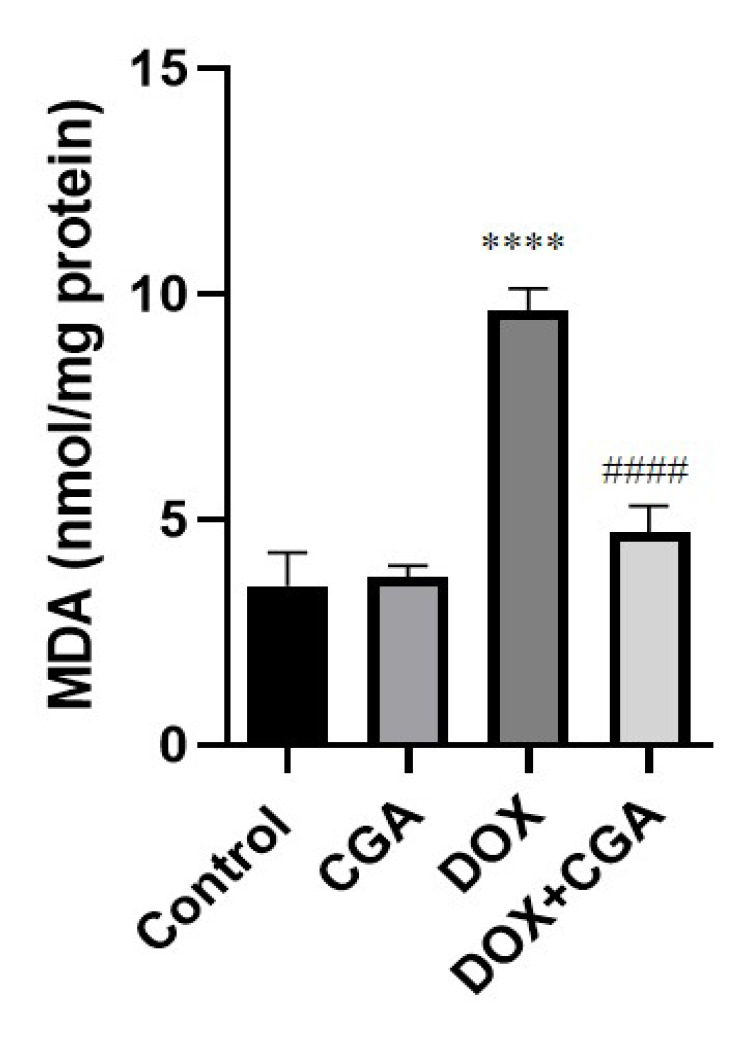
LPO marker (MDA) in cardiac tissue. CGA significantly reversed the DOX-related LPO via the reduction of MDA levels. Data are presented as the means ± SD. **** p < 0.0001 vs. the control group, #### p < 0.0001 vs. the DOX group (n = 7). CGA: Chlorogenic acid (100 mg/kg); DOX: Doxorubicin (15 mg/kg); MDA: Malondialdehyde.
Figure 5
Figure 5
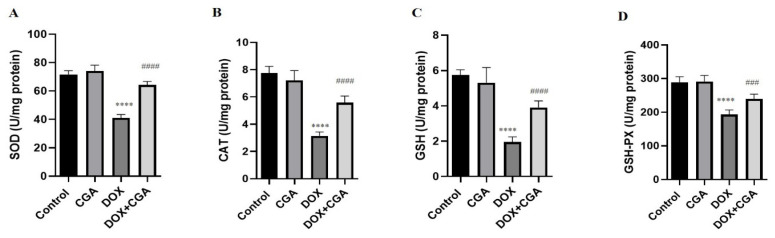
Oxidative stress markers in cardiac tissue. CGA significantly reversed the DOX-related oxidative stress via the elevation of (A) SOD, (B) CAT, (C) GSH-PX, and (D) GSH levels. Data are presented as the means ± SD. **** p < 0.0001 vs. the control group, ### p < 0.001, #### p < 0.0001 vs. the DOX group (n = 7). CGA: Chlorogenic acid (100 mg/kg); DOX: Doxorubicin (15 mg/kg); SOD: Superoxide dismutase; CAT: Catalase; GSH: Glutathione; GSH-PX: Glutathione peroxidase.
Figure 6
Figure 6
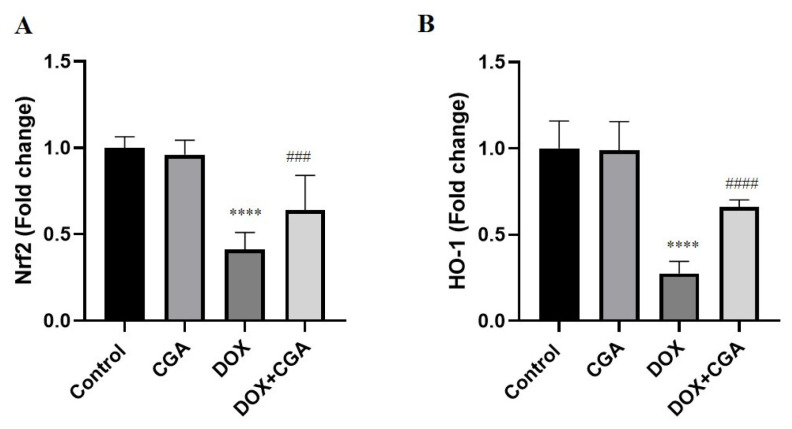
(A) Nrf2 and (B) HO-1 signaling pathway in cardiac tissue. The expression levels of Nrf2 and HO-1 were elevated with CGA treatment. Data are presented as the means ± SD. **** p < 0.0001 vs. the control group, ### p < 0.001, #### p < 0.0001 vs. the DOX group (n = 7). CGA: Chlorogenic acid (100 mg/kg); DOX: Doxorubicin (15 mg/kg); Nrf2: Nuclear factor erythroid 2–related factor 2; HO-1: Heme Oxygenase 1.
Figure 7
Figure 7
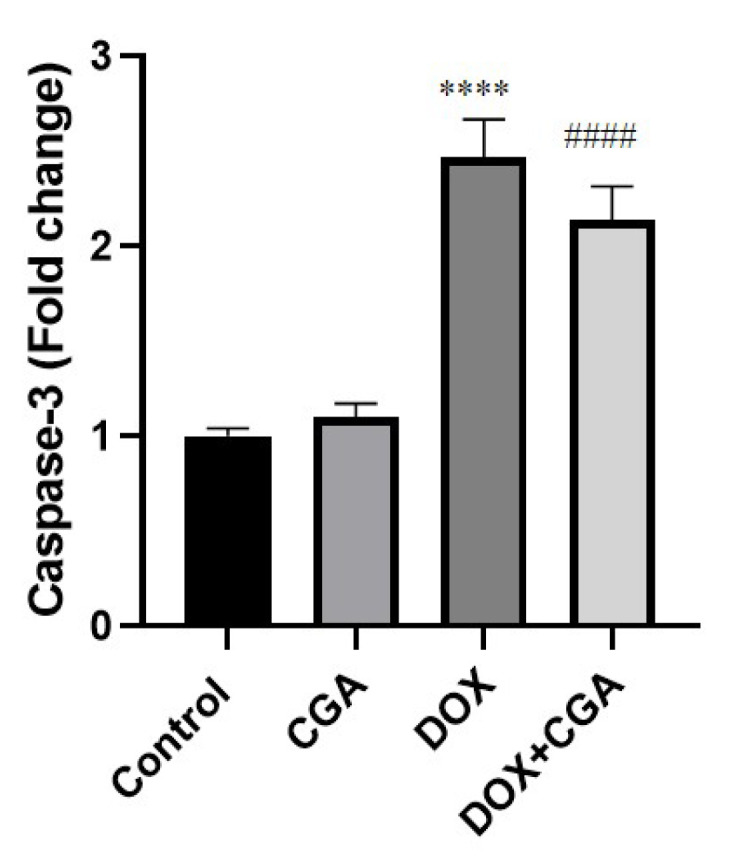
Apoptotic marker in cardiac tissue. The caspase-3 mRNA expression levels were significantly decreased with CGA treatment. Data are presented as the means ± SD. **** p < 0.0001 vs. the control group, #### p < 0.0001 vs. the DOX group (n = 7). CGA: Chlorogenic acid (100 mg/kg); DOX: Doxorubicin (15 mg/kg).
Figure 8
Figure 8
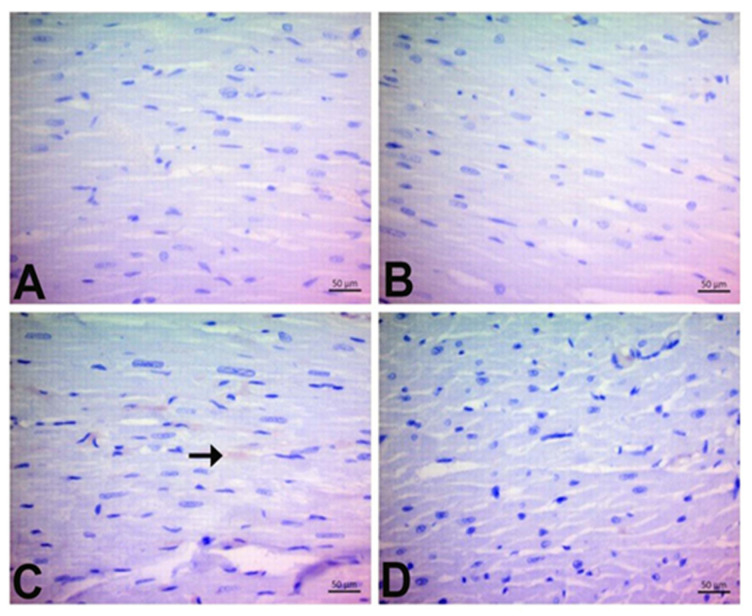
Immunohistochemical staining of 4-HNE in experimental groups in cardiac tissue (×400). 4-HNE expression levels were significantly elevated in DOX-treated rats, while CGA-treated rats demonstrated a significant decline in 4-HNE expression. Arrowhead: Intensity of immunoreactivity. (A) Control, (B) CGA, (C) DOX, and (D) DOX + CGA. Data are presented as the means ± SD. CGA: Chlorogenic acid (100 mg/kg); DOX: Doxorubicin (15 mg/kg); CGA: Chlorogenic acid (100 mg/kg); DOX: Doxorubicin (15 mg/kg); 4-HNE: 4-Hydroxynonenal.
Figure 9
Figure 9
Immunohistochemical staining of 8-OHdG in experimental groups in cardiac tissue (×400). The 8-OHdG expression levels were significantly elevated in DOX-treated rats, while CGA-treated rats demonstrated a significant decline in 8-OHdG expression. Arrowhead: Intensity of immunoreactivity. (A) Control (B) CGA (C) DOX (D) DOX + CGA. Data are presented as the means ± SD. CGA: Chlorogenic acid (100 mg/kg); DOX: Doxorubicin (15 mg/kg).
Figure 10
Figure 10
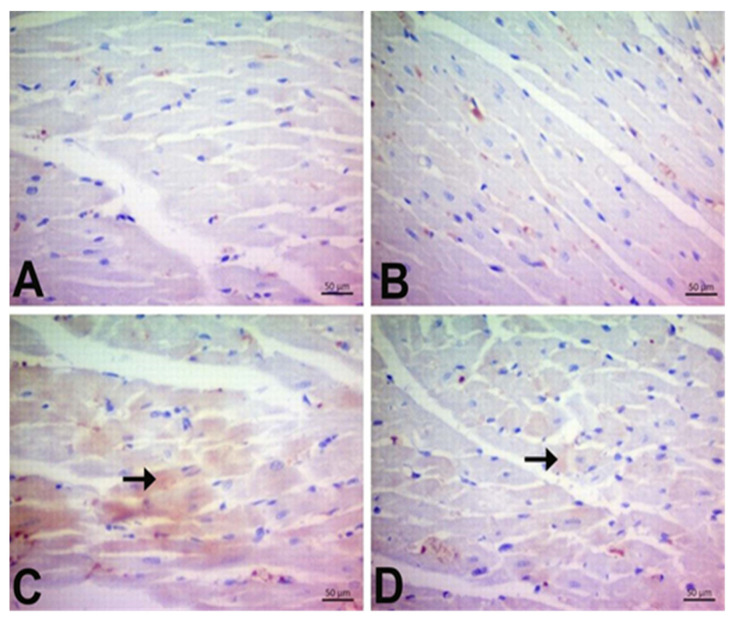
Immunohistochemical staining of DT in experimental groups in cardiac tissue (×400). DT expression levels were significantly elevated in DOX-treated rats while CGA-treated rats demonstrated a significant decline in DT expression. Arrowhead: Intensity of immunoreactivity. (A) Control, (B) CGA, (C) DOX, and (D) DOX + CGA. Data are presented as the means ± SD. CGA: Chlorogenic acid (100 mg/kg); DOX: Doxorubicin (15 mg/kg); DT: dityrosine.

References

    1. Amaral D.G., Witter M.P. The three-dimensional organization of the hippocampal formation: A review of anatomical data. Neuroscience. 1989;31:571–591. doi: 10.1016/0306-4522(89)90424-7. - DOI - PubMed
    1. Li X., Liang J., Qu L., Liu S., Qin A., Liu H., Wang T., Li W., Zou W. Exploring the role of ferroptosis in the doxorubicin-induced chronic cardiotoxicity using a murine model. Chem.-Biol. Interact. 2022;363:110008. doi: 10.1016/j.cbi.2022.110008. - DOI - PubMed
    1. Zhao L., Zhang B. Doxorubicin induces cardiotoxicity through upregulation of death receptors mediated apoptosis in cardiomyocytes. Sci. Rep. 2017;7:44735. doi: 10.1038/srep44735. - DOI - PMC - PubMed
    1. Sun L., Wang H., Dan X., Yu S., Zhang L., Li X. Lapatinib induces mitochondrial dysfunction to enhance oxidative stress and ferroptosis in doxorubicin-induced cardiomyocytes via inhibition of PI3K/AKT signaling pathway. Bioengineered. 2022;13:48–60. doi: 10.1080/21655979.2021.2004980. - DOI - PMC - PubMed
    1. Bardas E., Arslan Y.K., Polat S., Erisir M., Uslu G.A., Cetin N., Cicek B. Vitamin E and selenium reduce prednisolone side effects in rat hearts. Int. J. Vitam. Nutr. Res. 2020;90:309–317. doi: 10.1024/0300-9831/a000582. - DOI - PubMed