


Syndecan-1: From a Promising Novel Cardiac Biomarker to a Surrogate Early Predictor of Kidney and Liver Injury in Patients with Acute Heart Failure
- PMID: 37109427
- PMCID: PMC10146167
- DOI: 10.3390/life13040898
Syndecan-1: From a Promising Novel Cardiac Biomarker to a Surrogate Early Predictor of Kidney and Liver Injury in Patients with Acute Heart Failure
Abstract
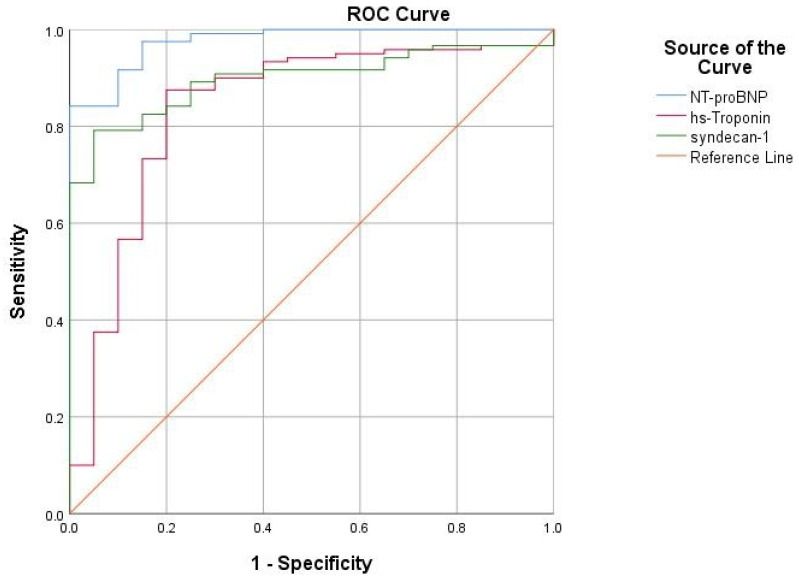
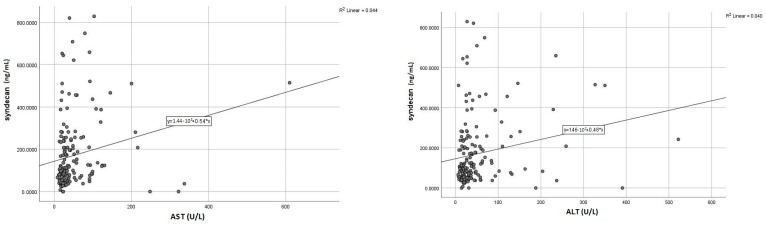
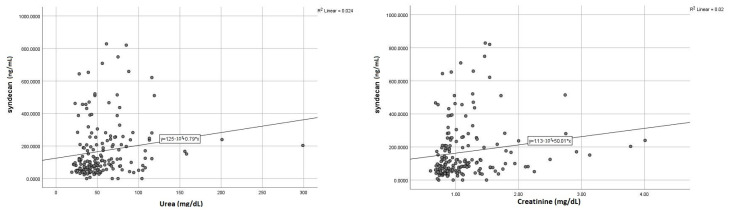
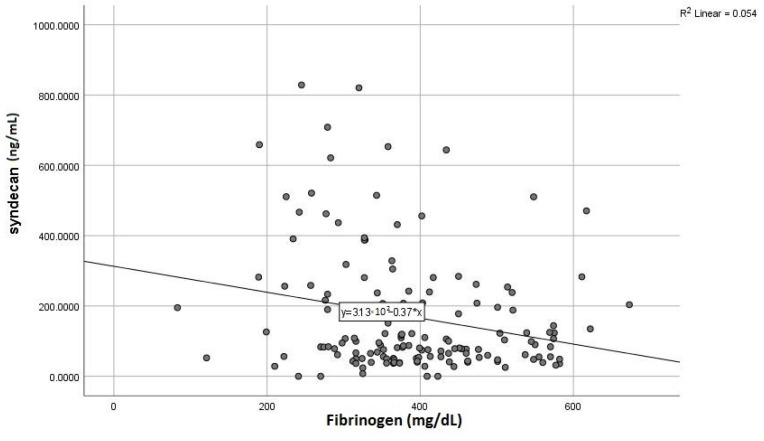
(1) Background: Acute heart failure (HF) represents a complex clinical syndrome burdened by increased mortality and a high rate of systemic complications. Although natriuretic peptides (e.g., NT-proBNP) currently represent the diagnostic and prognostic gold standard in acute HF, those molecules do not accurately reflect all the pathophysiological mechanisms involved in the progression of this pathology when determined independently. Therefore, the current paradigm tends to focus on a multi-marker approach for the risk stratification of patients with acute HF. Syndecan-1 is a less studied biomarker in cardiovascular diseases; its assessment in patients with acute HF being potentially able to reflect the myocardial pathological changes, such as fibrosis, inflammation, endothelial dysfunction or global wall stress. (2) Methods: We conducted a single center prospective study that enrolled 173 patients (120 patients admitted for acute HF, compared to 53 controls with stable chronic HF). A complete standardized clinical, echocardiography and laboratory evaluation was performed at admission, including serum samples for the determination of syndecan-1 by the enzyme-linked immunosorbent assay (ELISA) method. (3) Results: The serum concentration of syndecan-1 was significantly higher in patients with acute HF, compared to controls [121.4 (69.3-257.9) vs. 72.1 (41.4-135.8) ng/mL, p = 0.015]. Syndecan-1 was a significant predictor for the diagnosis of acute HF, expressed by an area under the curve (AUC) of 0.898, similar to NT-proBNP (AUC: 0.976) or cardiac troponin (AUC: 0.839). Moreover, syndecan-1 was independently associated with impaired kidney and liver function at admission, being also a predictor for early, subclinical organ dysfunction in patients with normal biological parameters at admission. When included in the multi-marker model, syndecan-1 levels influenced mortality more significantly than NT-proBNP or troponin. A multivariable regression including syndecan-1, NT-proBNP and troponin provided additional prognostic value compared to each independent biomarker. (4) Conclusions: Syndecan-1 can be considered a promising novel biomarker in acute HF, exhibiting adequate diagnostic and prognostic value. Additionally, syndecan-1 can be used as a surrogate biomarker for non-cardiac organ dysfunction, as its highs levels can accurately reflect early acute kidney and liver injury.
Keywords: acute heart failure; fibrosis; multi-marker; syndecan-1.
Conflict of interest statement
The authors declare no conflict of interest.
Figures
References
-
- Miftode R.-S., Costache I.-I., Cianga P., Petris A.O., Cianga C.-M., Maranduca M.-A., Miftode I.-L., Constantinescu D., Timpau A.-S., Crisan A., et al. The Influence of Socioeconomic Status on the Prognosis and Profile of Patients Admitted for Acute Heart Failure during COVID-19 Pandemic: Overestimated Aspects or a Multifaceted Hydra of Cardiovascular Risk Factors? Healthcare. 2021;9:1700. doi: 10.3390/healthcare9121700. - DOI - PMC - PubMed
-
- Miftode R.-S., Constantinescu D., Cianga C.-M., Petris A.-O., Costache I.-I., Mitu O., Miftode I.-L., Mitu I., Timpau A.-S., Duca S.-T., et al. A Rising Star of the Multimarker Panel: Growth Differentiation Factor-15 Levels Are an Independent Predictor of Mortality in Acute Heart Failure Patients Admitted to an Emergency Clinical Hospital from Eastern Europe. Life. 2022;12:1948. doi: 10.3390/life12121948. - DOI - PMC - PubMed
LinkOut - more resources
Full Text Sources
Research Materials
Miscellaneous
