


Prevalence and Etiology of Community- and Hospital-Acquired Pneumonia in Saudi Arabia and Their Antimicrobial Susceptibility Patterns: A Systematic Review
- PMID: 37109718
- PMCID: PMC10143967
- DOI: 10.3390/medicina59040760
Prevalence and Etiology of Community- and Hospital-Acquired Pneumonia in Saudi Arabia and Their Antimicrobial Susceptibility Patterns: A Systematic Review
Abstract
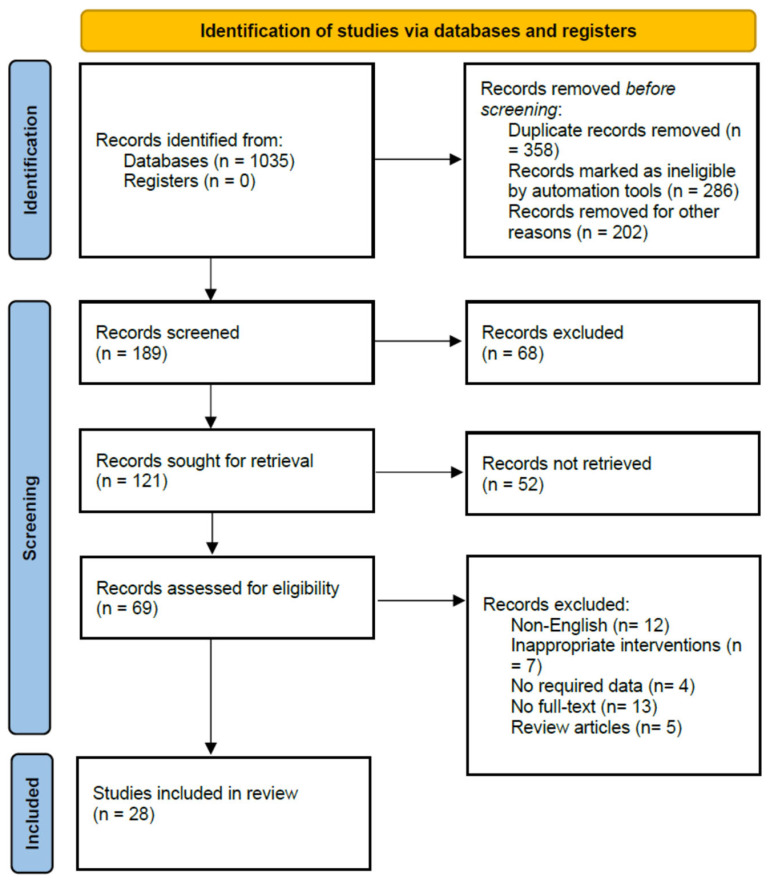
(1) Background and Objectives: Pneumonia is a major cause of morbidity and mortality worldwide, including in Saudi Arabia, and the prevalence and etiology of the disease varies depending on the setting. The development of effective strategies can help reduce the adverse impact of this disease. Therefore, this systematic review was conducted to explore the prevalence and etiology of community-acquired and hospital-acquired pneumonia in Saudi Arabia, as well as their antimicrobial susceptibility. (2) Materials and Methods: The Preferred Reporting Items for Systematic Reviews and Meta-Analyses (PRISMA) 2020 recommendations were followed for this systematic review. Several databases were used to perform a thorough literature search, and papers were then assessed for eligibility by two independent reviewers. The Newcastle-Ottawa Scale (NOS) was used to extract the data from the relevant research and evaluate its quality. (3) Results: This systematic review included 28 studies that highlighted the fact that gram-negative bacteria, particularly Acinetobacter spp. and Pseudomonas aeruginosa, were the common cause of hospital-acquired pneumonia, while Staphylococcus aureus and Streptococcus spp. were responsible for community-acquired pneumonia in children. The study also found that bacterial isolates responsible for pneumonia showed high resistance rates against several antibiotics, including cephalosporins and carbapenems. (4) Conclusions: In conclusion, the study found that different bacteria are responsible for community- and hospital-acquired pneumonia in Saudi Arabia. Antibiotic resistance rates were high for several commonly used antibiotics, highlighting the need for rational antibiotic use to prevent further resistance. Moreover, there is a need to conduct more regular multicenter studies to assess etiology, resistance, and susceptibility patterns of pneumonia-causing pathogens in Saudi Arabia.
Keywords: Saudi Arabia; antimicrobial susceptibility; community-acquired pneumonia; etiology; hospital-acquired pneumonia; prevalence.
Conflict of interest statement
The authors declare no conflict of interest.
References
-
- Troeger C.E., Blacker B.F., Khalil I.A., Zimsen S.R., Albertson S.B., Abate D., Abdela J., Adhikari T.B., Aghayan S.A., Agrawal S. Mortality, morbidity, and hospitalisations due to influenza lower respiratory tract infections, 2017: An analysis for the Global Burden of Disease Study 2017. Lancet Respir. Med. 2019;7:69–89. doi: 10.1016/S2213-2600(18)30496-X. - DOI - PMC - PubMed
-
- Ghia C.J., Dhar R., Koul P.A., Rambhad G., Fletcher M.A. Streptococcus pneumoniae as a cause of community-acquired pneumonia in Indian adolescents and adults: A systematic review and meta-analysis. Clin. Med. Insights Circ. Respir. Pulm. Med. 2019;13:1179548419862790. doi: 10.1177/1179548419862790. - DOI - PMC - PubMed
Publication types
MeSH terms
Substances
LinkOut - more resources
Full Text Sources
Medical
Miscellaneous
