


COVID-19 Vaccine Refusal and Delay among Adults in Italy: Evidence from the OBVIOUS Project, a National Survey in Italy
- PMID: 37112751
- PMCID: PMC10141216
- DOI: 10.3390/vaccines11040839
COVID-19 Vaccine Refusal and Delay among Adults in Italy: Evidence from the OBVIOUS Project, a National Survey in Italy
Abstract
Background: Vaccine hesitancy was defined by the World Health Organization (WHO) in 2019 as a major threat to global health. In Italy, reluctance to receive vaccines is a widespread phenomenon that was amplified during the COVID-19 pandemic by fear and mistrust in government. This study aims to depict different profiles and characteristics of people reluctant to vaccinate, focusing on the drivers of those who are in favor of and those who are opposed to receiving the COVID-19 vaccine.
Methods: A sample of 10,000 Italian residents was collected. A survey on COVID-19 vaccination behavior and possible determinants of vaccine uptake, delay, and refusal was administered to participants through a computer-assisted web interviewing method.
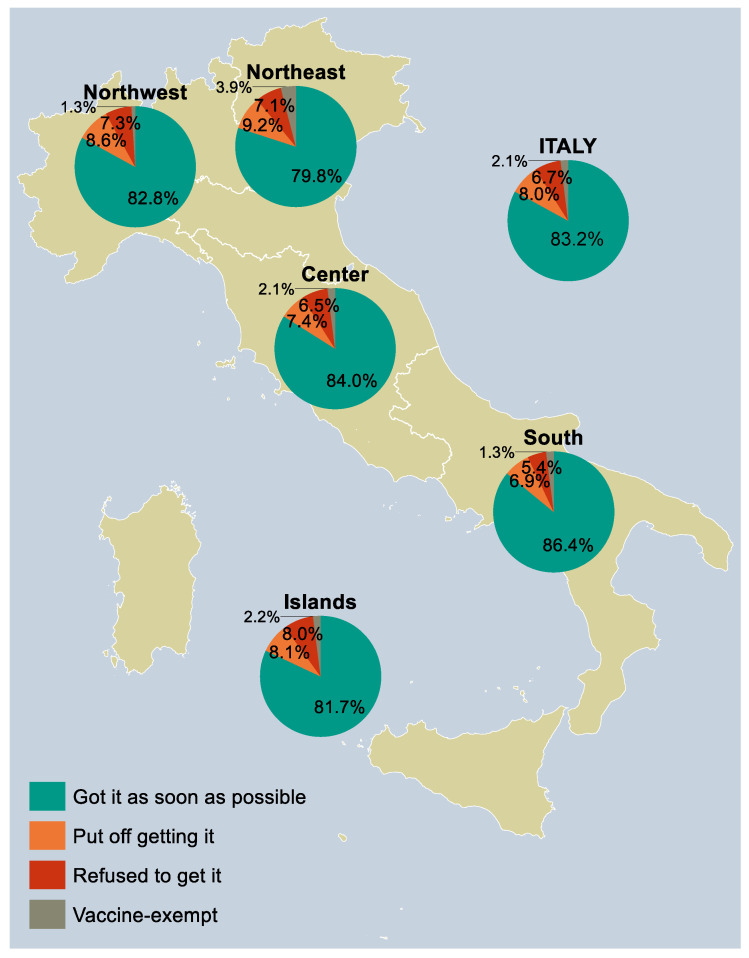
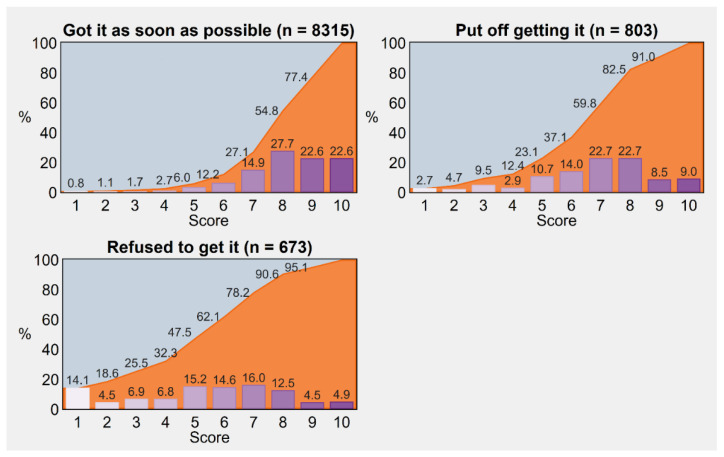
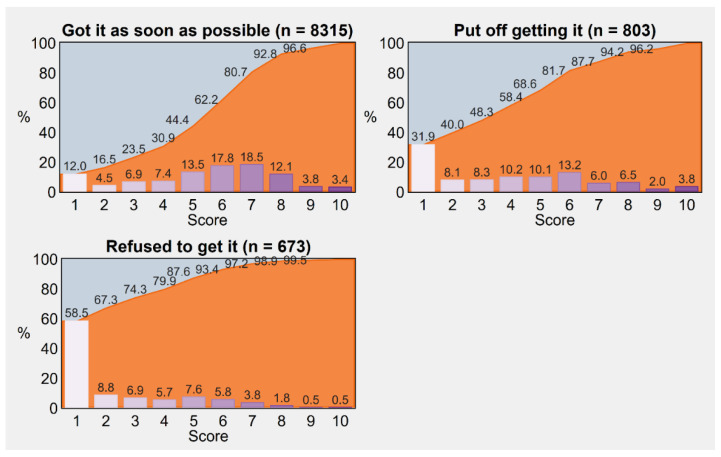
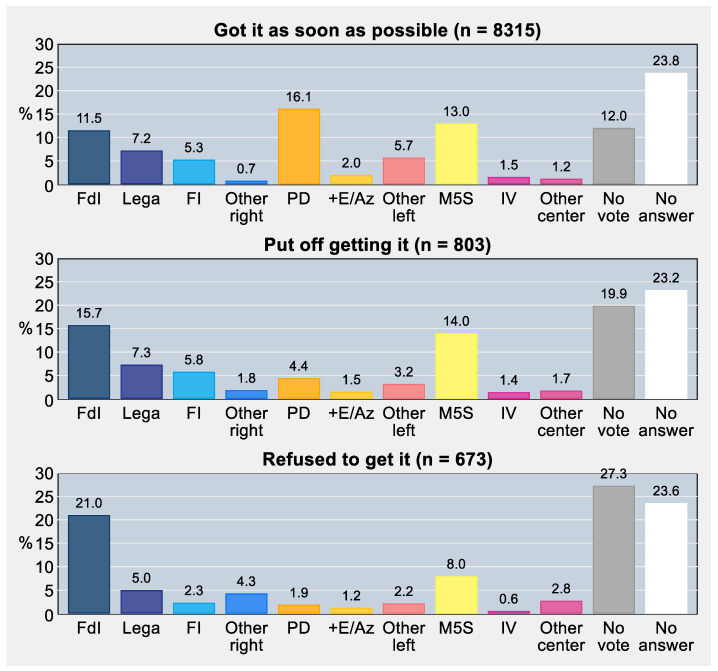
Results: In our sample, 83.2% stated that they were vaccinated as soon as possible ("vaccinators"), 8.0% delayed vaccination ("delayers"), and 6.7% refused to be vaccinated ("no-vaccinators"). In general, the results show that being female, aged between 25 and 64, with an education level less than a high school diploma or above a master's degree, and coming from a rural area were characteristics significantly associated with delaying or refusing COVID-19 vaccination. In addition, it was found that having minimal trust in science and/or government (i.e., 1 or 2 points on a scale from 1 to 10), using alternative medicine as the main source of treatment, and intention to vote for certain parties were characteristics associated with profiles of "delayers" or "no-vaccinators". Finally, the main reported motivation for delaying or not accepting vaccination was fear of vaccine side effects (55.0% among delayers, 55.6% among no-vaccinators).
Conclusion: In this study, three main profiles of those who chose to be vaccinated are described. Since those who are in favor of vaccines and those who are not usually cluster in similar sociodemographic categories, we argue that findings from this study might be useful to policy makers when shaping vaccine strategies and choosing policy instruments.
Keywords: COVID-19 vaccine; Italy; policy tools; vaccine hesitancy; vaccine uptake.
Conflict of interest statement
Julie Leask has received funding from the World Health Organization for research and consultancy. Heidi J. Larson received a grant for the Vaccine Confidence Project from Merch, J&J, and GSK. The remaining authors declare no conflict of interest.
Figures
References
-
- World Health Organization Agenda, Policy & Strategy, Immunization, Vaccines and Biologicals, Strategic Advisory Group of Experts on Immunization. Understanding the Behavioural and Social Drivers of Vaccine Uptake WHO Position Paper–May 2022. [(accessed on 6 February 2023)]. Available online: https://www.who.int/publications/i/item/who-wer9720-209-224.
-
- World Health Organization Ten Threats to Global Health in 2019. [(accessed on 31 January 2023)]. Available online: https://www.who.int/news-room/spotlight/ten-threats-to-global-health-in-....
-
- Betsch C., Böhm R., Chapman G.B. Using Behavioral Insights to Increase Vaccination Policy Effectiveness. Policy Insights Behav. Brain Sci. 2015;2:61–73. doi: 10.1177/2372732215600716. - DOI
Grants and funding
LinkOut - more resources
Full Text Sources
