. 2023 Apr 28;13(1):6993.
doi: 10.1038/s41598-023-34166-z.

On-admission and dynamic trend of laboratory profiles as prognostic biomarkers in COVID-19 inpatients

Affiliations

On-admission and dynamic trend of laboratory profiles as prognostic biomarkers in COVID-19 inpatients

Fatemeh Siavoshi et al. Sci Rep. .

Abstract

This large-scale study aimed to investigate the trend of laboratory tests of patients with COVID-19. Hospitalized confirmed and probable COVID-19 patients in three general hospitals were examined from March 20, 2020, to June 18, 2021. The confirmed and probable COVID-19 patients with known outcomes and valid laboratory results were included. The least absolute shrinkage and selection operator (LASSO) and Cox regression were used to select admittance prognostic features. Parallel Pairwise Comparison of mortality versus survival was used to examine the trend of markers. In the final cohort, 11,944 patients were enrolled, with an in-hospital mortality rate of 21.8%, mean age of 59.4 ± 18.0, and a male-to-female ratio of 1.3. Abnormal admittance level of white blood cells, neutrophils, lymphocytes, mean cellular volume, urea, creatinine, bilirubin, creatine kinase-myoglobin binding, lactate dehydrogenase (LDH), Troponin, c-reactive protein (CRP), potassium, and creatinine phosphokinase reduced the survival of COVID-19 inpatients. Moreover, the trend analysis showed lymphocytes, platelet, urea, CRP, alanine transaminase (ALT), and LDH have a dissimilar trend in non-survivors compared to survived patients. This study proposed a novel approach to find serial laboratory markers. Serial examination of platelet count, creatinine, CRP, LDH, and ALT can guide healthcare professionals in finding patients at risk of deterioration.


Conflict of interest statement

The authors declare no competing interests.

Figures
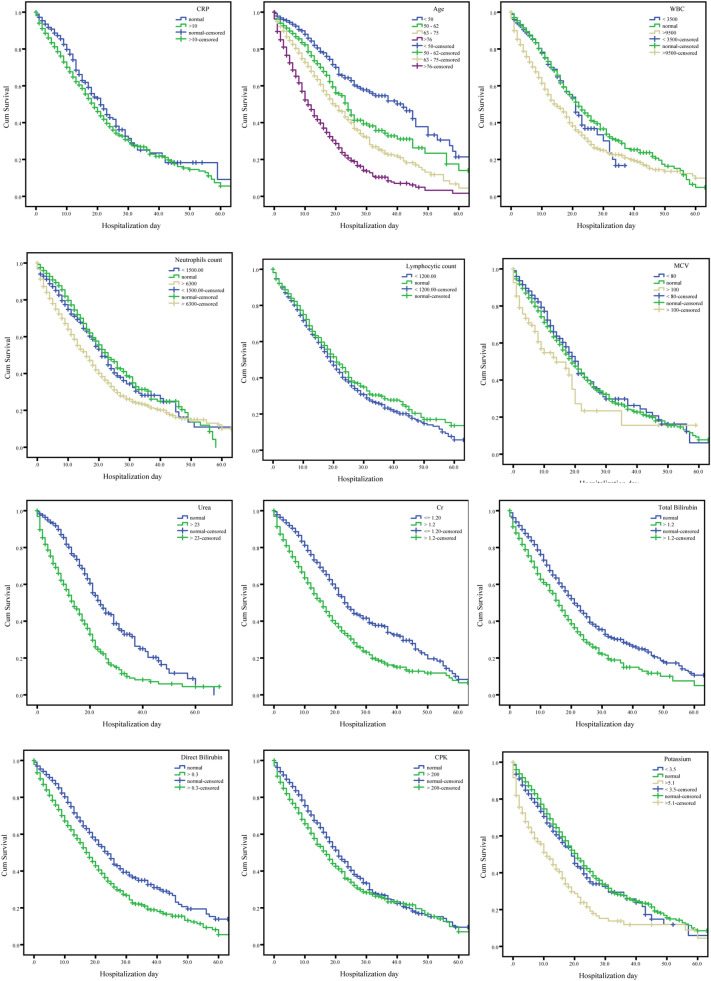
Figure 1
Figure 1
Survival curves of prognostic factors and admittance lab results of COVID-19 in hospitalized patients. (Footnote Abbreviations: CRP C-reactive protein; WBC White blood cell; MCV Mean corpuscular volume; Cr Creatinine; CPK Creatine phosphokinase).
Figure 2
Figure 2
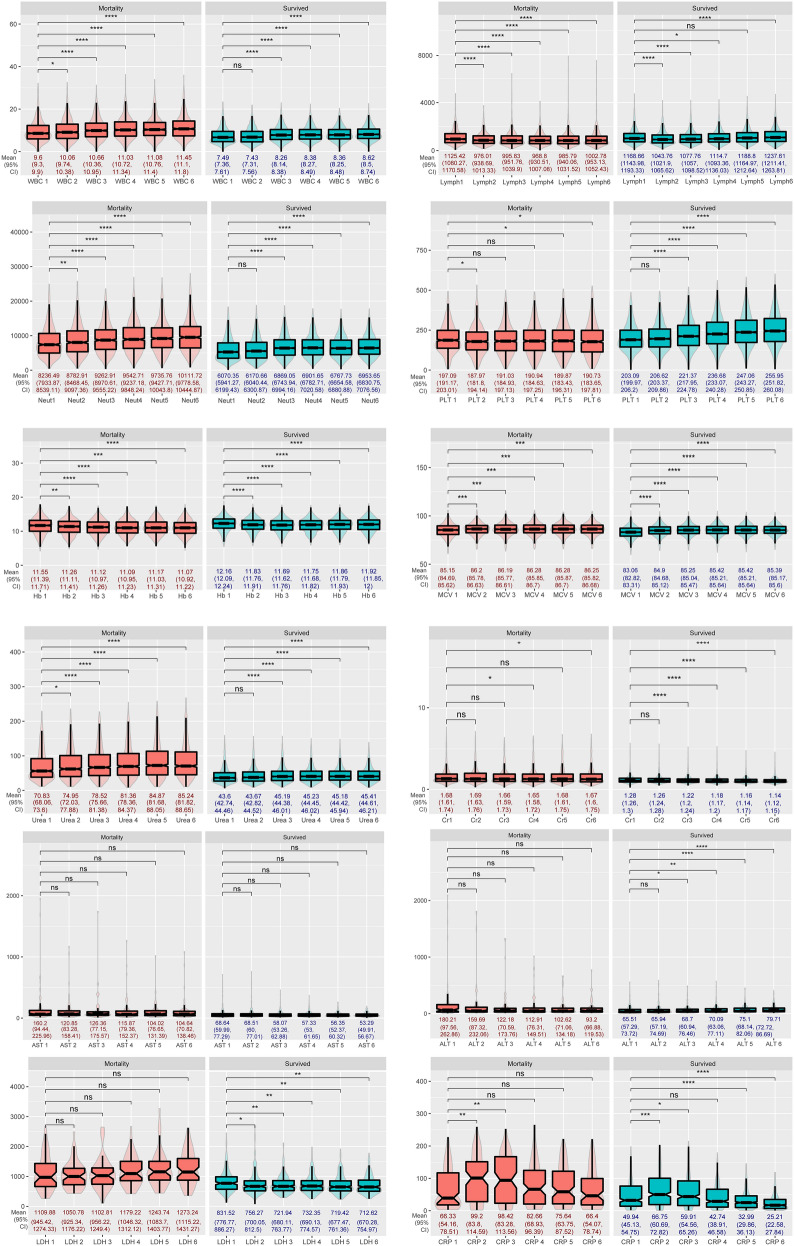
Serial laboratory values among COVID-19 inpatients (Footnote Wilcoxon signed-rank test used to evaluate p-value for all presented lab values. After outlier removal and selecting patients with a minimum of 4 valid data point number of patients are as follow (Mortality vs. Survived): WBC: 1284 vs. 4018, lymphocyte count: 927 vs. 2984, Neutrophil count: 932 vs. 2984, PLT: 950 vs. 3005, Hb: 964 vs. 3042, MCV: 972 vs. 3062, Urea: 1101 vs. 3571, Cr: 1097 vs. 3559, AST: 100 vs. 428, ALT: 99 vs. 424, LDH: 62 vs. 226, CRP: 103 vs. 417. Abbreviations: WBC White blood cell; Lymph Lymphocyte count; Neut Neutrophil count; PLT Platelet; Hb Hemoglobin; MCV Mean corpuscular volume; Cr Creatinine; AST Aspartate transaminase; ALT Alanine transaminase; LDH Lactate dehydrogenase; CRP C-reactive protein).
Figure 3
Figure 3
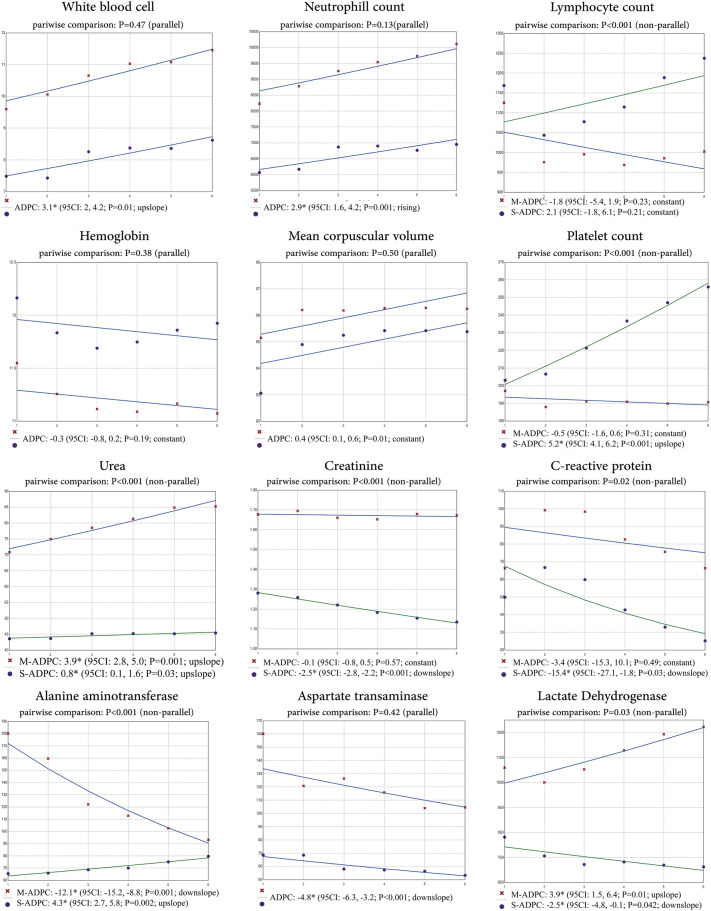
The joinpoint pairwise comparison (parallel) analysis of laboratory trends in survived COVID-19 inpatients versus patients who did not survive. (Footnote Red cross: Mortality; Blue dot: Survived. Abbreviations: ADPC Average daily percent change, 95CI 95% confidence interval, M-ADPC ADPC for mortality cohort, S-ADPC ADPC for the survived cohort).
Figure 4
Figure 4
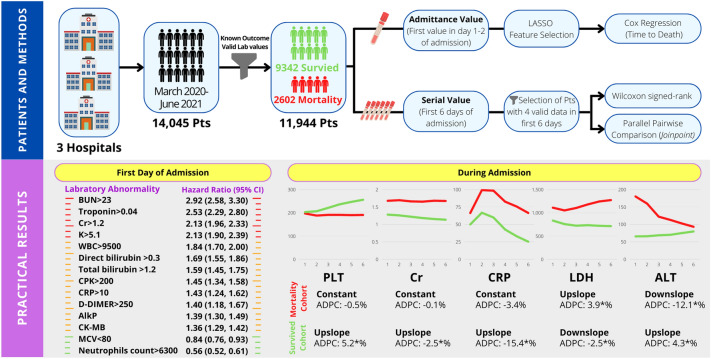
Summary of study method and population.

References

    1. WHO COVID-19 Dashboard. (World Health Organization, Geneva, 2020). Available online: https://covid19.who.int/ (last cited: 17 February 2023).
    1. Wang H, et al. Estimating excess mortality due to the COVID-19 pandemic: A systematic analysis of COVID-19-related mortality, 2020–21. The Lancet. 2022;399:1513–1536. doi: 10.1016/S0140-6736(21)02796-3. - DOI - PMC - PubMed
    1. Mohapatra RK, et al. The recently emerged BA.4 and BA.5 lineages of Omicron and their global health concerns amid the ongoing wave of COVID-19 pandemic—Correspondence. Int. J. Surg. 2022;103:106698. doi: 10.1016/j.ijsu.2022.106698. - DOI - PMC - PubMed
    1. Long B, et al. Clinical update on COVID-19 for the emergency clinician: Presentation and evaluation. Am. J. Emerg. Med. 2022;54:46–57. doi: 10.1016/j.ajem.2022.01.028. - DOI - PMC - PubMed
    1. Hariyanto TI, et al. Inflammatory and hematologic markers as predictors of severe outcomes in COVID-19 infection: A systematic review and meta-analysis. Am. J. Emerg. Med. 2021;41:110–119. doi: 10.1016/j.ajem.2020.12.076. - DOI - PMC - PubMed