. 2023 Jul;41(3):575-602.
doi: 10.5534/wjmh.220282. Epub 2023 Apr 10.

Controversy and Consensus on Indications for Sperm DNA Fragmentation Testing in Male Infertility: A Global Survey, Current Guidelines, and Expert Recommendations

Ashok Agarwal  1   2 Ala'a Farkouh  1 Ramadan Saleh  3 Taha Abo-Almagd Abdel-Meguid Hamoda  4   5 Ahmed M Harraz  6   7   8 Parviz Kavoussi  9 Mohamed Arafa  10   11   12 Gianmaria Salvio  13 Amarnath Rambhatla  14 Tuncay Toprak  15 Murat Gül  16 Nguyen Ho Vinh Phuoc  17   18 Florence Boitrelle  19   20 Ponco Birowo  21 Ramy Abou Ghayda  22 Rossella Cannarella  23 Shinnosuke Kuroda  24 Damayanthi Durairajanayagam  25 Armand Zini  26 Christine Wyns  27 Selcuk Sarikaya  28 Kelton Tremellen  29 Taymour Mostafa  12 Ioannis Sokolakis  30 Donald P Evenson  31 Ralf Henkel  32   33   34 Wael Zohdy  12 Eric Chung  35 Imad Ziouziou  36 Marco Falcone  37 Giorgio I Russo  38 Manaf Al-Hashimi  39   40 Aldo E Calogero  23 Edmund Ko  41 Giovanni Colpi  42 Sheena Lewis  43 Ege Can Serefoglu  44 Fahmi Bahar  45 Marlon Martinez  46 Quang Nguyen  47   48 Rafael F Ambar  49   50 Mustafa Emre Bakircioglu  51 Hussein Kandil  52 Nasser Mogharabian  53 Marjan Sabbaghian  54 Hisanori Taniguchi  55 Akira Tsujimura  56 Hesamoddin Sajadi  54 Wael Ibrahim  57 Widi Atmoko  21 Paraskevi Vogiatzi  58 Sezgin Gunes  59 Mohammad Ali Sadighi Gilani  54 Shubhadeep Roychoudhury  60 Nur Dokuzeylül Güngör  61 Lukman Hakim  62 Ricky Adriansjah  63 Priyank Kothari  64 Sunil Jindal  65 Edouard Amar  66 Hyun Jun Park  67   68 Tran Quang Tien Long  69 Sheryl Homa  70 Vilvapathy Senguttuvan Karthikeyan  71 Birute Zilaitiene  72 Israel Maldonado Rosas  73 Angelo Marino  74 Edoardo Pescatori  75 Cevahir Ozer  76 Hamed Akhavizadegan  77 Nicolas Garrido  78 Gian Maria Busetto  79 Aram Adamyan  80 Mohamed Al-Marhoon  81 Haitham Elbardisi  10   11 Parisa Dolati  82 Mahsa Darbandi  83   84 Sara Darbandi  83   84 Giancarlo Balercia  13 Germar-Michael Pinggera  85 Sava Micic  86 Christopher Chee Kong Ho  87 Mohamad Moussa  88   89 Mirko Preto  37 Cătălina Zenoaga-Barbăroșie  90 Ryan P Smith  91 Raghavender Kosgi  92 Jean de la Rosette  93 Ahmed I El-Sakka  94 Saad Mohammed Abumelha  95 Tiago Cesar Mierzwa  96 Teng Aik Ong  97 Saleem A Banihani  98 Kasonde Bowa  99 Shinichiro Fukuhara  100 Luca Boeri  101 Yavuz Onur Danacıoğlu  102 Fatih Gokalp  103 Osama Mohamed Selim  12 Chak-Lam Cho  104 Nicholas N Tadros  105 Muhammet Rasit Ugur  106 Mehmet Serkan Ozkent  107 Peter Chiu  104 Arif Kalkanli  108 Kareim Khalafalla  10   109 Ranjit B Vishwakarma  110 Federica Finocchi  13   111 Sotiris Andreadakis  112 Carlo Giulioni  113 Gökhan Çeker  114   115 Erman Ceyhan  76 Vineet Malhotra  116 Mehmet Yilmaz  117 Massimiliano Timpano  37 Trenton L Barrett  118 Shannon Hee Kyung Kim  119   120 Sun-Tae Ahn  121 Filippo Giacone  122 Ayad Palani  123 Gede Wirya Kusuma Duarsa  124 Ates Kadioglu  125 Franco Gadda  101 Daniel Suslik Zylbersztejn  126 Kaan Aydos  127 Deniz Kulaksız  128 Deepak Gupte  129 Gokhan Calik  130 Keshab Kumar Karna  131 Panagiotis Drakopoulos  132   133 Aykut Baser  134 Vijay Kumar  135 Juan Manuel Corral Molina  136 Osvaldo Rajmil  137 Raphael H Ferreira  138 Sofia Leonardi  139 Armen Avoyan  140 Emrullah Sogutdelen  141 Giorgio Franco  142 Jonathan Ramsay  143 Liliana Ramirez  73 Rupin Shah  110 Global Andrology Forum
Affiliations

Controversy and Consensus on Indications for Sperm DNA Fragmentation Testing in Male Infertility: A Global Survey, Current Guidelines, and Expert Recommendations

Ashok Agarwal et al. World J Mens Health. 2023 Jul.

Abstract

Purpose: Sperm DNA fragmentation (SDF) testing was recently added to the sixth edition of the World Health Organization laboratory manual for the examination and processing of human semen. Many conditions and risk factors have been associated with elevated SDF; therefore, it is important to identify the population of infertile men who might benefit from this test. The purpose of this study was to investigate global practices related to indications for SDF testing, compare the relevant professional society guideline recommendations, and provide expert recommendations.

Materials and methods: Clinicians managing male infertility were invited to take part in a global online survey on SDF clinical practices. This was conducted following the CHERRIES checklist criteria. The responses were compared to professional society guideline recommendations related to SDF and the appropriate available evidence. Expert recommendations on indications for SDF testing were then formulated, and the Delphi method was used to reach consensus.

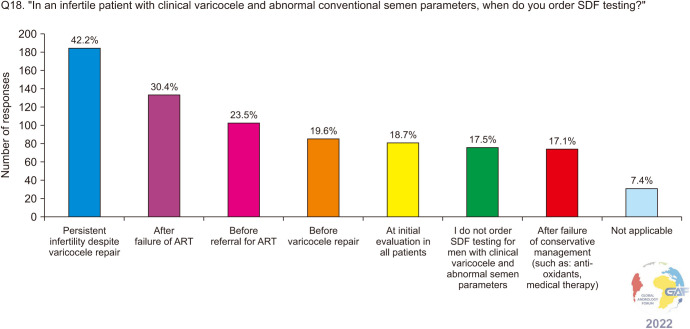
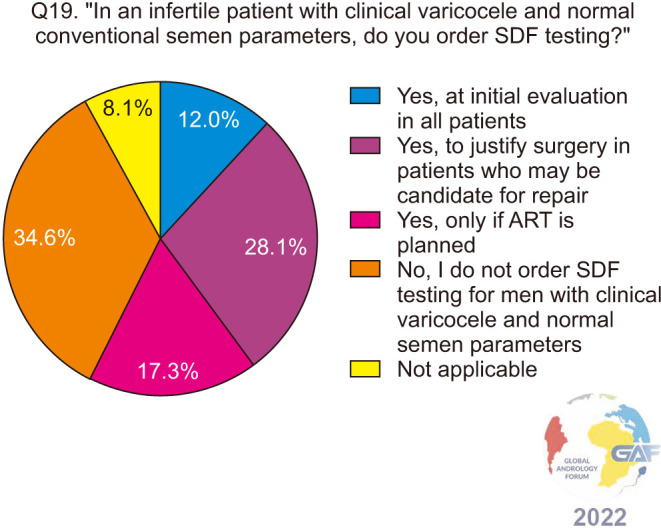
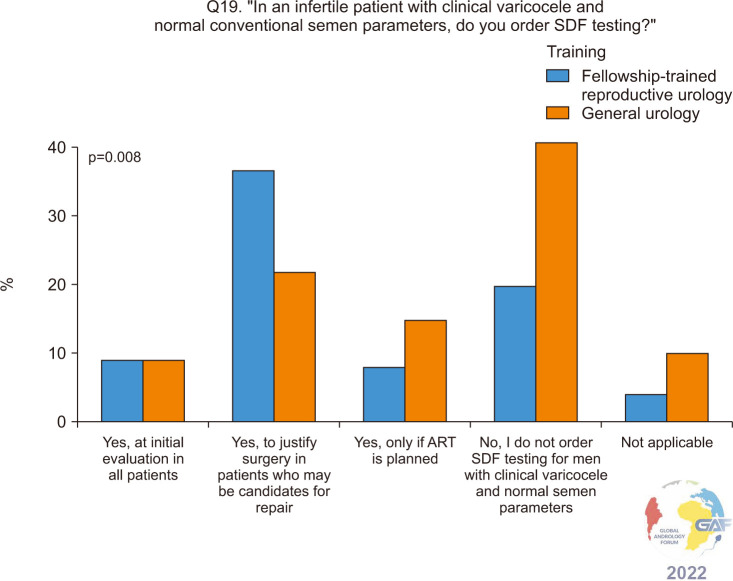
Results: The survey was completed by 436 experts from 55 countries. Almost 75% of respondents test for SDF in all or some men with unexplained or idiopathic infertility, 39% order it routinely in the work-up of recurrent pregnancy loss (RPL), and 62.2% investigate SDF in smokers. While 47% of reproductive urologists test SDF to support the decision for varicocele repair surgery when conventional semen parameters are normal, significantly fewer general urologists (23%; p=0.008) do the same. Nearly 70% would assess SDF before assisted reproductive technologies (ART), either always or for certain conditions. Recurrent ART failure is a common indication for SDF testing. Very few society recommendations were found regarding SDF testing.

Conclusions: This article presents the largest global survey on the indications for SDF testing in infertile men, and demonstrates diverse practices. Furthermore, it highlights the paucity of professional society guideline recommendations. Expert recommendations are proposed to help guide clinicians.

Keywords: DNA fragmentation; Delphi method; Male infertility; Practice guidelines; Sperm; Survey.


Conflict of interest statement

The authors have nothing to disclose.

Figures
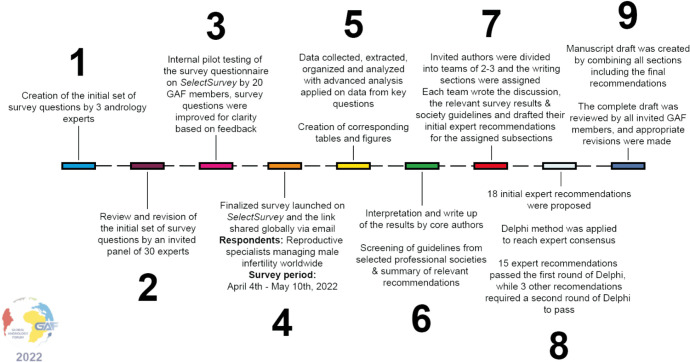
Fig. 1
Fig. 1. Complete survey methodology. The complete survey consisted of 64 questions on SDF clinical practices divided into five sections: demographics, indications for SDF testing, technical aspects of SDF testing, management of elevated SDF, and barriers in incorporating SDF into clinical practice. A total of 18 recommendations were made as follows: seven for indications for SDF testing, ten for management of infertile men with elevated SDF, and one for technical aspects of SDF testing. Passing criteria for the Delphi method was set at >80% scoring the recommendation ≥7 in agreement. GAF: Global Andrology Forum, SDF: sperm DNA fragmentation.
Fig. 2
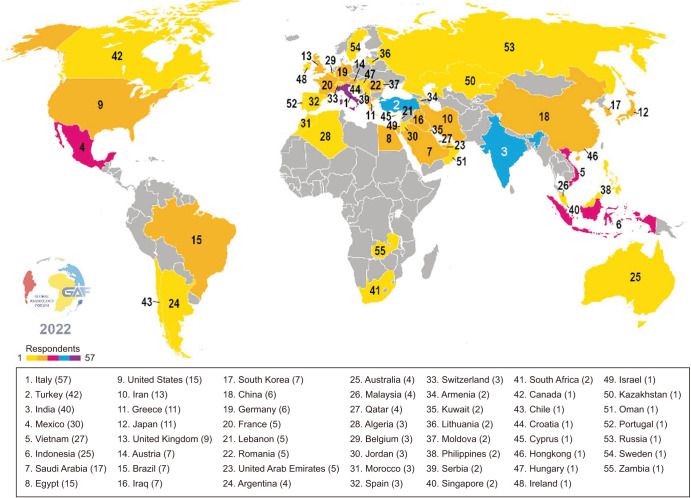
Fig. 2. Geographical distribution of respondents. The number of respondents is shown in brackets after the name of each country. The purple color indicates the country with the greatest number of respondents (Italy; n=57), the blue color indicates the countries with the second and third highest responses (n=40 or above), the pink color indicates countries with responses between 20 and 30, the orange color represents those countries with 5–19 responses, while the yellow color indicates countries with less than 5 respondents.
Fig. 3
Fig. 3. Specialties of the survey respondents. ART: assisted reproductive technologies.
Fig. 4
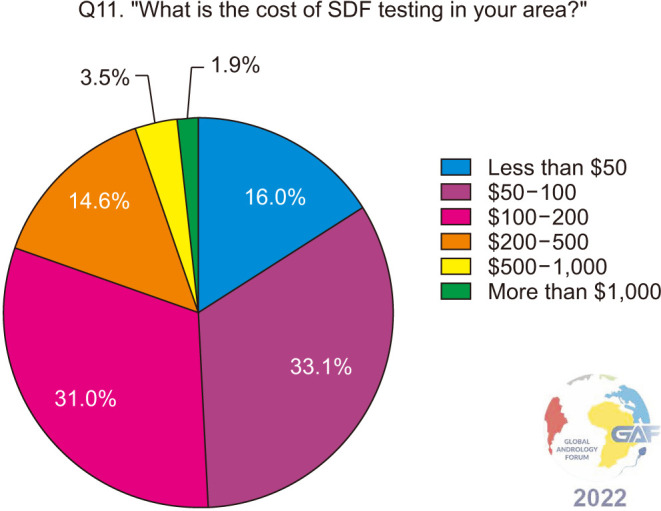
Fig. 4. Cost of sperm DNA fragmentation (SDF) testing.
Fig. 5
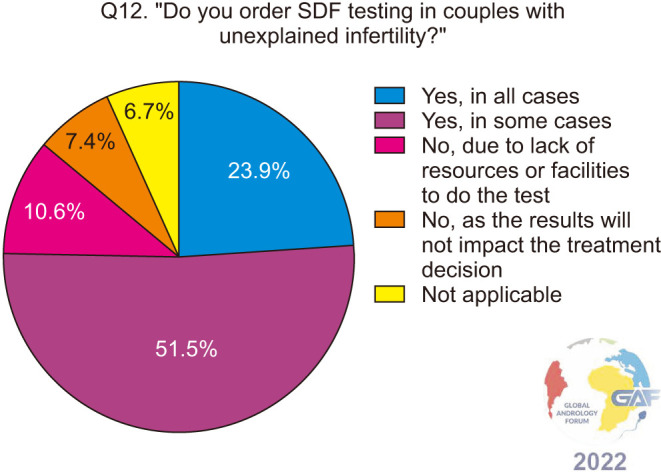
Fig. 5. Sperm DNA fragmentation (SDF) testing in couples with unexplained infertility.
Fig. 6
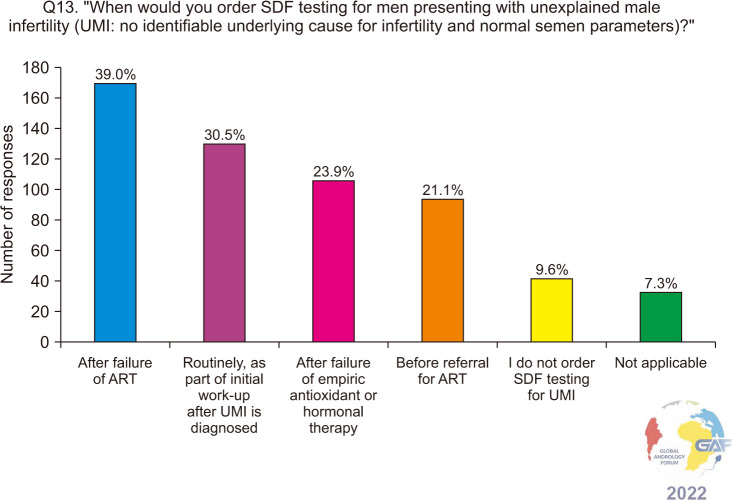
Fig. 6. Timing of sperm DNA fragmentation (SDF) testing in unexplained male infertility (UMI). Respondents were allowed to select more than one answer. The percentage for each answer was calculated by dividing the number of respondents who had selected it by the total number of respondents who had answered this question (n=436). ART: assisted reproductive technologies.
Fig. 7
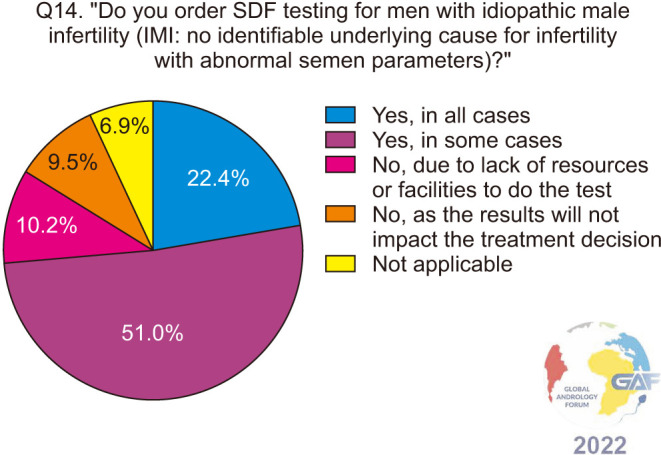
Fig. 7. Sperm DNA fragmentation (SDF) testing in idiopathic male infertility (IMI).
Fig. 8
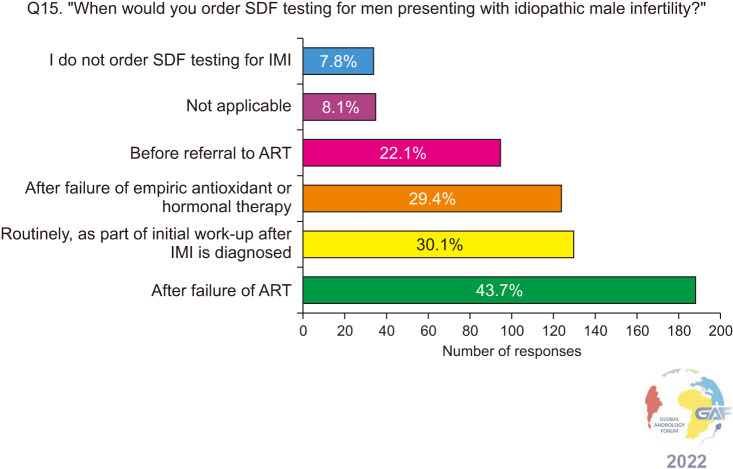
Fig. 8. Timing of sperm DNA fragmentation (SDF) testing in idiopathic male infertility (IMI). Respondents were allowed to select more than one answer. The percentage for each answer was calculated by dividing the number of respondents who had selected it by the total number of respondents who had answered this question (n=435). ART: assisted reproductive technologies.
Fig. 9
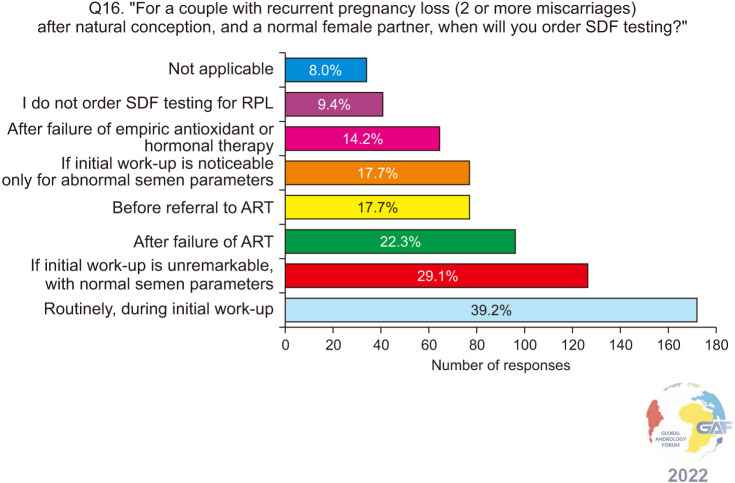
Fig. 9. Sperm DNA fragmentation (SDF) testing after recurrent pregnancy loss (RPL). Respondents were allowed to select more than one answer. The percentage for each answer was calculated by dividing the number of respondents who had selected it by the total number of respondents who had answered this question (n=436). ART: assisted reproductive technologies.
Fig. 10
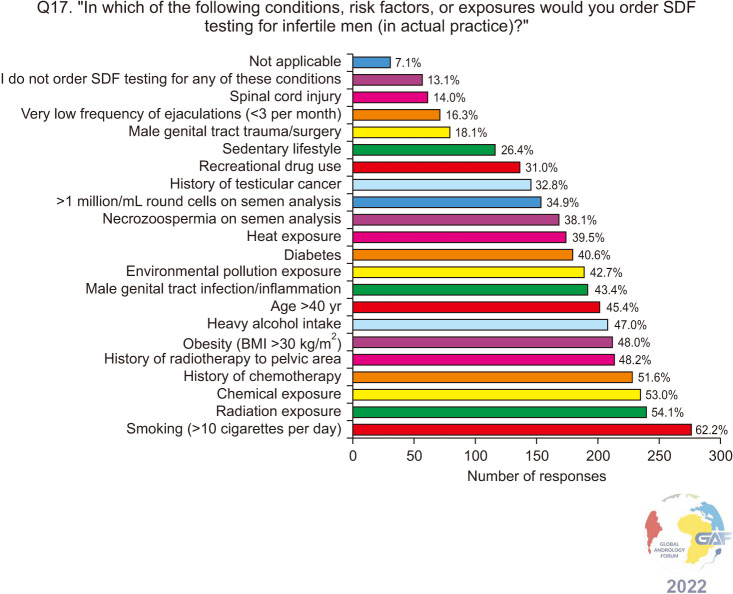
Fig. 10. Sperm DNA fragmentation (SDF) testing in men with risk factors and exposures. Respondents were allowed to select more than one answer. The percentage for each answer was calculated by dividing the number of respondents who had selected it by the total number of respondents who had answered this question (n=436). BMI: body mass index.
Fig. 11
Fig. 11. Ordering sperm DNA fragmentation (SDF) testing for infertile men with clinical varicocele and normal conventional semen parameters. Respondents were allowed to select more than one answer. The percentage for each answer was calculated by dividing the number of respondents who had selected it by the total number of respondents who had answered this question (n=434). ART: assisted reproductive technologies.
Fig. 12
Fig. 12. Ordering sperm DNA fragmentation (SDF) testing for infertile men with clinical varicocele and normal conventional semen parameters. ART: assisted reproductive technologies.
Fig. 13
Fig. 13. Ordering sperm DNA fragmentation (SDF) testing for infertile men with clinical varicocele and normal conventional semen parameters, with responses stratified according to the level of training among urologists. Fellowship-trained reproductive urologists tend to order more SDF testing in this population of men to justify varicocele surgery compared to general urologists who are more inclined to refuse SDF testing. The differences between the practices of both groups are significant (p=0.008). ART: assisted reproductive technologies.
Fig. 14
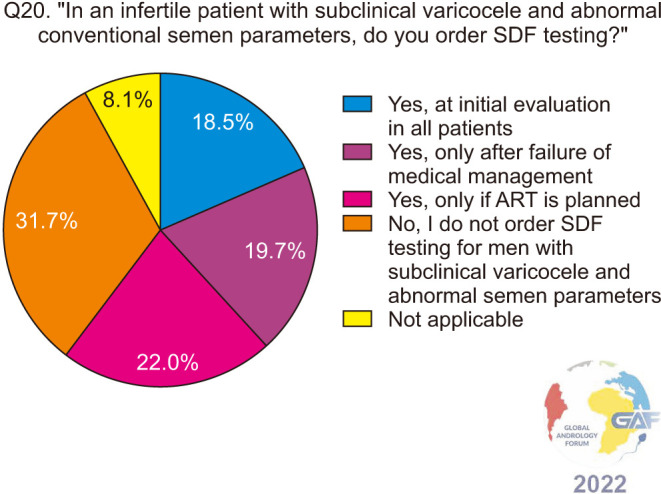
Fig. 14. Ordering sperm DNA fragmentation (SDF) testing for infertile men with subclinical varicocele and abnormal conventional semen parameters. ART: assisted reproductive technologies.
Fig. 15
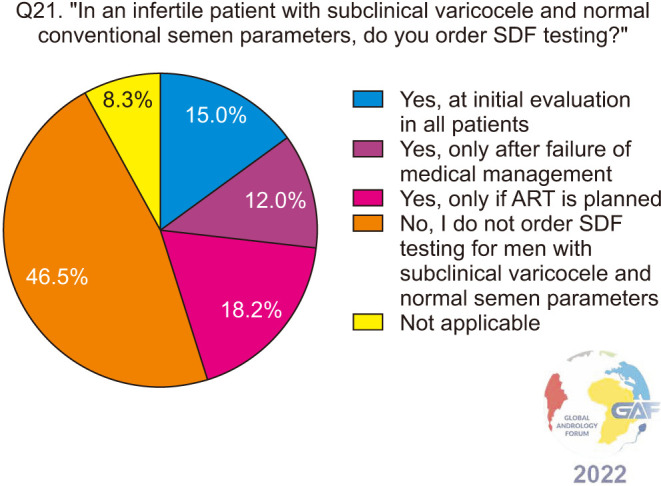
Fig. 15. Ordering sperm DNA fragmentation (SDF) testing for infertile men with subclinical varicocele and normal conventional semen parameters. ART: assisted reproductive technologies.
Fig. 16
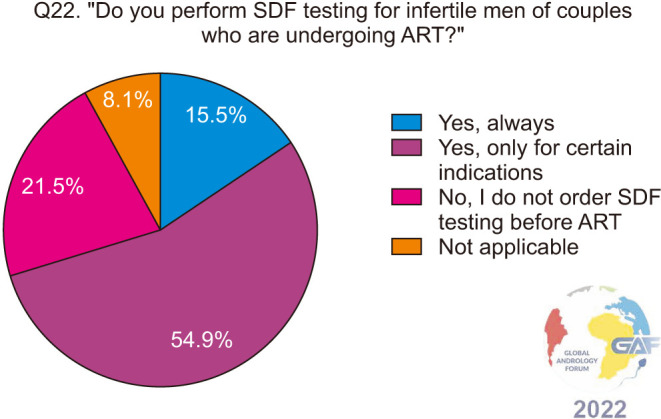
Fig. 16. Sperm DNA fragmentation (SDF) testing for infertile men before assisted reproductive technologies (ART).
Fig. 17
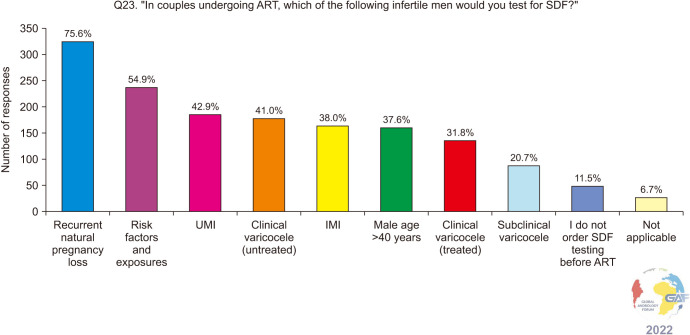
Fig. 17. Conditions before ART for which sperm DNA fragmentation (SDF) testing is ordered by respondents. Respondents were allowed to select more than one answer. The percentage for each answer was calculated by dividing the number of respondents who had selected it by the total number of respondents who had answered this question (n=434). ART: assisted reproductive technologies, IMI: idiopathic male infertility, UMI: unexplained male infertility.
Fig. 18
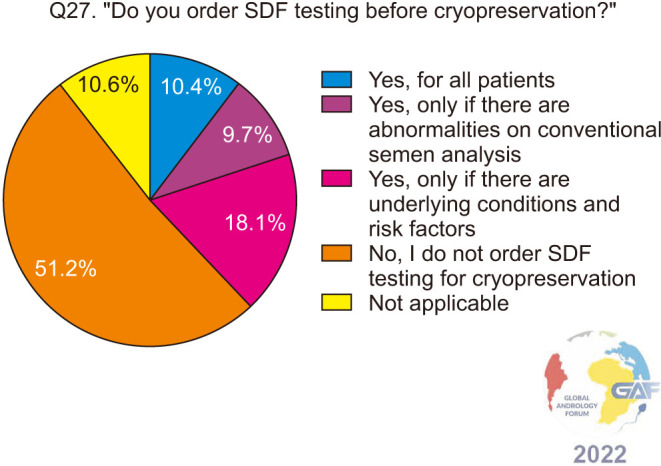
Fig. 18. Sperm DNA fragmentation (SDF) testing before sperm cryopreservation.
Fig. 19
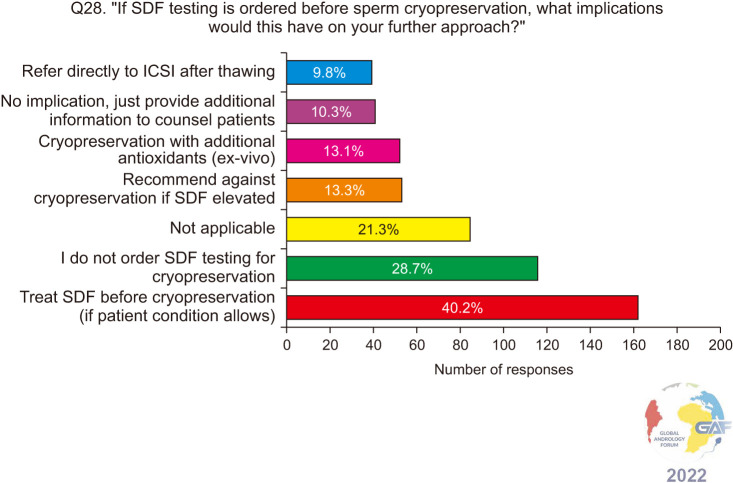
Fig. 19. Approach if elevated sperm DNA fragmentation (SDF) is found prior to cryopreservation. Respondents were allowed to select more than one answer. The percentage for each answer was calculated by dividing the number of respondents who had selected it by the total number of respondents who had answered this question (n=428). ICSI: intracytoplasmic sperm injection.
Fig. 20
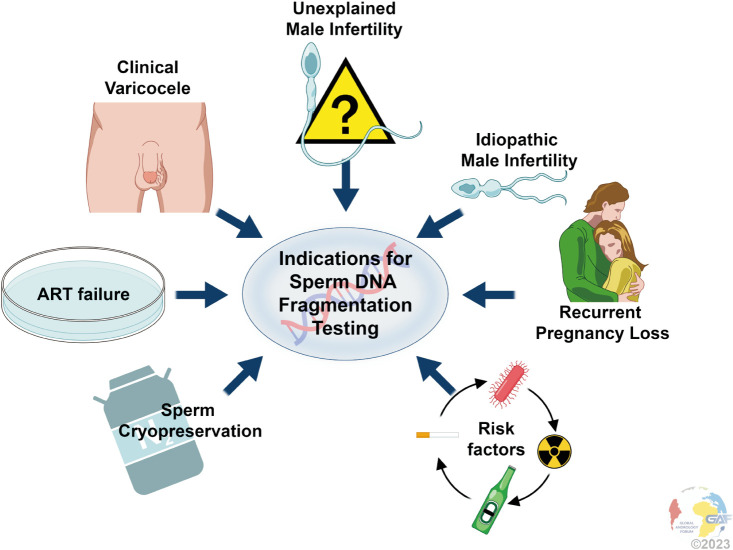
Fig. 20. Indications for sperm DNA fragmentation testing.

References

    1. Agarwal A, Panner Selvam MK, Baskaran S, Cho CL. Sperm DNA damage and its impact on male reproductive health: a critical review for clinicians, reproductive professionals and researchers. Expert Rev Mol Diagn. 2019;19:443–457. - PubMed
    1. Shukla KK, Mahdi AA, Rajender S. Apoptosis, spermatogenesis and male infertility. Front Biosci (Elite Ed) 2012;4:746–754. - PubMed
    1. Muratori M, Marchiani S, Tamburrino L, Baldi E. Sperm DNA fragmentation: mechanisms of origin. Adv Exp Med Biol. 2019;1166:75–85. - PubMed
    1. Björndahl L, Kvist U. Structure of chromatin in spermatozoa. Adv Exp Med Biol. 2014;791:1–11. - PubMed
    1. Bui AD, Sharma R, Henkel R, Agarwal A. Reactive oxygen species impact on sperm DNA and its role in male infertility. Andrologia. 2018;50:e13012. - PubMed