


Inhaled mRNA therapy for treatment of cystic fibrosis: Interim results of a randomized, double-blind, placebo-controlled phase 1/2 clinical study
- PMID: 37121795
- PMCID: PMC10524666
- DOI: 10.1016/j.jcf.2023.04.008
Inhaled mRNA therapy for treatment of cystic fibrosis: Interim results of a randomized, double-blind, placebo-controlled phase 1/2 clinical study
Abstract
Background: MRT5005, a codon-optimized CFTR mRNA, delivered by aerosol in lipid nanoparticles, was designed as a genotype-agnostic treatment for CF lung disease.
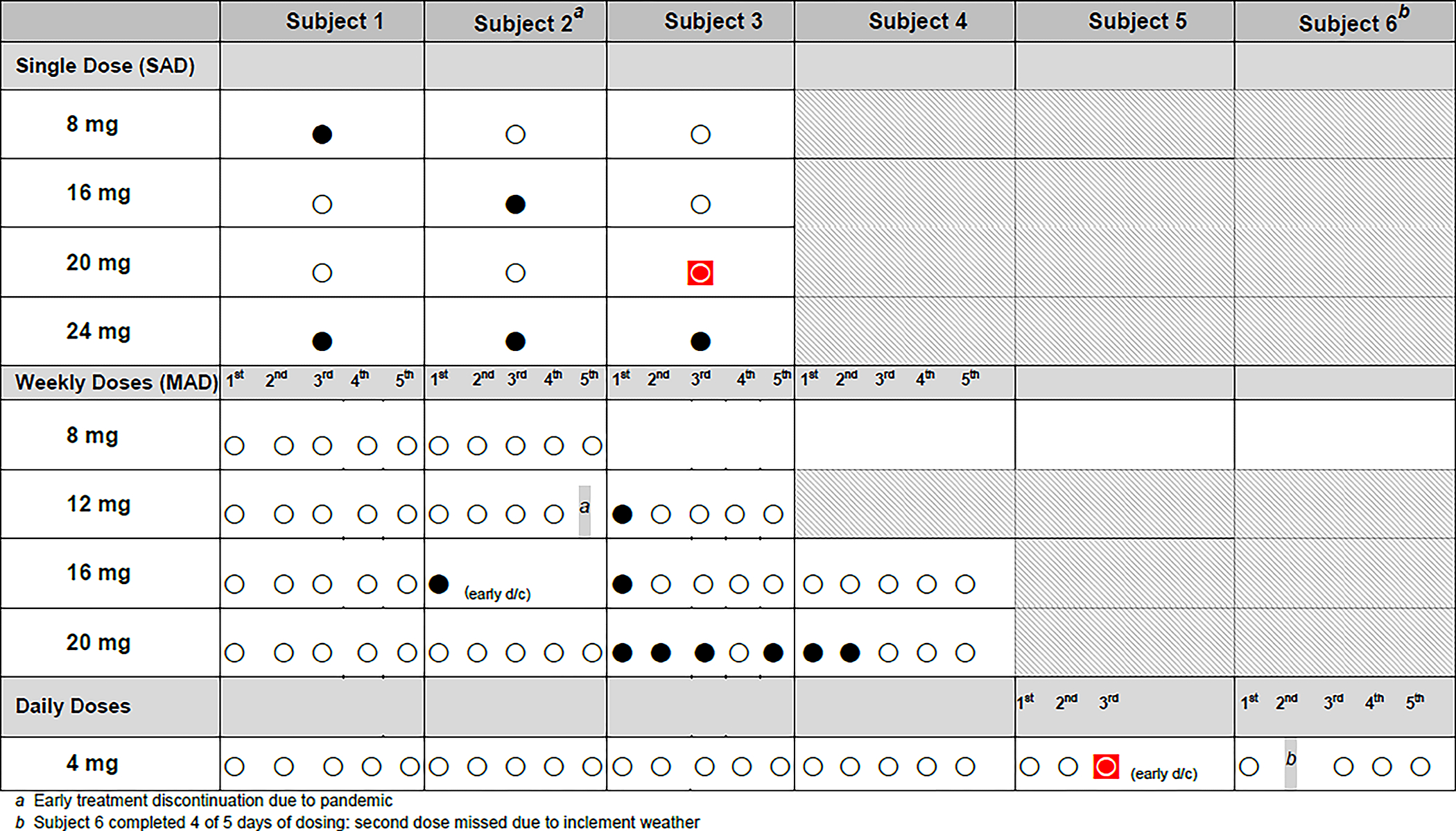
Methods: This was a randomized, double-blind, placebo-controlled Phase 1/2 study performed in the US. Adults with 2 severe class I and/or II CFTR mutations and baseline ppFEV1 values between 50 and 90% were randomized 3:1 (MRT5005: placebo). Six dose levels of MRT5005 (4, 8, 12, 16, 20, and 24 mg) or placebo (0.9% Sodium Chloride) were administered by nebulization. The single ascending dose cohort was treated over a range from 8 to 24 mg; the multiple ascending dose cohort received five weekly doses (range 8-20 mg); and the daily dosing cohort received five daily doses (4 mg).
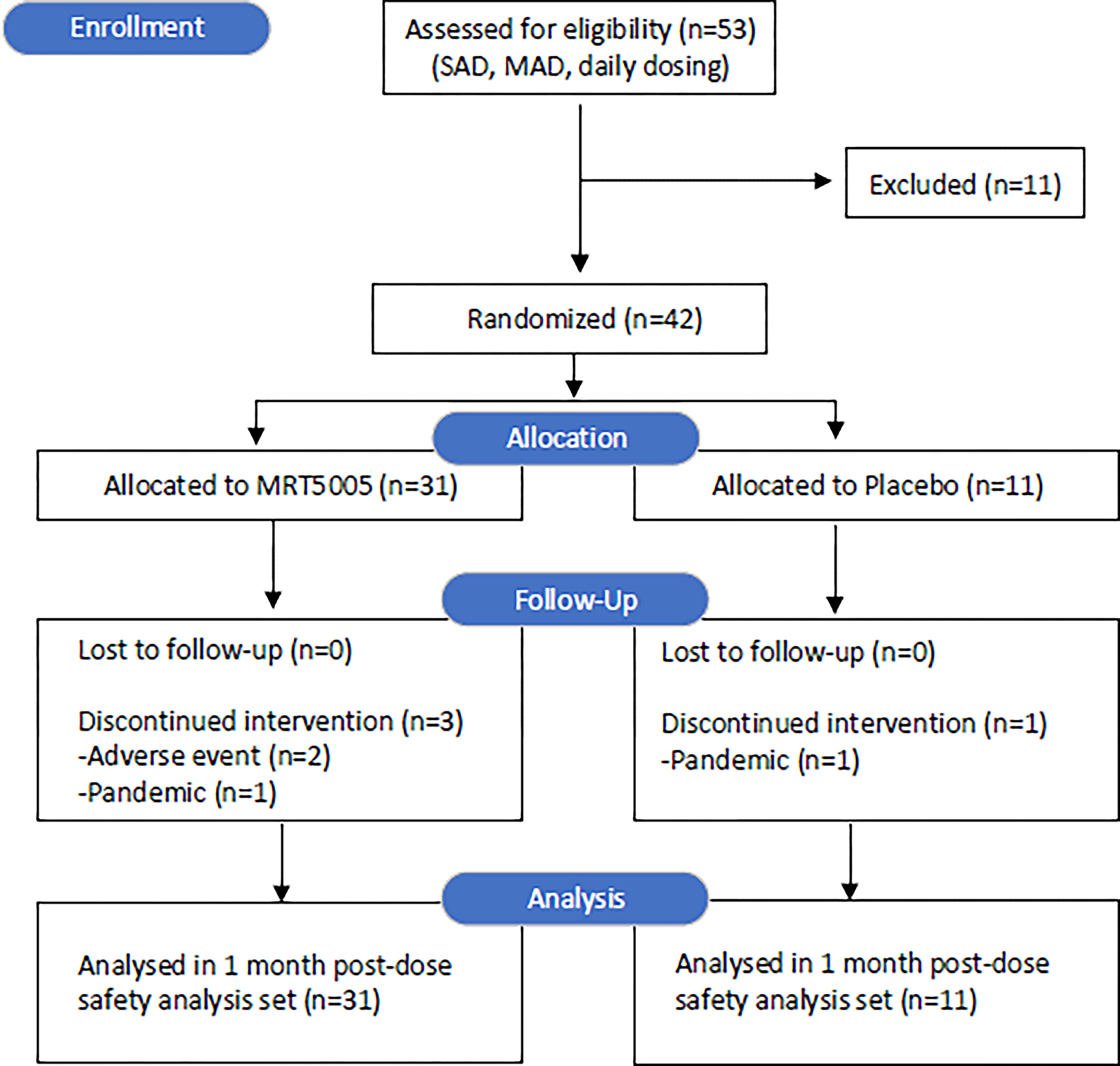
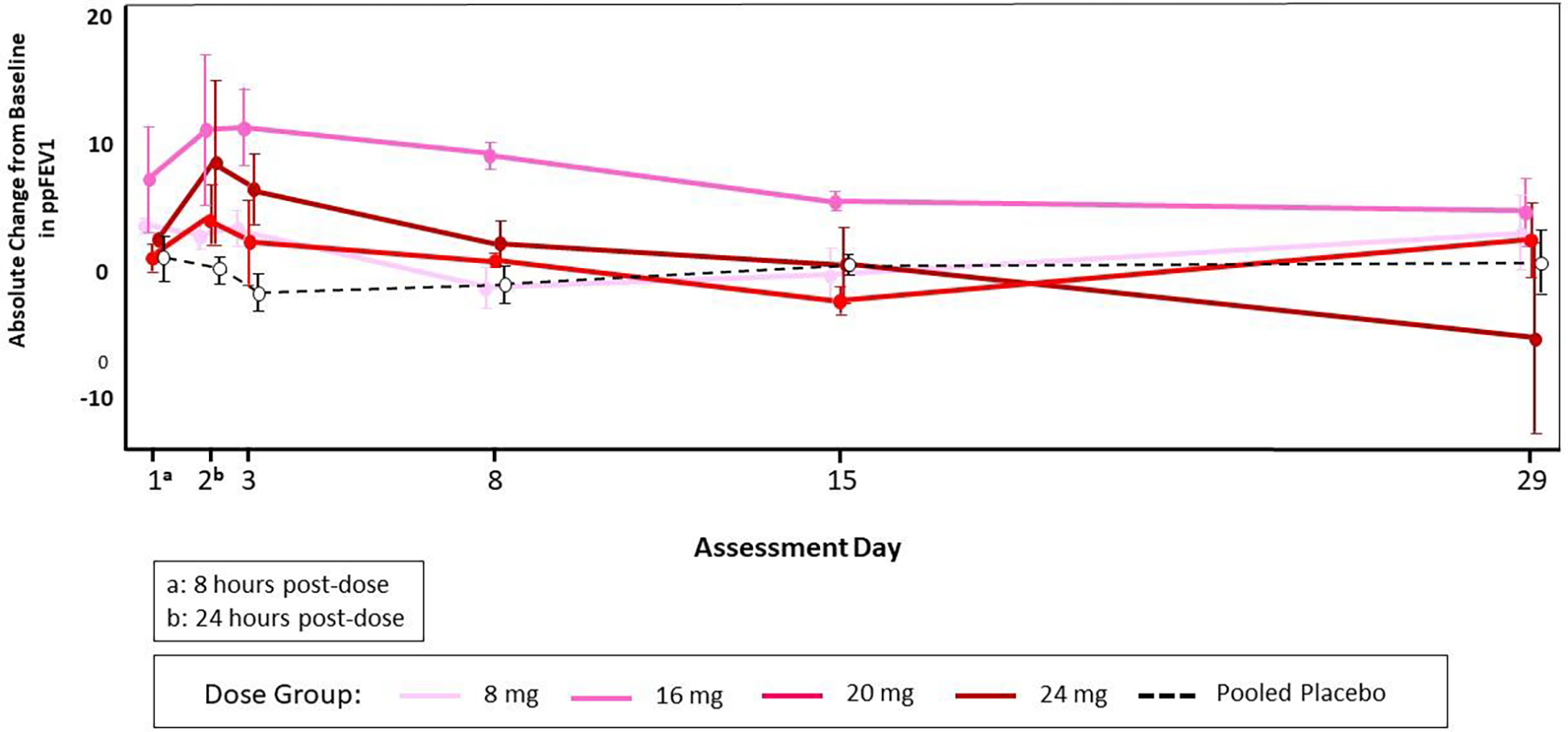
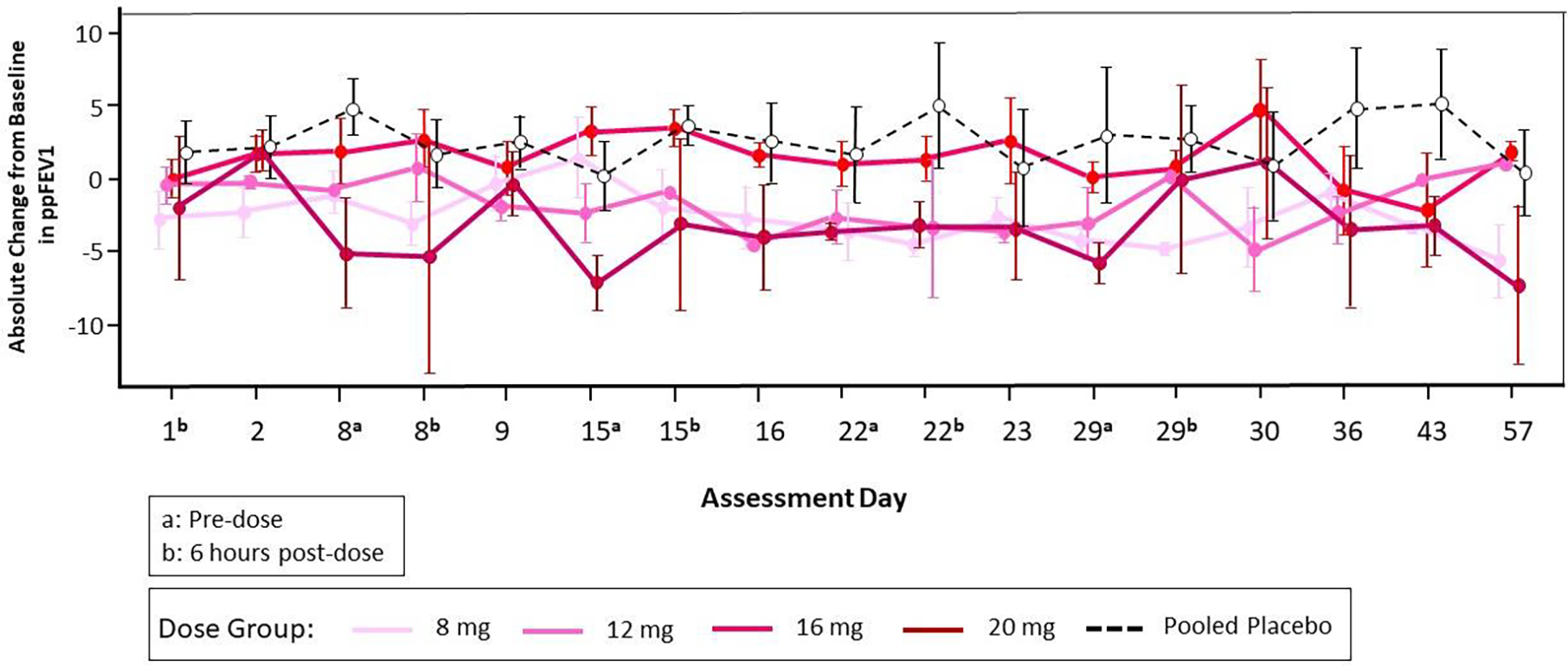
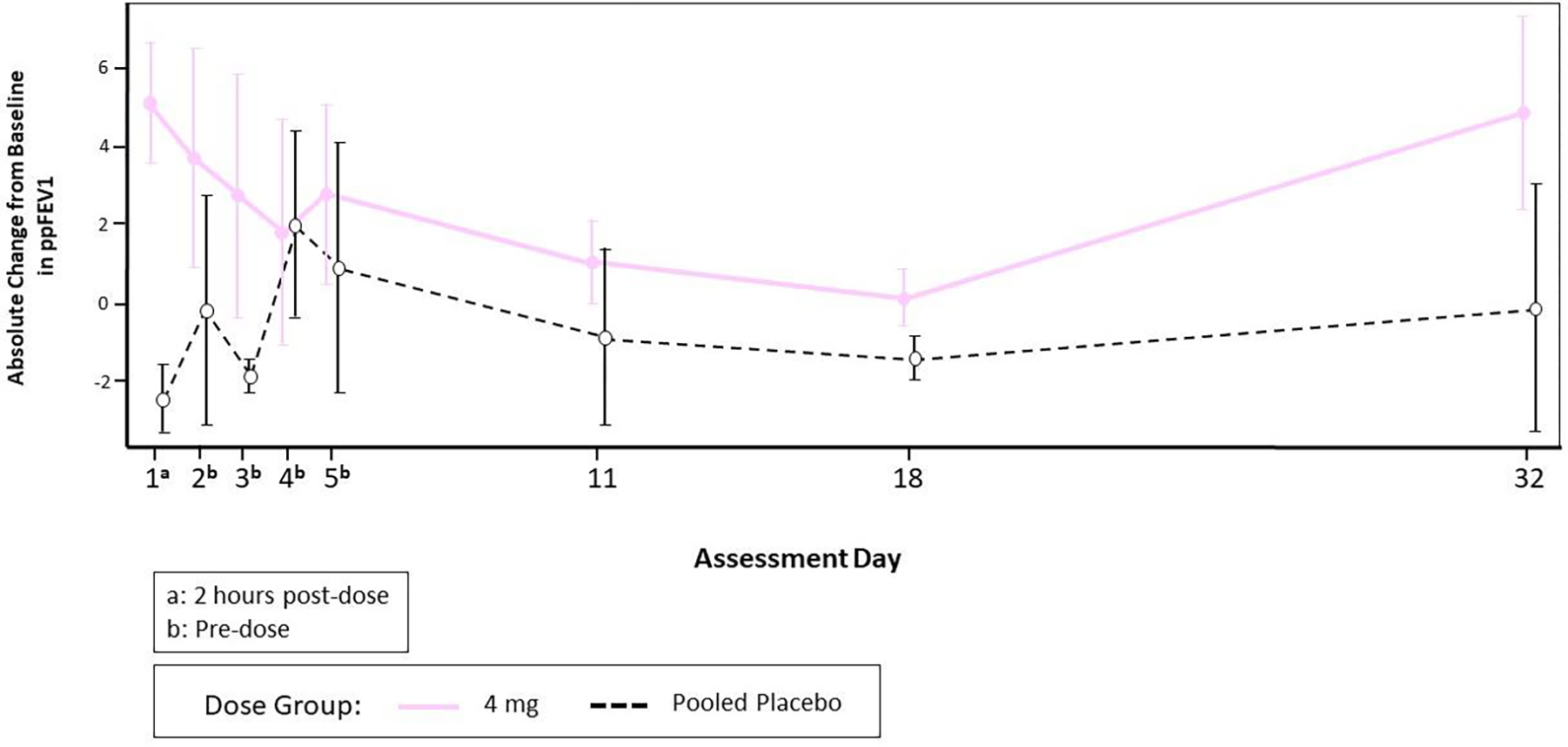
Results: A total of 42 subjects were assigned to MRT5005 [31] or placebo [11]. A total of 14 febrile reactions were observed in 10 MRT5005-treated participants, which were mild [3] or moderate [11] in severity; two subjects discontinued related to these events. Additionally, two MRT5005-treated patients experienced hypersensitivity reactions, which were managed conservatively. The most common treatment emergent adverse events were cough and headache. No consistent effects on FEV1 were noted.
Conclusions: MRT5005 was generally safe and well tolerated through 28 days of follow-up after the last dose, though febrile and hypersensitivity reactions were noted. The majority of these reactions resolved within 1-2 days with supportive care allowing continued treatment with MRT5005 and careful monitoring. In this small first-in-human study, FEV1 remained stable after treatment, but no beneficial effects on FEV1 were observed.
Keywords: Aerosol; Cystic fibrosis; Gene therapy; mRNA therapy.
Copyright © 2023 European Cystic Fibrosis Society. Published by Elsevier B.V. All rights reserved.
Conflict of interest statement
Declaration of Competing Interest The authors have completed ICMJE disclosure of interest forms. MJ, JL, KDM, and SZN report no competing interests. JBZ, CB, JCC, DD, NL, SL, SMR, KAM, KSM, and MSS report clinical trial funding from Translate Bio to their institution for this study. MSS, EBM, KAM, and JCC report support for the current manuscript from Emily's Entourage. DD reports research contracts with Insmed, Inc., Aridis Pharmaceuticals, Armata Pharmaceuticals, and 4D Molecular Therapeutics and fees from the CFF for his role on the Data Safety Monitoring Board (DSMB). DD is a member of the DSMB at the University of Pennsylvania. KSM reports research grants to her institution from the CFF in partnership with 4D Molecular Therapeutics, Abbvie, Aridis Pharmaceuticals, Armata Pharmaceuticals, Boeringer-Ingelheim, Corbus, Insmed, Laurent Pharmaceuticals, Novartis, Eloxx, Vertex Pharmaceuticals, Savara, and Proteostasis for unrelated research. SMR reports research grants to his institution from the CFF in partnership with Novartis, Galapagos/Abbvie, Synedgen/Synspira, Eloxx, Vertex Pharmaceuticals, Ionis, and Astra Zenica for unrelated research. SMR reports consulting fees for clinical trial design and conduct from Novartis, Galapagos/Abbvie, Synedgen/Synspira, Vertex Pharmaceuticals, Renovion, Ionis, Cystetic Medicines, and Arcturus. JBZ reports fees from the CFF for his role on the DSMB and research grants from the CFF in partnership with Laurent Pharmaceuticals, Savara, AzureRx Biopharma, Aridis Pharmaceuticals, and Vertex Pharmaceuticals for unrelated research but no personal payments. AB, EBM and MV were full-time employees of Translate Bio during the conduct of the study. MV was an employee of Rho, Inc. and is currently an employee of Krystal Biotech. MV reports stock options provided to employees of Translate Bio and Krystal Biotech. MV is former board member of the CFF Central Carolinas Chapter. AB is currently on the Board of Directors for Pieris Pharmaceuticals. CB reports research grants from the CFF and CFF Therapeutic Development Network (CFFTDN) in partnership with Vertex pharmaceuticals for unrelated research but no personal payments. MSS reports research grants to his institution from the CFF in partnership with Vertex Pharmaceuticals and consulting fees from Vertex Pharmaceuticals. MVI reports research grants from the CFF and CFFTDN. To advance drug development and a search for a cure, the CFF has contracts with several companies to help fund the development of potential treatments and/or cures for CF. Pursuant to these contracts, CFF may receive milestone-based payments, equity interests, royalties on the net sales of therapies, and/or other forms of consideration. Resulting revenue received by CFF is used in support of their mission.
Figures
Comment in
-
Cystic fibrosis research: The only constant is change.J Cyst Fibros. 2023 Jul;22(4):596-597. doi: 10.1016/j.jcf.2023.07.008. Epub 2023 Sep 6. J Cyst Fibros. 2023. PMID: 37679269 No abstract available.
References
-
- Cystic Fibrosis Foundation Patient Registry - 2021 Annual Data Report 2022 ed. Bethesda, Maryland; 2022.
Publication types
MeSH terms
Substances
Grants and funding
LinkOut - more resources
Full Text Sources
Other Literature Sources
Medical
