Review
. 2023 Mar 21;9(4):614-638.
doi: 10.1021/acscentsci.3c00051. eCollection 2023 Apr 26.

Carbon-Centered Radicals in Protein Manipulation

Affiliations
Review

Carbon-Centered Radicals in Protein Manipulation

Xuanxiao Chen et al. ACS Cent Sci. .

Abstract

Methods to directly post-translationally modify proteins are perhaps the most straightforward and operationally simple ways to create and study protein post-translational modifications (PTMs). However, precisely altering or constructing the C-C scaffolds pervasive throughout biology is difficult with common two-electron chemical approaches. Recently, there has been a surge of new methods that have utilized single electron/radical chemistry applied to site-specifically "edit" proteins that have started to create this potential-one that in principle could be near free-ranging. This review provides an overview of current methods that install such "edits", including those that generate function and/or PTMs, through radical C-C bond formation (as well as C-X bond formation via C• where illustrative). These exploit selectivity for either native residues, or preinstalled noncanonical protein side-chains with superior radical generating or accepting abilities. Particular focus will be on the radical generation approach (on-protein or off-protein, use of light and photocatalysts), judging the compatibility of conditions with proteins and cells, and novel chemical biology applications afforded by these methods. While there are still many technical hurdles, radical C-C bond formation on proteins is a promising and rapidly growing area in chemical biology with long-term potential for biological editing.


Conflict of interest statement

The authors declare no competing financial interest.

Figures
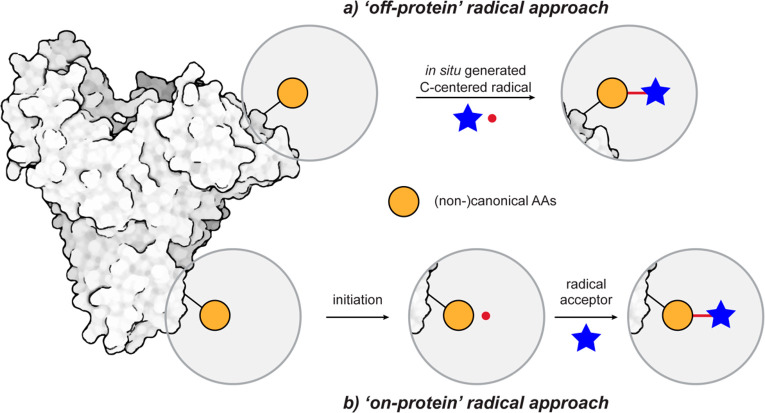
Figure 1
Figure 1
(a) General scheme for “off-protein” radical approach. (b) General scheme for “on-protein” radical protein modification.
Figure 2
Figure 2
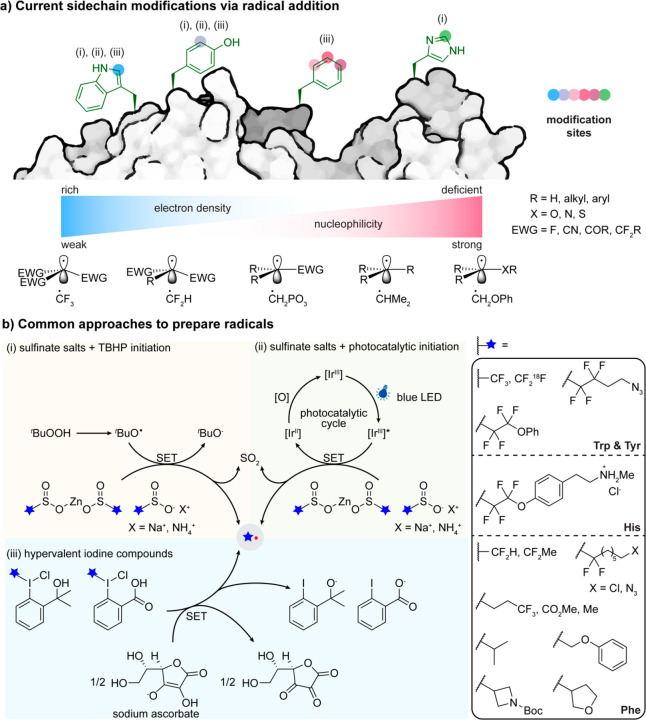
a) Overview of current side-chains that can be attached via radical additions to canonical AAs. b) Selected mechanisms for some common approaches to “off-protein” carbon-centered C• radicals with utility in reactions with canonical AAs. These include (i) sulfinate salts in conjunction with direct oxidant e.g. TBHP; (ii) sulfinate salts in conjunction with photocatalytic oxidant; and (iii) hypervalent iodine salts in conjunction with ascorbate salts.
Figure 3
Figure 3
Suggested mechanism of Tyr-selective peptide functionalization using off-protein radicals, generated from sulfinate salts.
Figure 4
Figure 4
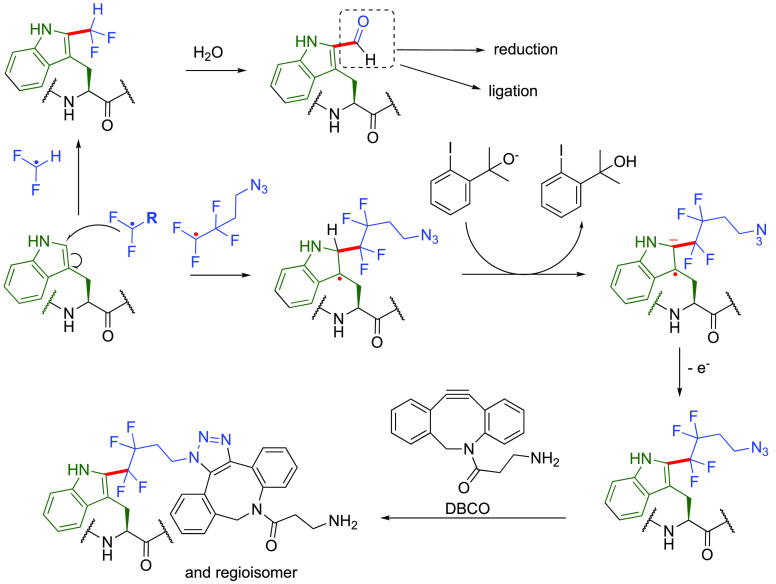
Pathways and mechanisms of Trp-selective protein functionalization using off-protein •CF2R radicals. Reaction at C2 gives a range of modified protein adducts, including variants that react further spontaneously (e.g., via hydrolysis to formyl, top) or via additional e.g. dibenzocyclooctyne (DBCO) derivatives (bottom). A suggested mechanism from hypervalent iodine compounds is shown here (bottom, adapted from ref (47)).
Figure 5
Figure 5
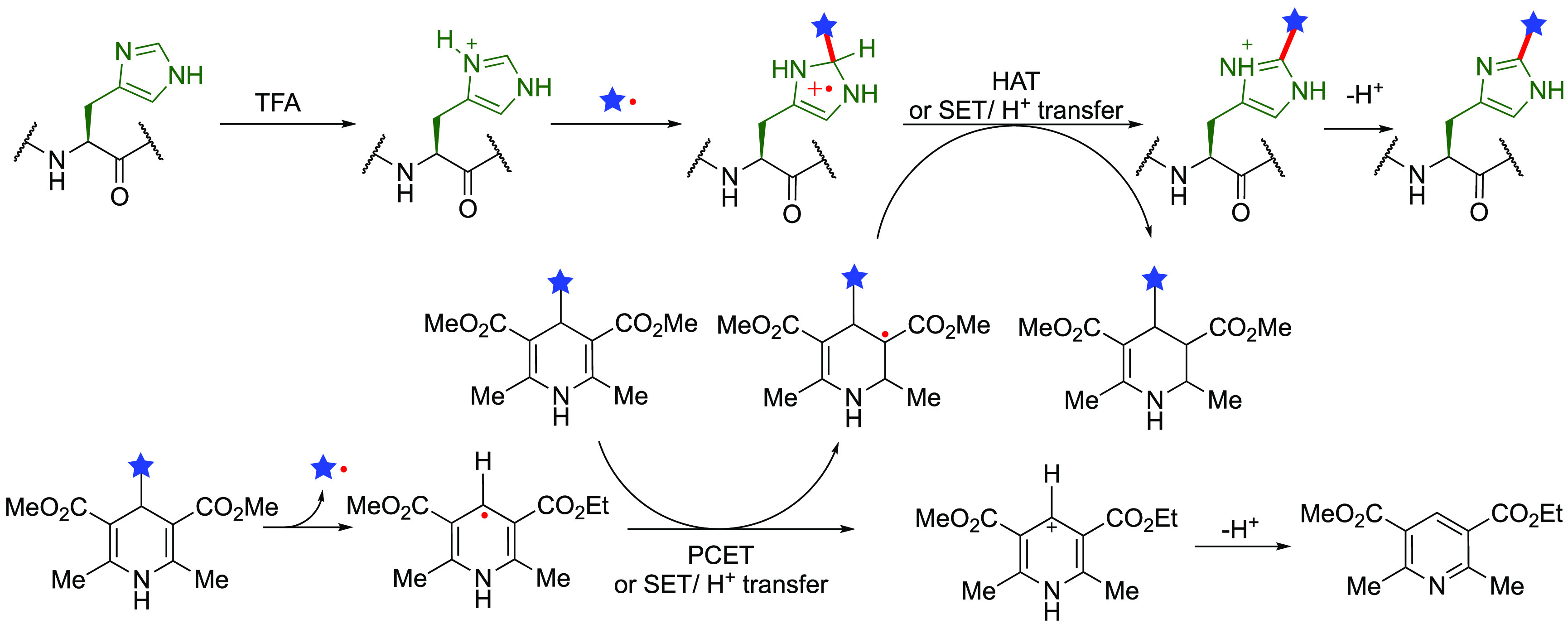
His-selective pathways exploiting imidazolium generation. Altered chemoselectivity, here using Hantzch-type precursors highlights the promise in certain systems but may restrict application to systems tolerant of lower pH. Figure adapted from ref (63). Copyright 2019 American Chemical Society.
Figure 6
Figure 6
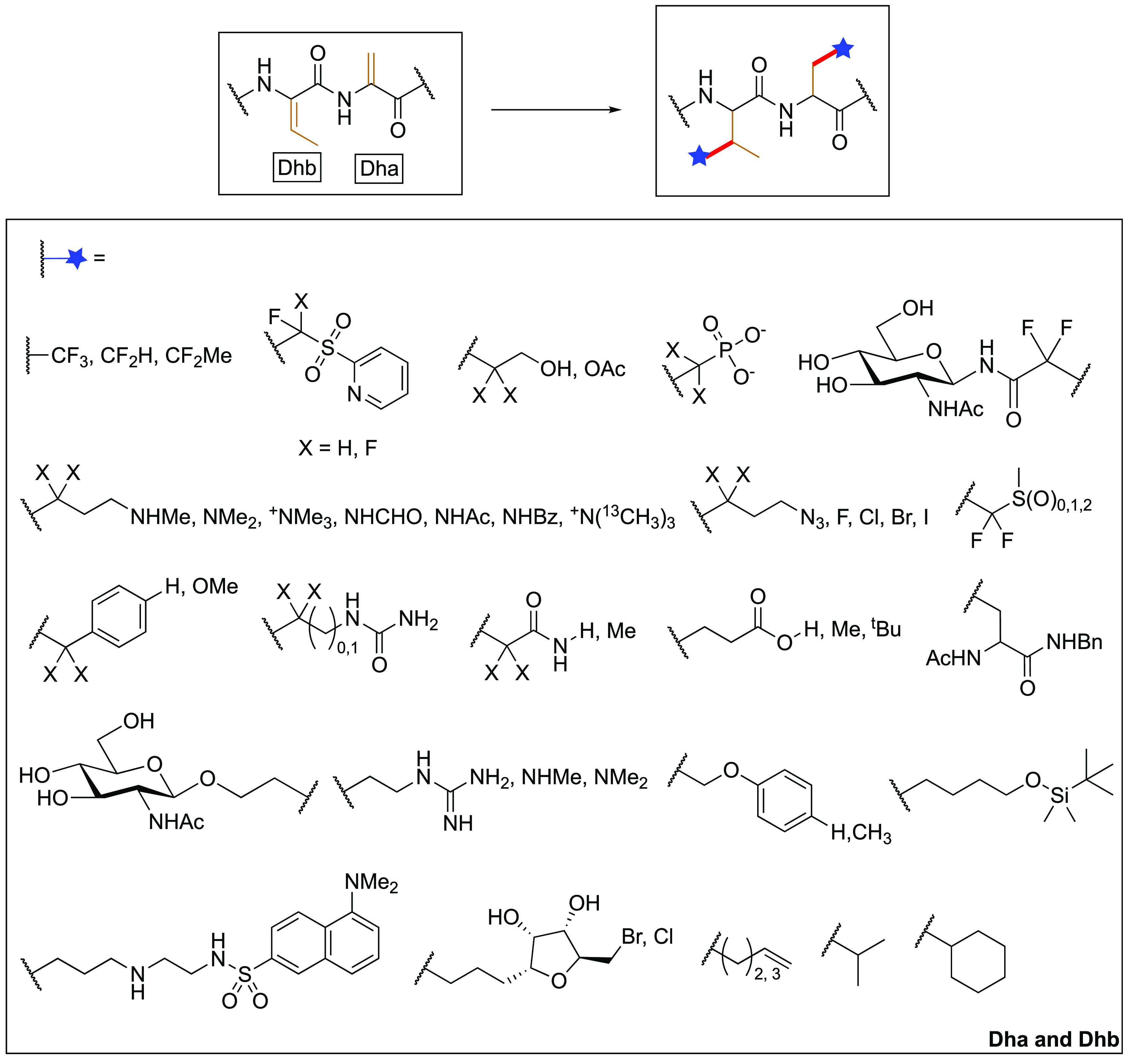
Overview of possible side-chains that can be attached via radical additions to noncanonical AAs in peptides and proteins.,,,
Figure 7
Figure 7
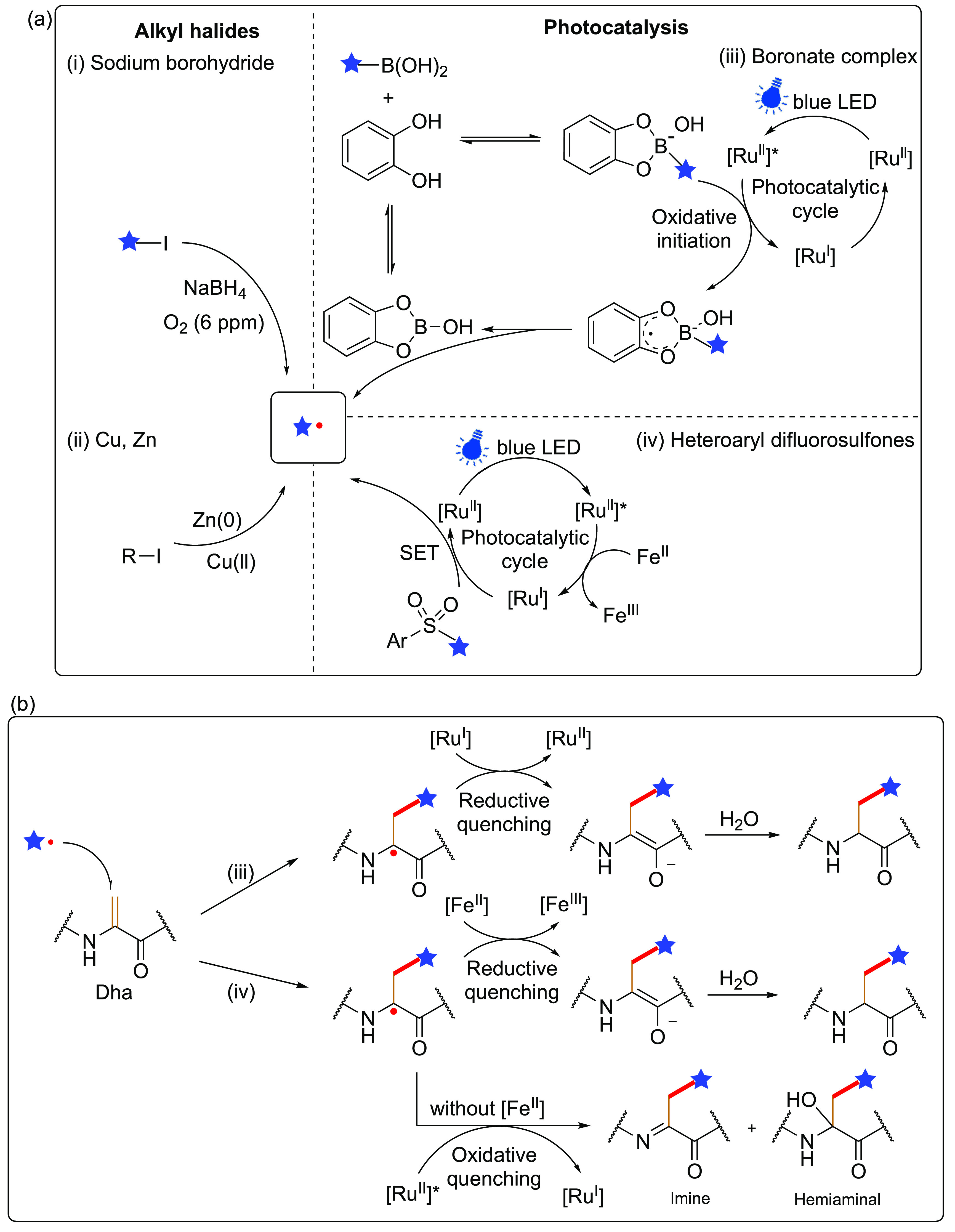
Suggested mechanisms for preparing and using off-protein radical precursors for additions to noncanonical AA Dha. (a) Generation of radicals using (i) alkyl halides in conjunction with sodium borohydride,, (ii) alkyl halides in conjunction with Zn(0) or Cu(ll)/Zn(0),, (iii) organoborates and (iv) heteroaryl difluorosulfones., (b) Suggested associated mechanisms for radical quenching steps of on-protein Cα• radical intermediates in two photocatalytic approaches.
Figure 8
Figure 8
Proposed mechanism and process for installing an on-protein radical precursor via chemoselective reductive initiation through C–I homolysis in the presence of potentially labile C–S (which can then act later as a site for “on-protein” initiation, see below).
Figure 9
Figure 9
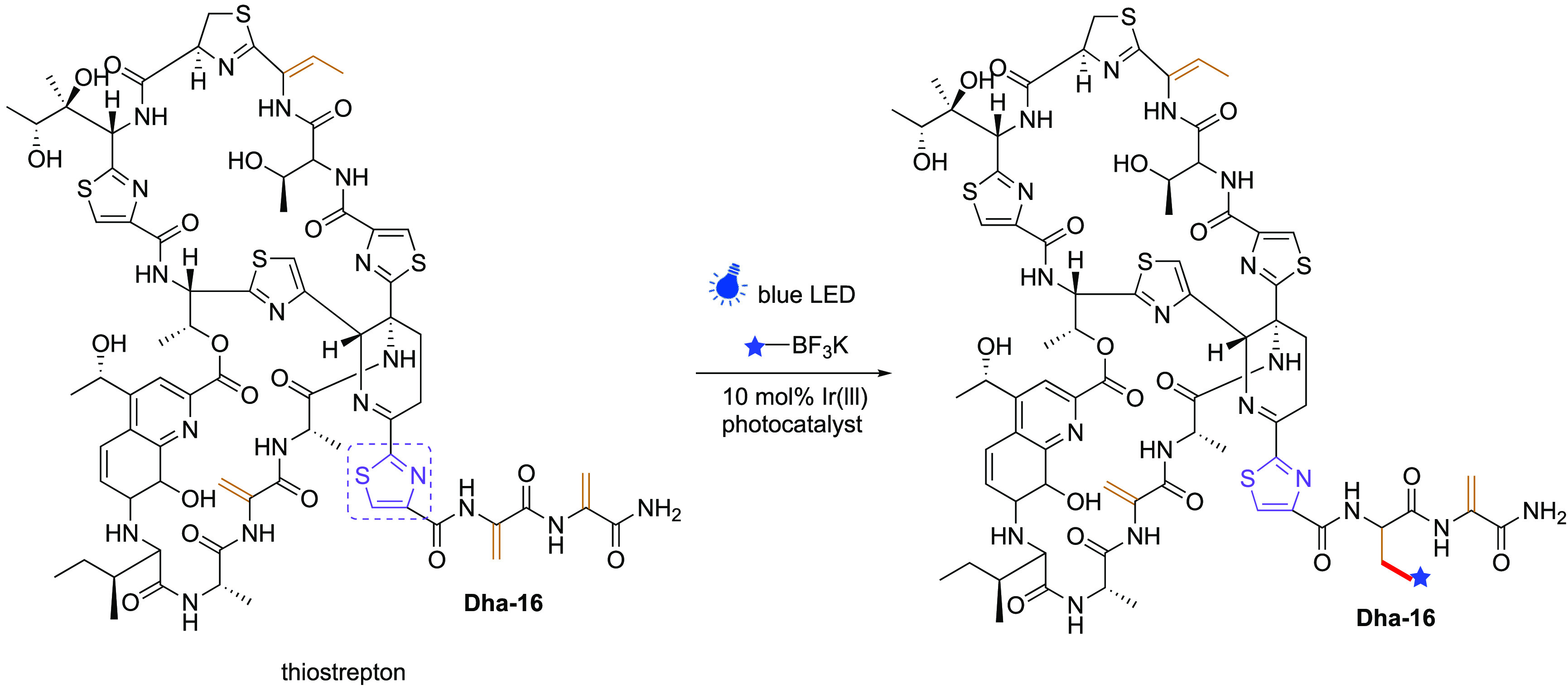
Regio- and chemoselective reaction of radicals with peptide natural product thiostrepton. The electron withdrawing effect of the thiazole group (purple) is suggested as a guiding motif for selective reactivity; how this will relate to utility in proteins using “off-protein” C• centered radicals remains to be seen, but it implies intriguing potential.
Figure 10
Figure 10
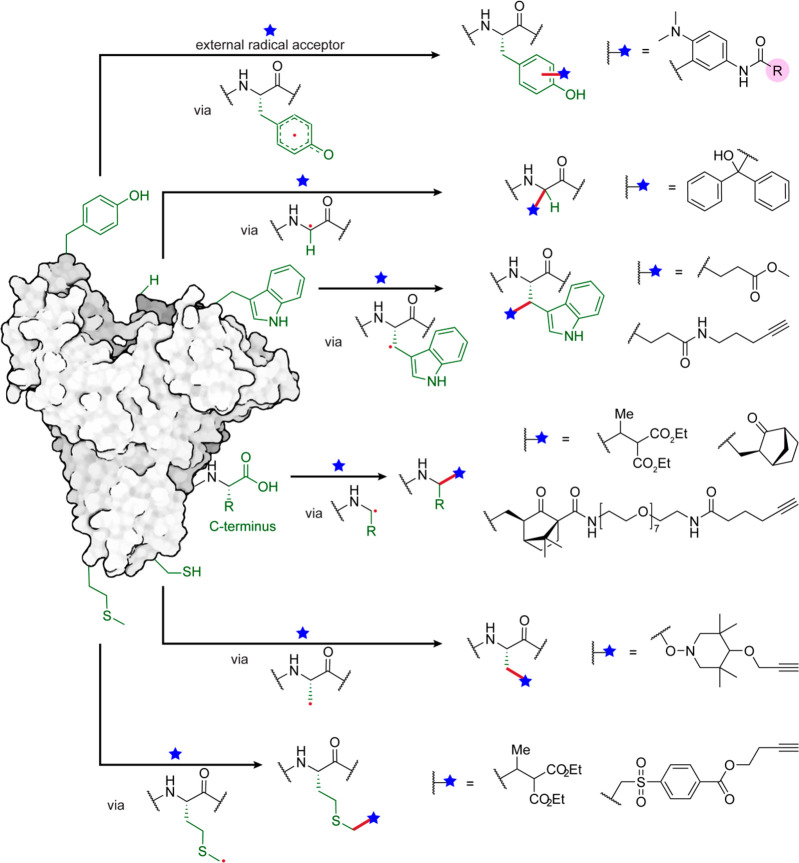
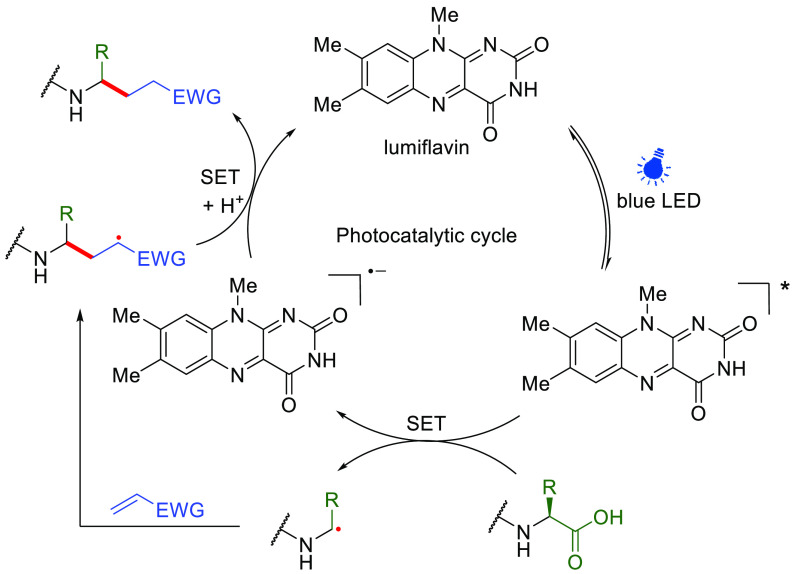
Overview of putative “on-protein” or “on-peptide” radicals generated on canonical AAs, including the C-terminus and different in-chain residues.
Figure 11
Figure 11
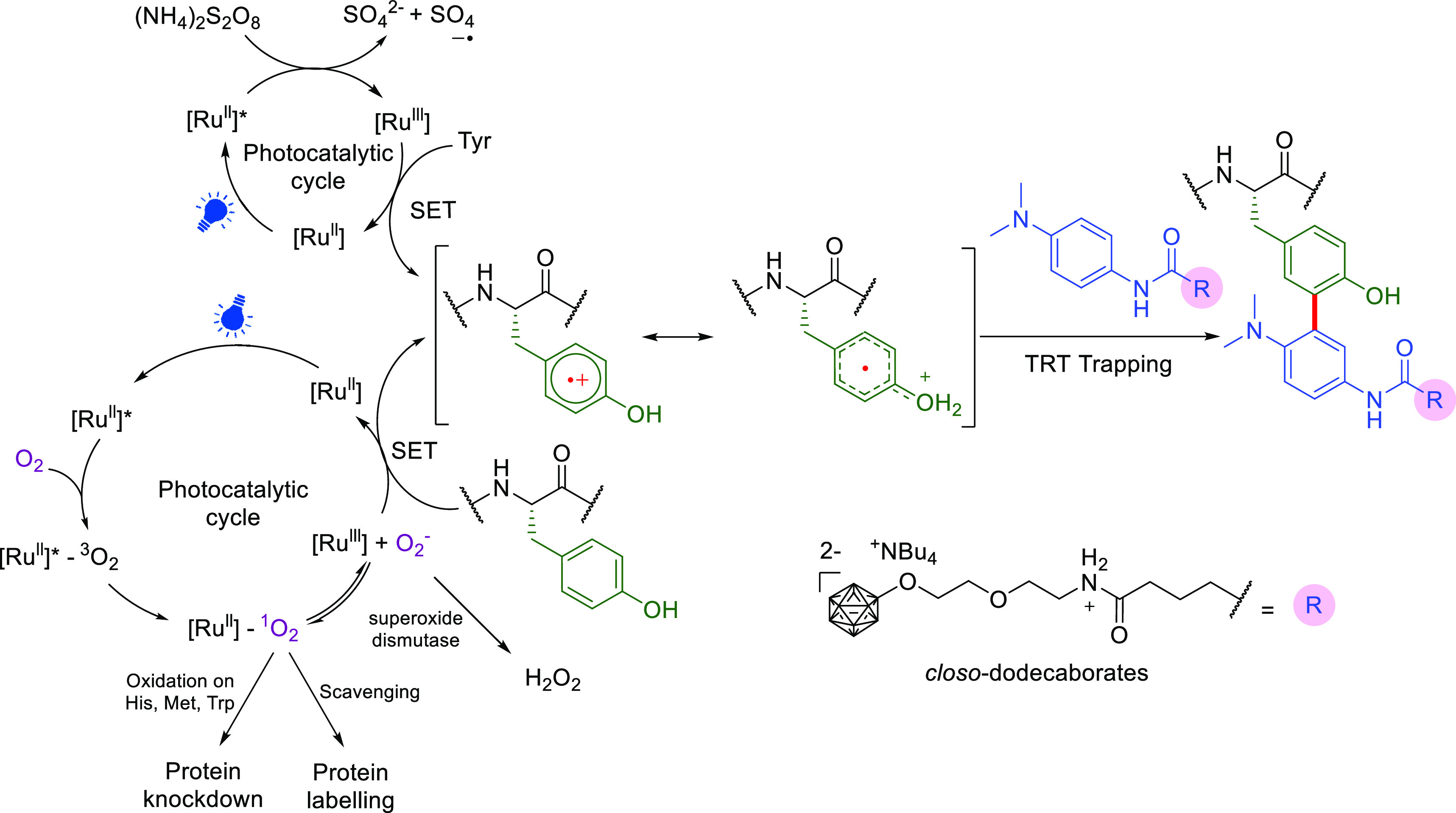
Oxidative radical generation on Tyr and a suggested mechanism that exploits dual roles of Ru(II) in inactivating or labeling proteins using on-protein generated tyrosyl radicals. Figure adapted from ref (100). Copyright 2015 American Chemical Society.
Figure 12
Figure 12
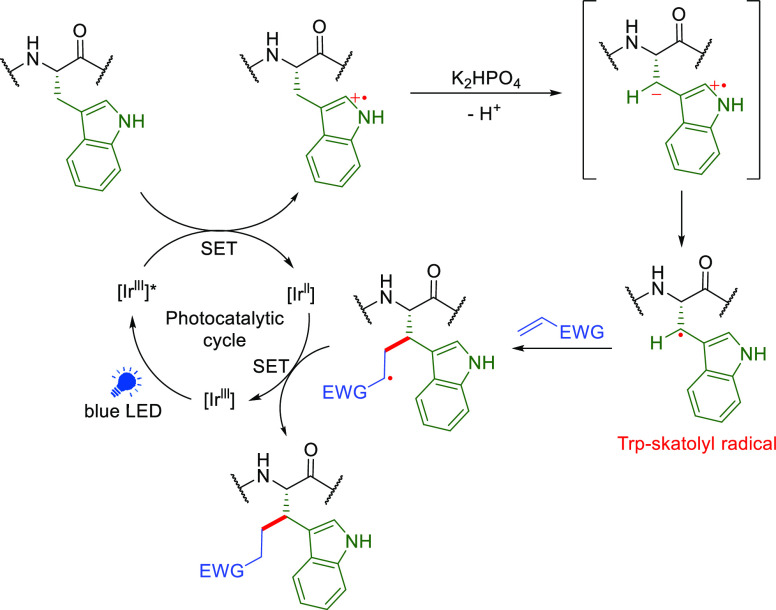
Mechanism of photocatalytic bioconjugation between a Michael acceptor and the β-position of Trp. Figure adapted from ref (103). Copyright 2018 American Chemical Society
Figure 13
Figure 13
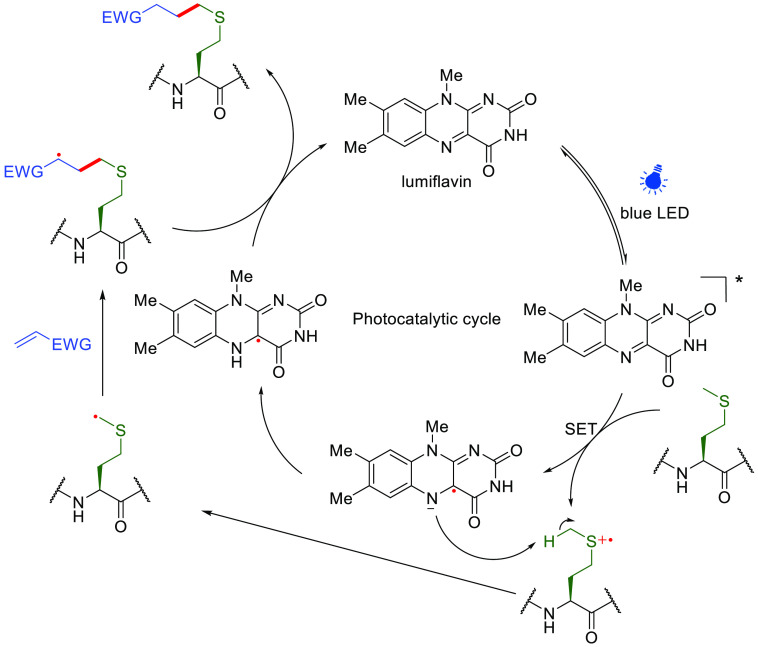
Proposed mechanism of photocatalytic methionine bioconjugation via Met-derived Cε• radicals.
Figure 14
Figure 14
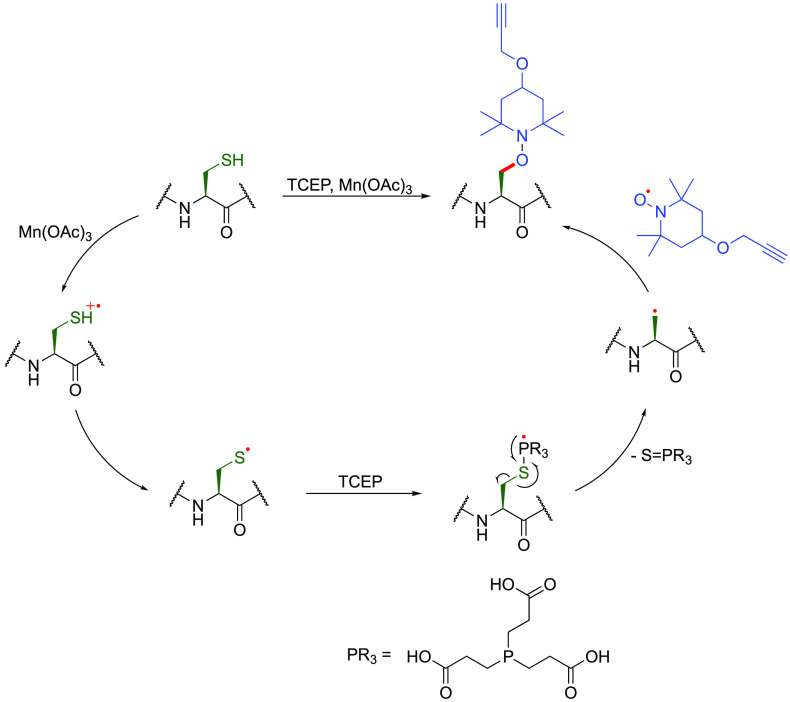
A possible mechanism of TCEP-mediated desulfurization of Cys, via thiyl radicals, forming C• alanyl radicals that can be trapped by TEMPO derivatives.
Figure 15
Figure 15
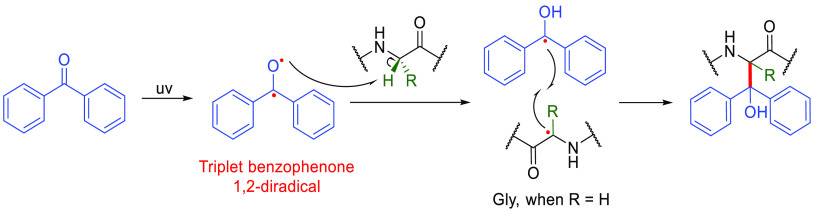
Mechanism of generating “on-protein” radicals via benzophenone derivatives.
Figure 16
Figure 16
Proposed mechanism of site-selective bioconjugation via decarboxylative alkylation of the C-terminus. Figure adapted from ref (85). Copyright 2018 Nature.
Figure 17
Figure 17
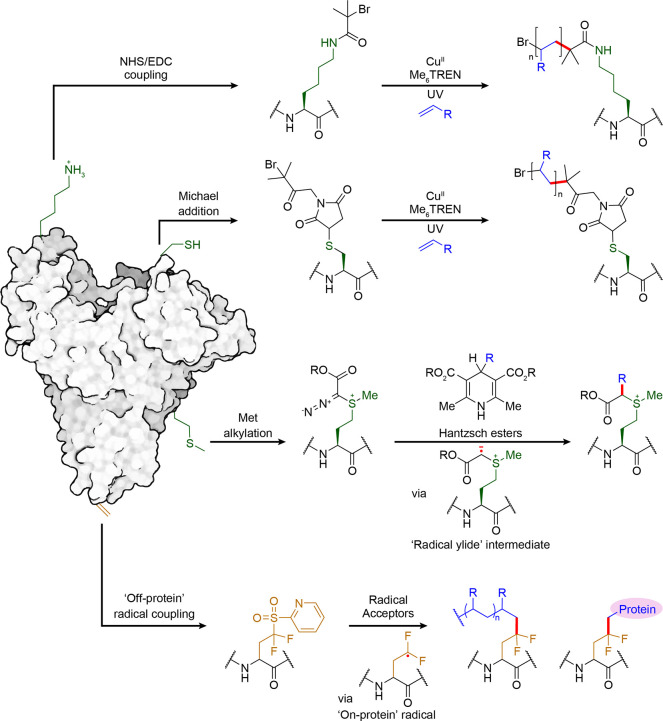
Overview of “on-protein” radical generation on noncanonical AAs.
Figure 18
Figure 18
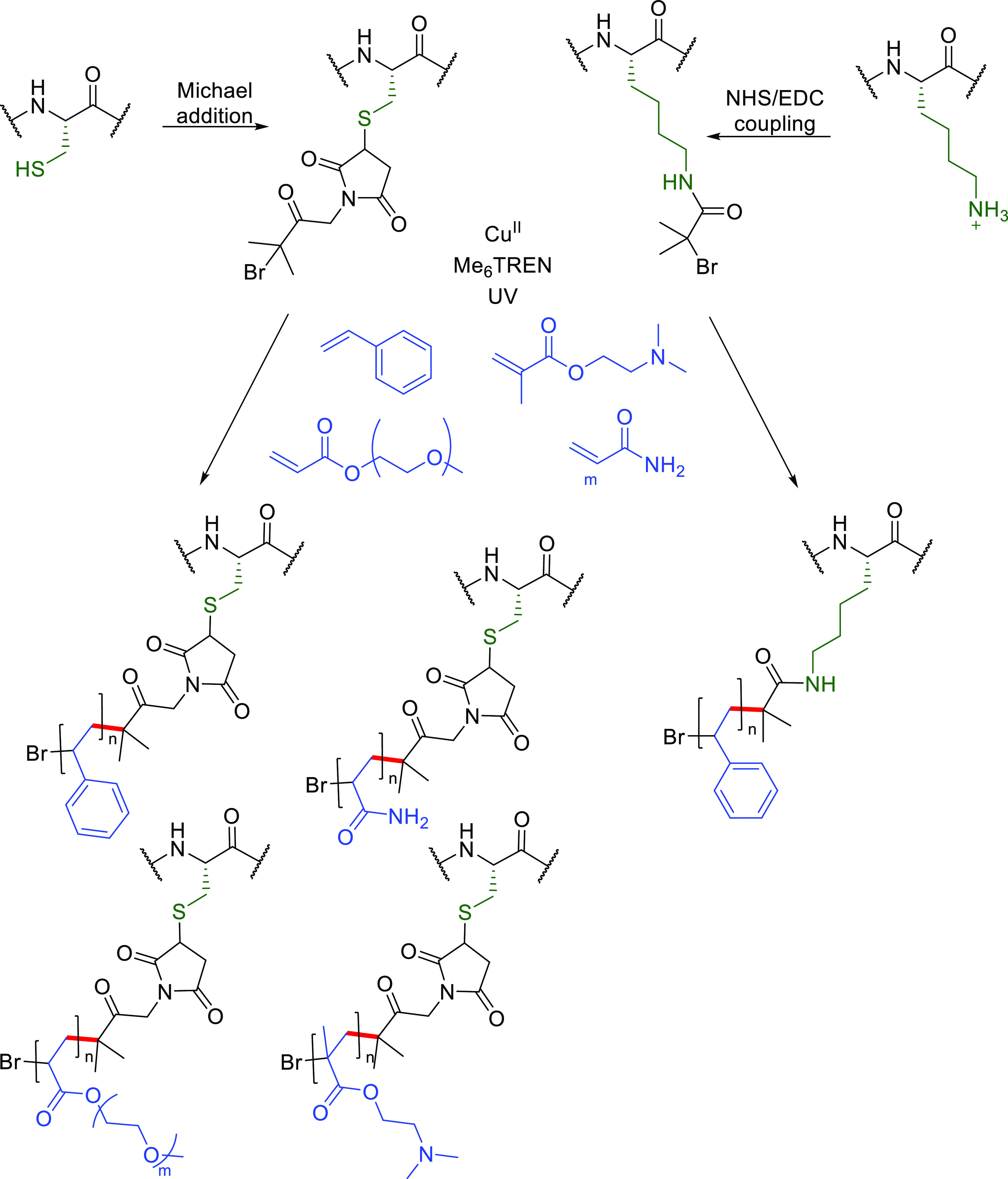
Construction of protein–polymer bioconjugates through a mild and oxygen tolerant photoinduced ATRP process.
Figure 19
Figure 19
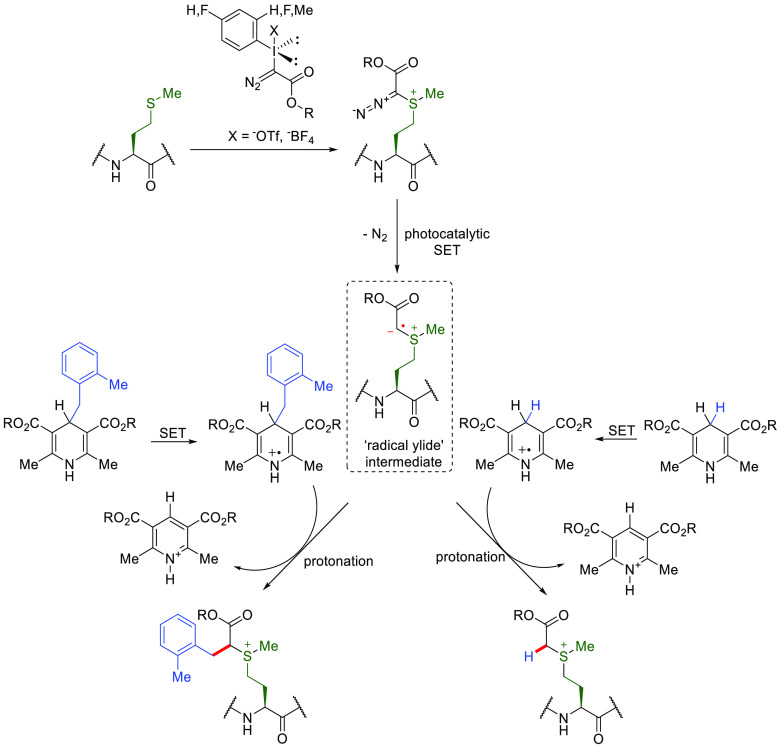
Proposed mechanism of consecutive Met-selective modification strategies that generates an “on-Met” C• radical ylid initiation site. Figure adapted from ref (110). Copyright 2018 Nature.
Figure 20
Figure 20
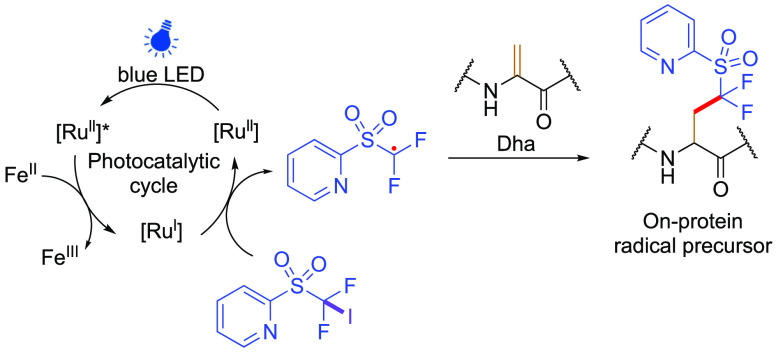
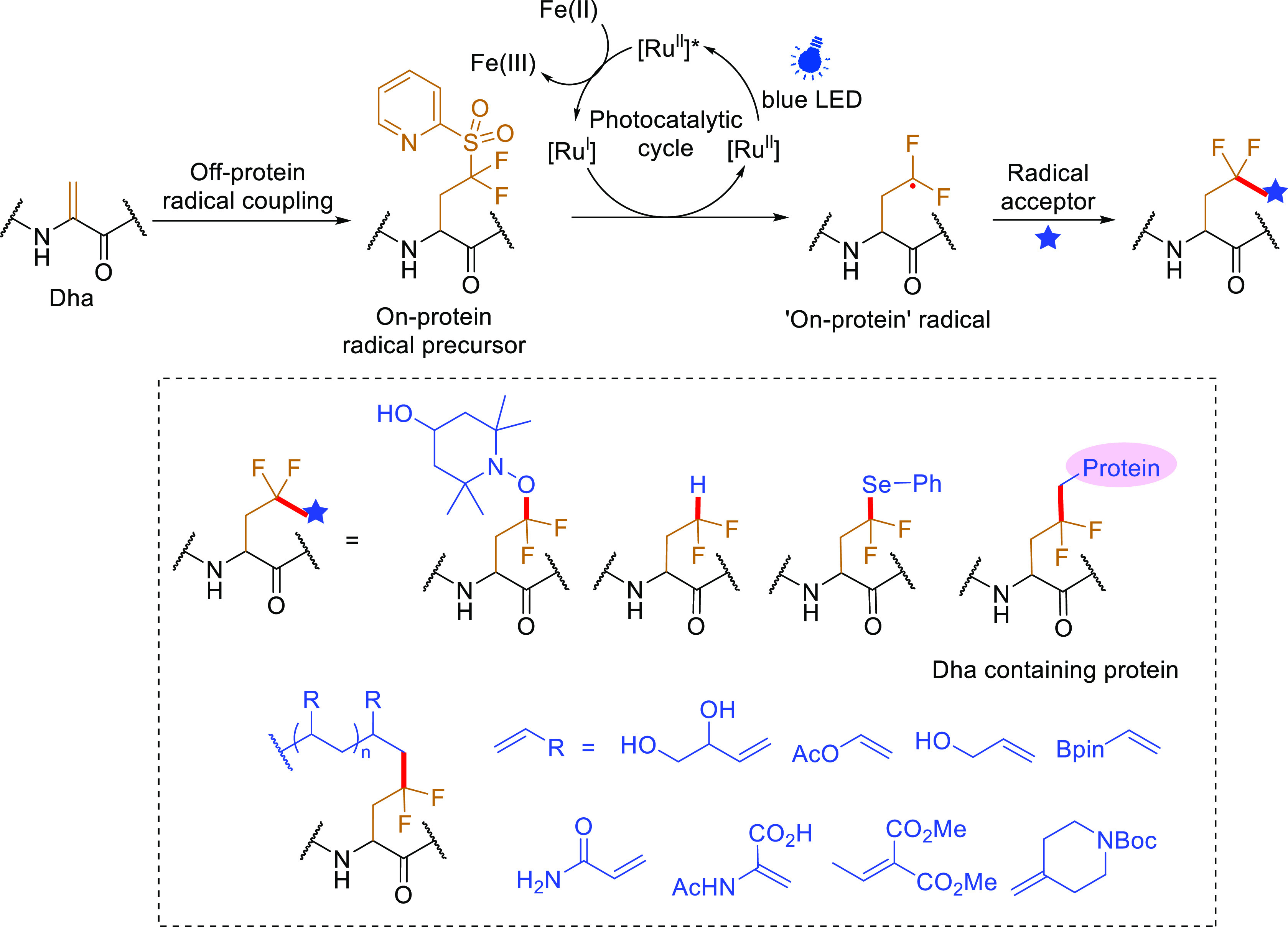
Proposed mechanism and use of photocatalytic generation of “on-protein” difluoroalkyl radicals from an installed “pySOOF” difluoropyridylsulfone and the resulting radical acceptor scope.
Figure 21
Figure 21
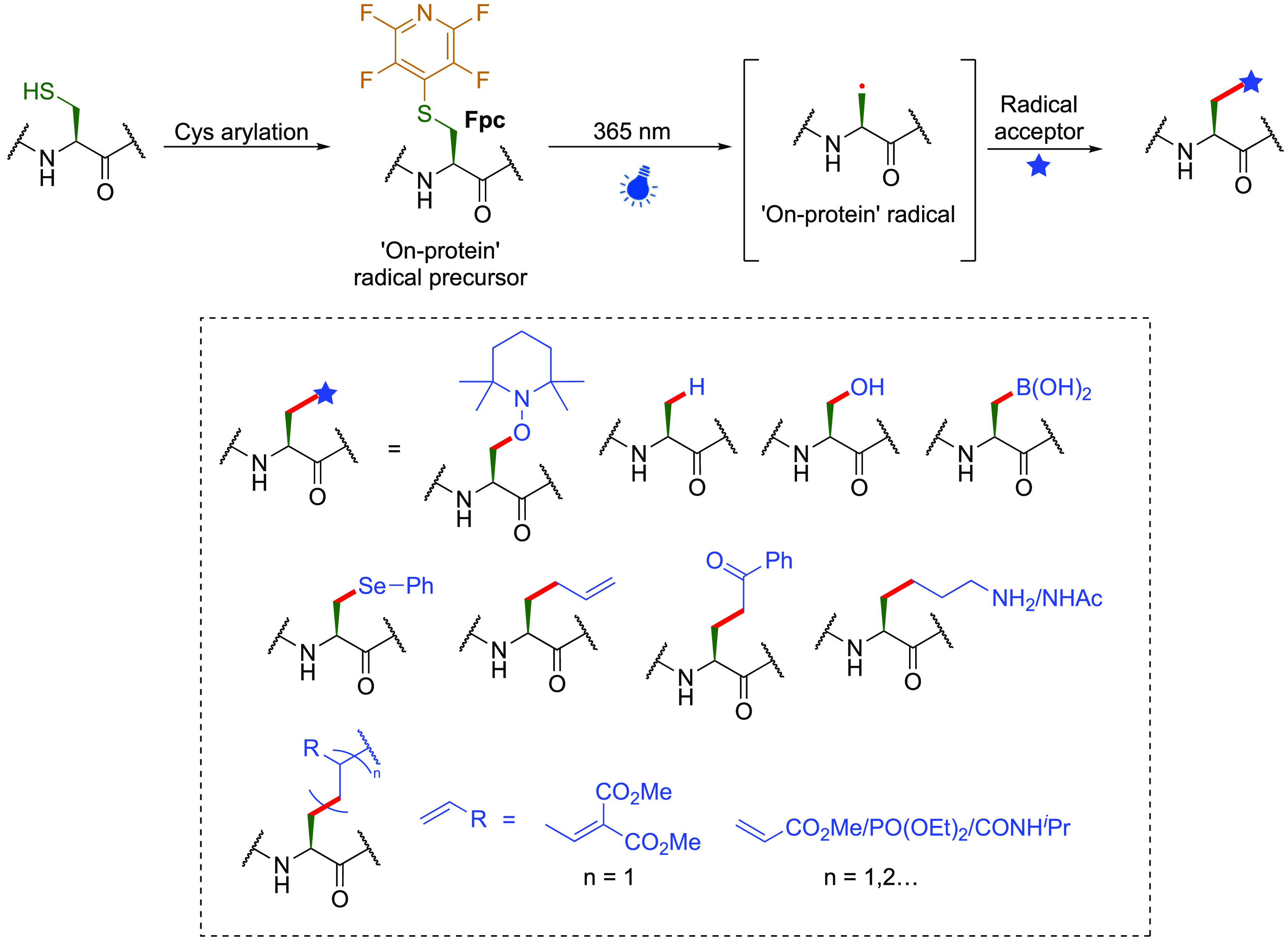
Exploitation of C–S bond scission in an arylated Cys noncanonical amino acid Fpc and alanyl radical trapping in a proposed method for so-called stereoretentive protein editing.
Figure 22
Figure 22
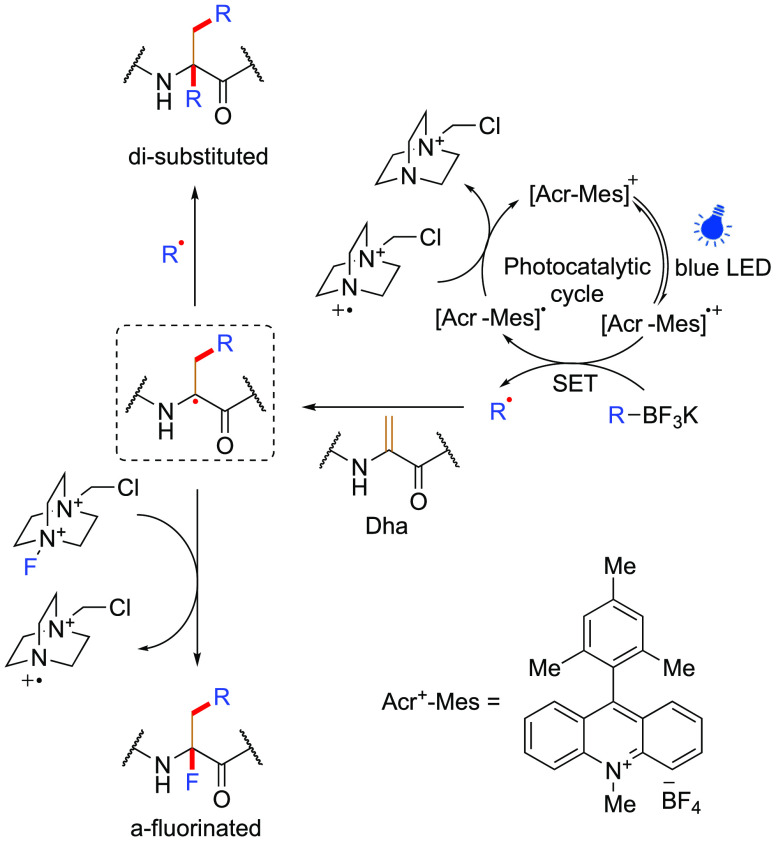
Mechanism of terminating a propagated “on-protein” α-carbon radical (dotted box) postradical addition to Dha. Multiple methods were demonstrated for initial “off-protein” C• formation, here, Acr-Mes was used as an example. Figure adapted from ref (82). Copyright 2019 American Chemical Society

References

    1. Walsh C. T.; Garneau-Tsodikova S.; Gatto Jr G. J. Protein posttranslational modifications: the chemistry of proteome diversifications. Angew. Chem., Int. Ed. 2005, 44 (45), 7342–7372. 10.1002/anie.200501023. - DOI - PubMed
    1. Gunnoo S. B.; Madder A. Bioconjugation-using selective chemistry to enhance the properties of proteins and peptides as therapeutics and carriers. Organic & Biomolecular Chemistry 2016, 14 (34), 8002–8013. 10.1039/C6OB00808A. - DOI - PubMed
    1. Spicer C. D.; Davis B. G. Selective chemical protein modification. Nat. Commun. 2014, 5 (1), 1–14. 10.1038/ncomms5740. - DOI - PubMed
    1. Krall N.; Da Cruz F. P.; Boutureira O.; Bernardes G. J. Site-selective protein-modification chemistry for basic biology and drug development. Nat. Chem. 2016, 8 (2), 103. 10.1038/nchem.2393. - DOI - PubMed
    1. Hoyt E. A.; Cal P. M.; Oliveira B. L.; Bernardes G. J. Contemporary approaches to site-selective protein modification. Nature Reviews Chemistry 2019, 3 (3), 147–171. 10.1038/s41570-019-0079-1. - DOI