This is a preprint.
Precision medicine in type 2 diabetes: A systematic review of treatment effect heterogeneity for GLP1-receptor agonists and SGLT2-inhibitors
- PMID: 37131814
- PMCID: PMC10153311
- DOI: 10.1101/2023.04.21.23288868
Precision medicine in type 2 diabetes: A systematic review of treatment effect heterogeneity for GLP1-receptor agonists and SGLT2-inhibitors
Update in
-
Treatment effect heterogeneity following type 2 diabetes treatment with GLP1-receptor agonists and SGLT2-inhibitors: a systematic review.Commun Med (Lond). 2023 Oct 5;3(1):131. doi: 10.1038/s43856-023-00359-w. Commun Med (Lond). 2023. PMID: 37794166 Free PMC article.
Abstract
Background: A precision medicine approach in type 2 diabetes requires identification of clinical and biological features that are reproducibly associated with differences in clinical outcomes with specific anti-hyperglycaemic therapies. Robust evidence of such treatment effect heterogeneity could support more individualized clinical decisions on optimal type 2 diabetes therapy.
Methods: We performed a pre-registered systematic review of meta-analysis studies, randomized control trials, and observational studies evaluating clinical and biological features associated with heterogenous treatment effects for SGLT2-inhibitor and GLP1-receptor agonist therapies, considering glycaemic, cardiovascular, and renal outcomes.
Results: After screening 5,686 studies, we included 101 studies of SGLT2-inhibitors and 75 studies of GLP1-receptor agonists in the final systematic review. The majority of papers had methodological limitations precluding robust assessment of treatment effect heterogeneity. For glycaemic outcomes, most cohorts were observational, with multiple analyses identifying lower renal function as a predictor of lesser glycaemic response with SGLT2-inhibitors and markers of reduced insulin secretion as predictors of lesser response with GLP1-receptor agonists. For cardiovascular and renal outcomes, the majority of included studies were post-hoc analyses of randomized control trials (including meta-analysis studies) which identified limited clinically relevant treatment effect heterogeneity.
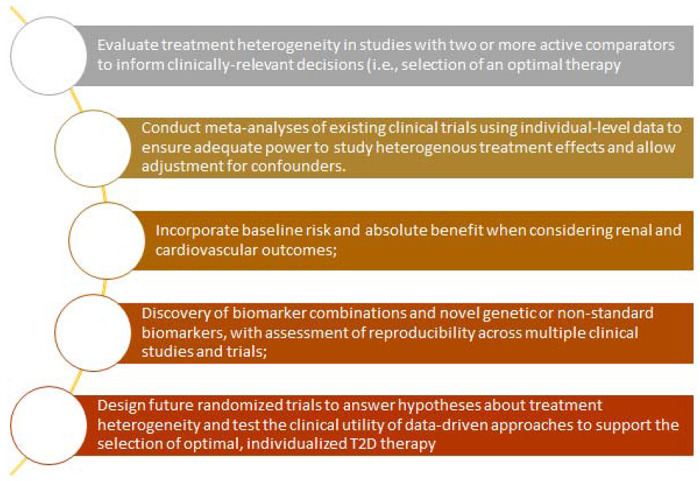
Conclusions: Current evidence on treatment effect heterogeneity for SGLT2-inhibitor and GLP1-receptor agonist therapies is limited, likely reflecting the methodological limitations of published studies. Robust and appropriately powered studies are required to understand type 2 diabetes treatment effect heterogeneity and evaluate the potential for precision medicine to inform future clinical care.
Plain language summary: This review identifies research that helps understand which clinical and biological factors that are associated with different outcomes for specific type 2 diabetes treatments. This information could help clinical providers and patients make better informed personalized decisions about type 2 diabetes treatments. We focused on two common type 2 diabetes treatments: SGLT2-inhibitors and GLP1-receptor agonists, and three outcomes: blood glucose control, heart disease, and kidney disease. We identified some potential factors that are likely to lessen blood glucose control including lower kidney function for SGLT2-inhibitors and lower insulin secretion for GLP1-receptor agonists. We did not identify clear factors that alter heart and renal disease outcomes for either treatment. Most of the studies had limitations, meaning more research is needed to fully understand the factors that influence treatment outcomes in type 2 diabetes.
Conflict of interest statement
APM declares previous research funding from Eli Lilly and Company, Pfizer, and AstraZeneca. ERP has received honoraria for speaking from Lilly, Novo Nordisk and Illumina. All other authors declare no conflict of interest.
Figures
References
-
- Tsapas A, Avgerinos I, Karagiannis T, et al. Comparative Effectiveness of Glucose-Lowering Drugs for Type 2 Diabetes: A Systematic Review and Network Meta-analysis. Annals of internal medicine 2020; 173(4). - PubMed
-
- Sattar N, Lee M, Kristensen S, et al. Cardiovascular, mortality, and kidney outcomes with GLP-1 receptor agonists in patients with type 2 diabetes: a systematic review and meta-analysis of randomised trials. The lancet Diabetes & endocrinology 2021; 9(10). - PubMed
Publication types
Grants and funding
LinkOut - more resources
Full Text Sources