


Management of anterior cruciate ligament revision in adults: the 2022 ESSKA consensus part III-indications for different clinical scenarios using the RAND/UCLA appropriateness method
- PMID: 37133742
- PMCID: PMC10598192
- DOI: 10.1007/s00167-023-07401-3
Management of anterior cruciate ligament revision in adults: the 2022 ESSKA consensus part III-indications for different clinical scenarios using the RAND/UCLA appropriateness method
Abstract
Purpose: The aim of the ESSKA 2022 consensus Part III was to develop patient-focused, contemporary, evidence-based, guidelines on the indications for revision anterior cruciate ligament surgery (ACLRev).
Methods: The RAND/UCLA Appropriateness Method (RAM) was used to provide recommendations on the appropriateness of surgical treatment versus conservative treatment in different clinical scenarios based on current scientific evidence in conjunction with expert opinion. A core panel defined the clinical scenarios with a moderator and then guided a panel of 17 voting experts through the RAM tasks. Through a two-step voting process, the panel established a consensus as to the appropriateness of ACLRev for each scenario based on a nine-point Likert scale (in which a score in the range 1-3 was considered 'inappropriate', 4-6 'uncertain', and 7-9 'appropriate').
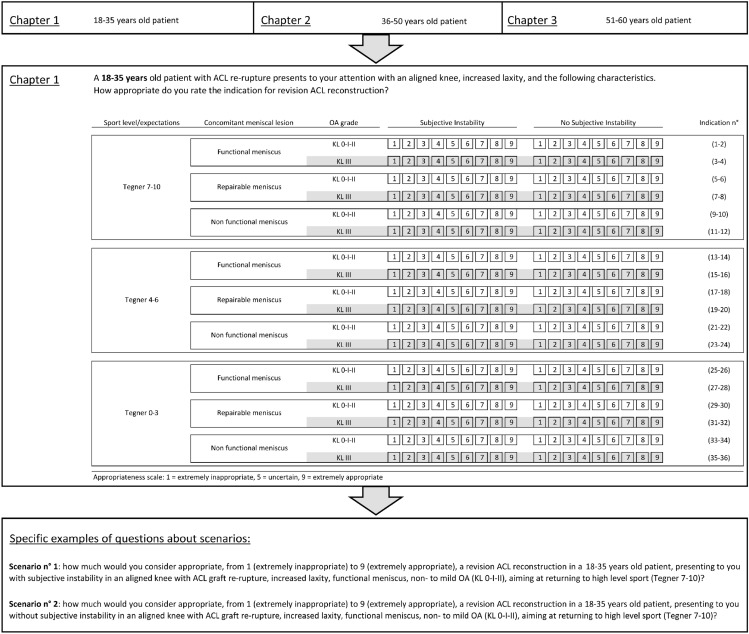
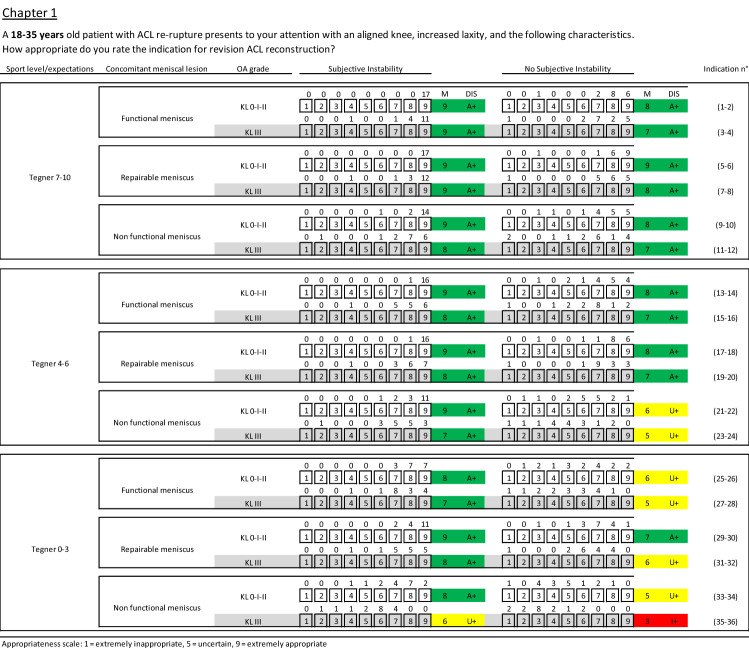
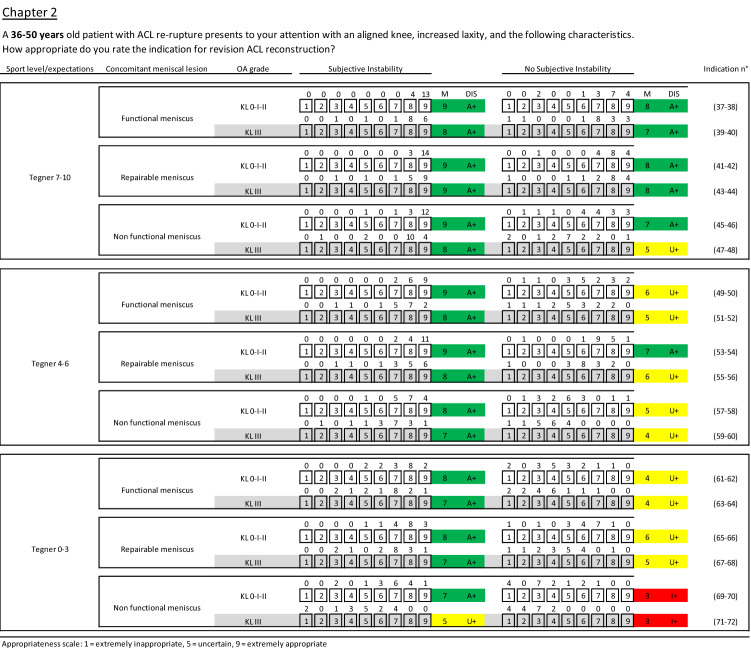
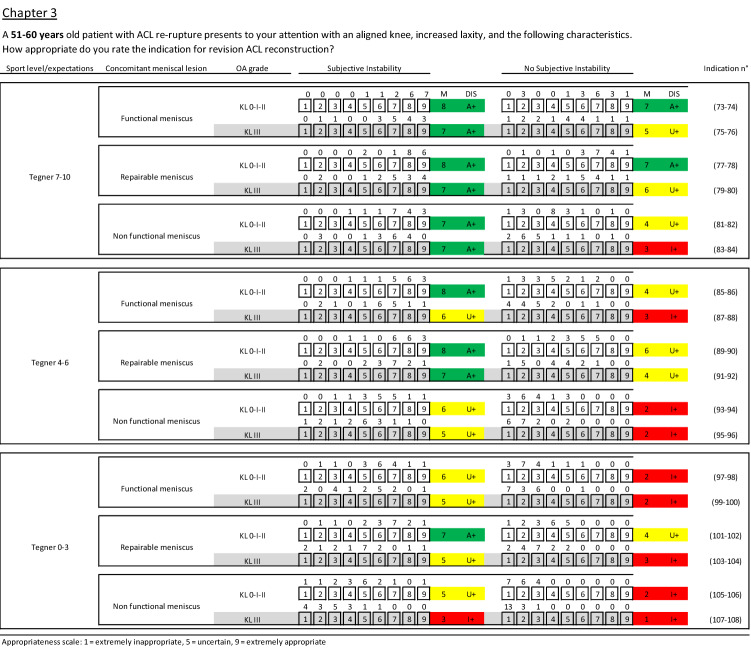
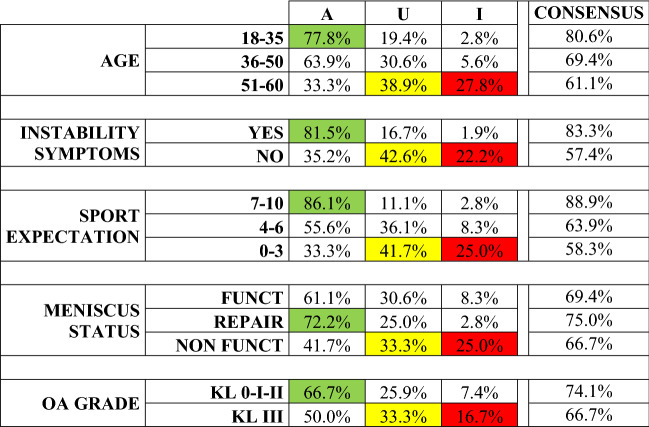
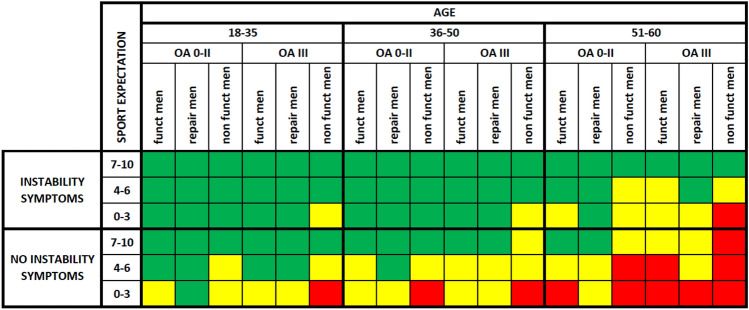
Results: The criteria used to define the scenarios were: age (18-35 years vs 36-50 years vs 51-60 years), sports activity and expectation (Tegner 0-3 vs 4-6 vs 7-10), instability symptoms (yes vs no), meniscus status (functional vs repairable vs non-functional meniscus), and osteoarthritis (OA) (Kellgren-Lawrence [KL] grade 0-I-II vs grade III). Based on these variables, a set of 108 clinical scenarios was developed. ACLRev was considered appropriate in 58%, inappropriate in 12% (meaning conservative treatment is indicated), and uncertain in 30%. Experts considered ACLRev appropriate for patients with instability symptoms, aged ≤ 50 years, regardless of sports activity level, meniscus status, and OA grade. Results were much more controversial in patients without instability symptoms, while higher inappropriateness was related to scenarios with older age (51-60 years), low sporting expectation, non-functional meniscus, and knee OA (KL III).
Conclusion: This expert consensus establishes guidelines as to the appropriateness of ACLRev based on defined criteria and provides a useful reference for clinical practice in determining treatment indications.
Level of evidence: II.
Keywords: Anterior cruciate ligament; Consensus; Guidelines; Knee; Revision.
© 2023. The Author(s).
Conflict of interest statement
The authors declare no conflicts of interest relevant to this manuscript.
Figures
References
-
- Cuzzolin M, Previtali D, Zaffagnini S, Deabate L, Candrian C, Filardo G. Anterior cruciate ligament reconstruction versus nonoperative treatment: better function and less secondary meniscectomies but no difference in knee osteoarthritis—a meta-analysis. Cartilage. 2021;13:1658S–1670S. doi: 10.1177/19476035211046041. - DOI - PMC - PubMed
MeSH terms
LinkOut - more resources
Full Text Sources
Research Materials
