Use of interviewer-administered telephone surveys during infectious disease outbreaks, epidemics and pandemics: a scoping review
- PMID: 37137536
- PMCID: PMC10163463
- DOI: 10.1136/bmjgh-2022-011109
Use of interviewer-administered telephone surveys during infectious disease outbreaks, epidemics and pandemics: a scoping review
Abstract
Introduction: During the COVID-19 crisis, researchers had to collect data remotely. Telephone surveys and interviews can quickly gather data from a distance without heavy expense. Although interviewer-administered telephone surveys (IATS) can accommodate the needs of international public health research, the literature on their use during infectious disease outbreaks is scarce. This scoping review aimed to map the characteristics of IATS during infectious disease outbreaks.
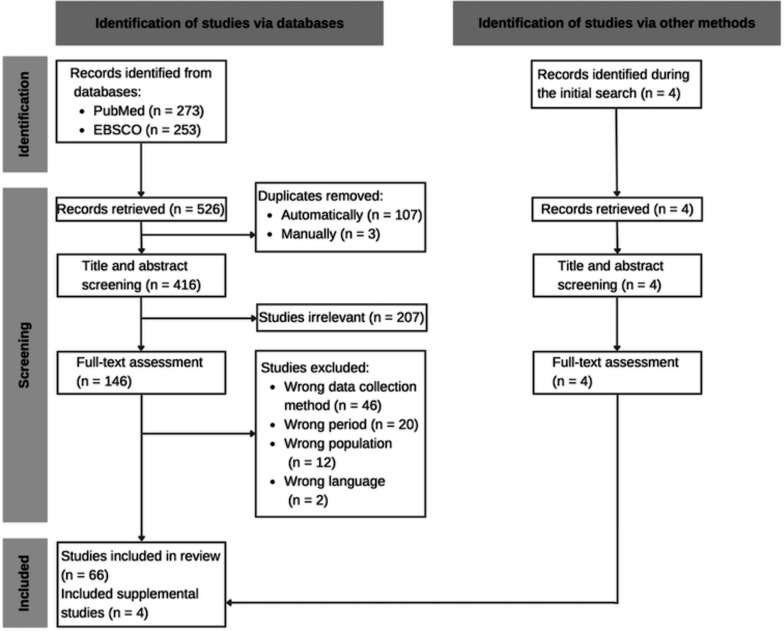
Methods: IATS conducted principally during infectious disease outbreaks and answered by informants at least 18 years old were searched from PubMed and EBSCO. There was a manual addition of relevant documents identified during an initial search. Overall trends were reported using different groupings, including WHO regions, and study details were compared before and during the COVID-19 pandemic.
Results: 70 IATS published between 2003 and 2022 were identified. 57.1% were conducted during the COVID-19 pandemic. Among 30 IATS conducted before the COVID-19 pandemic in the world, only 3.3% were carried out in low-income and middle-income countries (LMICs). This percentage of studies in LMICs out of all the IATS rose to 32.5% during the pandemic. The share of qualitative studies grew from 6.7% before the COVID-19 outbreak to 32.5% during the outbreak. IATS performed during the COVID-19 pandemic focused on more diverse, specific population groups, such as patients and healthcare professionals. Mobile phones are increasingly used for IATS over time.
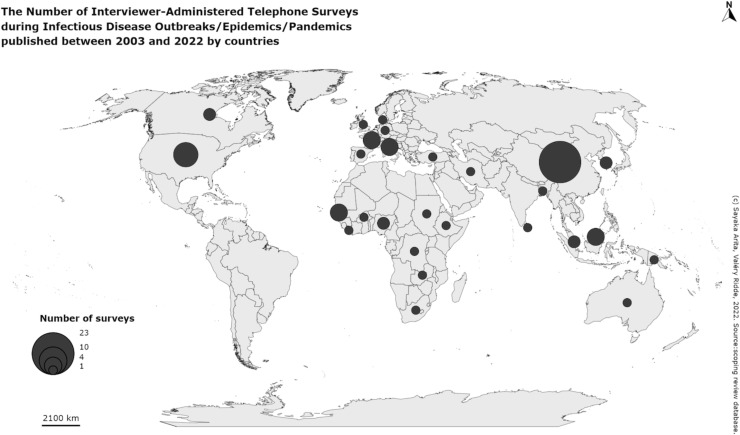
Conclusion: IATS are used globally with high frequency in the Western Pacific Region and high-income countries. Technical and financial challenges continue to exist, and assessments of inclusiveness and representativeness should be carefully conducted. A lack of details related to methods was observed, and this scoping review urges researchers using this data collection method in the future to specify how they executed IATS for better use and more efficient deployment.
Keywords: Public Health; Systematic review.
© Author(s) (or their employer(s)) 2023. Re-use permitted under CC BY-NC. No commercial re-use. See rights and permissions. Published by BMJ.
Conflict of interest statement
Competing interests: CloudlyYours is a for-profit business, which provides data management solutions, including technological support for telephone surveys, with its expertise in digital transformation and development. SA, as a paid master of public health intern, conducted this scoping review with other authors to produce insights into telephone-based surveys, which CloudlyYours could use to determine areas of improvement. Therefore, the theme of this scoping review aligns with one type of service that CoudlyYours provides, telephone surveys.
Figures
References
-
- Rosenberg S. Smartphone ownership is growing rapidly around the world, but not always equally [Pew Research Center’s Global Attitudes Project]. 2019. Available: https://www.pewresearch.org/global/2019/02/05/smartphone-ownership-is-gr...
-
- Croke K, Dabalen A, Demombybes G, et al. Collecting high frequency panel data in Africa using mobile phone interviews. The World Bank, 2012.
Publication types
MeSH terms
LinkOut - more resources
Full Text Sources
Medical