


Mentorship Programs in Residency: A Scoping Review
- PMID: 37139208
- PMCID: PMC10150829
- DOI: 10.4300/JGME-D-22-00415.1
Mentorship Programs in Residency: A Scoping Review
Abstract
Background: Mentorship during residency training is correlated with improved outcomes. Many residency programs have implemented formal mentorship programs; however, reported data for these programs have not been previously synthesized. Thus, existing programs may fall short on delivering effective mentorship.
Objective: To synthesize current literature on formal mentorship programs in residency training in Canada and the United States, including program structure, outcomes, and evaluation.
Methods: In December 2019, the authors performed a scoping review of the literature in Ovid MEDLINE and Embase. The search strategy included keywords relevant to mentorship and residency training. Eligibility criteria included any study describing a formal mentorship program for resident physicians within Canada or the United States. Data from each study were extracted in parallel by 2 team members and reconciled.
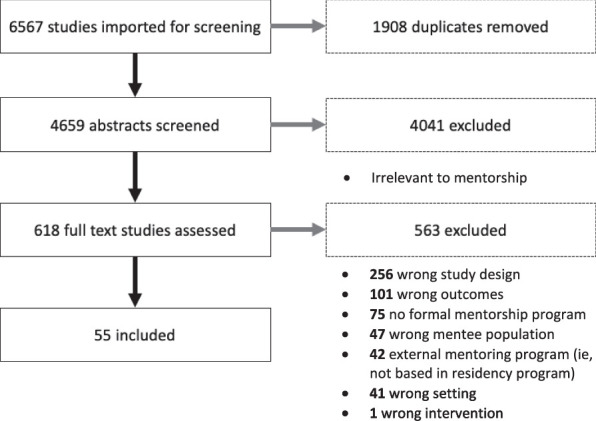
Results: A total of 6567 articles were identified through the database search, and 55 studies met inclusion criteria and underwent data extraction and analysis. Though reported program characteristics were heterogenous, programs most commonly assigned a staff physician mentor to a resident mentee with meetings occurring every 3 to 6 months. The most common evaluation strategy was a satisfaction survey at a single time point. Few studies performed qualitative evaluations or used evaluation tools appropriate to the stated objectives. Analysis of data from qualitative studies allowed us to identify key barriers and facilitators for successful mentorship programs.
Conclusions: While most programs did not utilize rigorous evaluation strategies, data from qualitative studies provided insights into barriers and facilitators of successful mentorship programs, which can inform program design and improvement.
Conflict of interest statement
Conflict of interest: The authors declare they have no competing interests.
References
Publication types
MeSH terms
LinkOut - more resources
Full Text Sources
Miscellaneous
