


The role of hormones in sepsis: an integrated overview with a focus on mitochondrial and immune cell dysfunction
- PMID: 37144447
- PMCID: PMC10167421
- DOI: 10.1042/CS20220709
The role of hormones in sepsis: an integrated overview with a focus on mitochondrial and immune cell dysfunction
Abstract
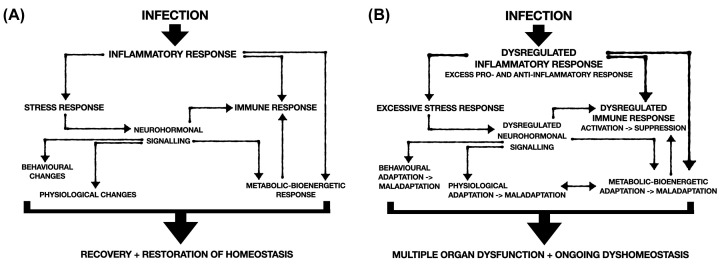
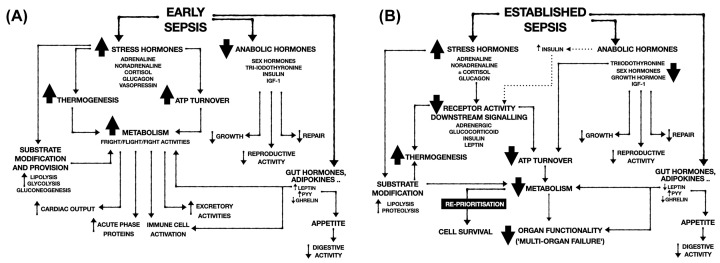
Sepsis is a dysregulated host response to infection that results in life-threatening organ dysfunction. Virtually every body system can be affected by this syndrome to greater or lesser extents. Gene transcription and downstream pathways are either up- or downregulated, albeit with considerable fluctuation over the course of the patient's illness. This multi-system complexity contributes to a pathophysiology that remains to be fully elucidated. Consequentially, little progress has been made to date in developing new outcome-improving therapeutics. Endocrine alterations are well characterised in sepsis with variations in circulating blood levels and/or receptor resistance. However, little attention has been paid to an integrated view of how these hormonal changes impact upon the development of organ dysfunction and recovery. Here, we present a narrative review describing the impact of the altered endocrine system on mitochondrial dysfunction and immune suppression, two interlinked and key aspects of sepsis pathophysiology.
Keywords: hormones; immune response; mitochondria; organ dysfunction; sepsis; stress response.
© 2023 The Author(s).
Conflict of interest statement
The authors declare that there are no competing interests associated with the manuscript.
Figures
References
-
- Shankar-Hari M., Phillips G.S., Levy M.L., Seymour C.W., Liu V.X., Deutschman C.S.et al. (2016) Developing a new definition and assessing new clinical criteria for septic shock: for the third international consensus definitions for sepsis and septic shock (Sepsis-3). JAMA 315, 775–787 10.1001/jama.2016.0289 - DOI - PMC - PubMed
Publication types
MeSH terms
Substances
LinkOut - more resources
Full Text Sources
Medical
