


A single-center, open-label, randomized, parallel-group trial to pilot the effectiveness of a peer coach behavioral intervention versus an active control in reducing anxiety and depression in patients scheduled for total knee replacement
- PMID: 37147587
- PMCID: PMC10160708
- DOI: 10.1186/s12891-023-06460-4
A single-center, open-label, randomized, parallel-group trial to pilot the effectiveness of a peer coach behavioral intervention versus an active control in reducing anxiety and depression in patients scheduled for total knee replacement
Abstract
Background: Moving Well is a behavioral intervention for patients with knee osteoarthritis (KOA) scheduled for a total knee replacement (TKR). The objective of this intervention is to help patients with KOA mentally and physically prepare for and recover from TKR.
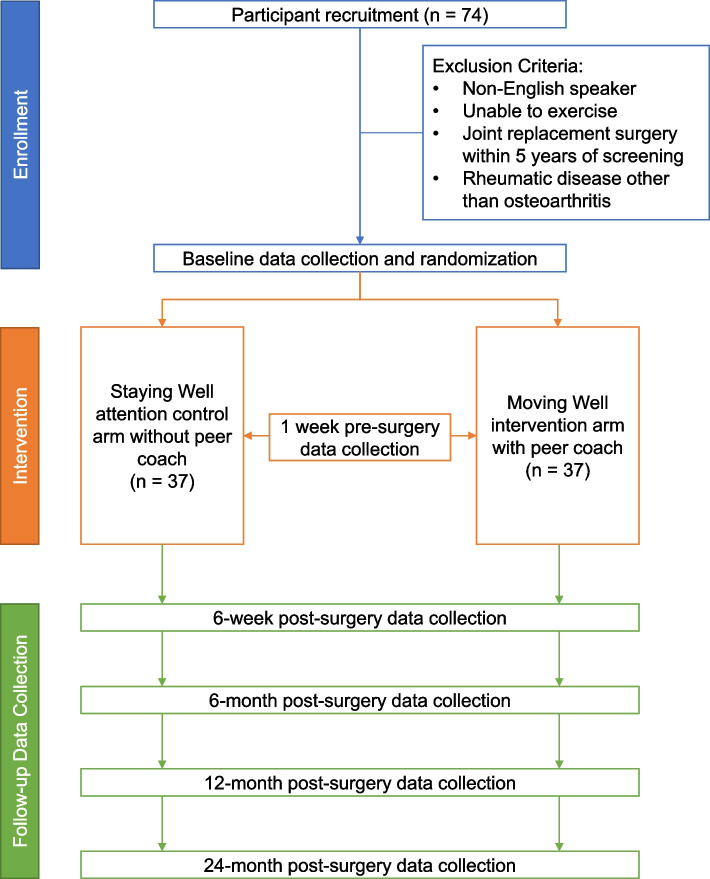
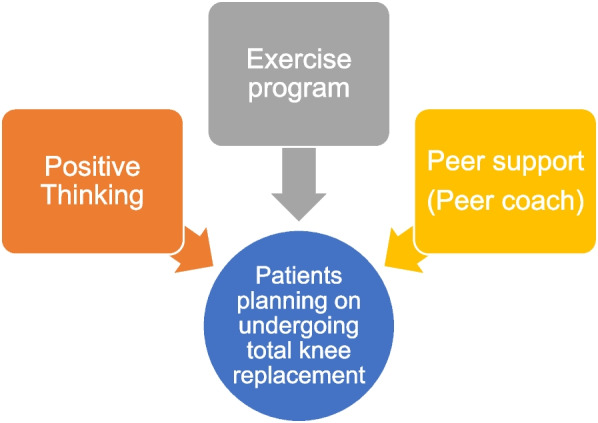
Methods: This is an open-label pilot randomized clinical trial that will test the feasibility and effectiveness of the Moving Well intervention compared to an attention control group, Staying Well, to reduce symptoms of anxiety and depression in patients with KOA undergoing TKR. The Moving Well intervention is guided by Social Cognitive Theory. During this 12-week intervention, participants will receive 7 weekly calls before surgery and 5 weekly calls after surgery from a peer coach. During these calls, participants will be coached to use principles of cognitive behavioral therapy (CBT), stress reduction techniques, and will be assigned an online exercise program, and self-monitoring activities to complete on their own time throughout the program. Staying Well participants will receive weekly calls of similar duration from research staff to discuss a variety of health topics unrelated to TKR, CBT, or exercise. The primary outcome is the difference in levels of anxiety and/or depression between participants in the Moving Well and Staying Well groups 6 months after TKR.
Discussion: This study will pilot test the feasibility and effectiveness of Moving Well, a peer coach intervention, alongside principles of CBT and home exercise, to help patients with KOA mentally and physically prepare for and recover from TKR.
Trial registration: Clinicaltrials.gov. NCT05217420; Registered: January 31, 2022.
Keywords: Cognitive behavioral therapy; Home physical therapy; Knee osteoarthritis; Knee replacement; Peer coach.
© 2023. The Author(s).
Conflict of interest statement
INM received speaker fees from SOBI. AJ, YDP, MB, GL, WKH, NH, MP, AGDV, SG, SB, and MS do not have any competing interests that may be perceived to influence the results and/or discussion reported in this paper.
Figures
References
-
- Beswick AD, Wylde V, Gooberman-Hill R, Blom A, Dieppe P. What proportion of patients report long-term pain after total hip or knee replacement for osteoarthritis? A systematic review of prospective studies in unselected patients. BMJ Open. 2012;2(1):e000435. doi: 10.1136/bmjopen-2011-000435. - DOI - PMC - PubMed
