


Diagnosis of Respiratory Syncytial Virus in Adults Substantially Increases When Adding Sputum, Saliva, and Serology Testing to Nasopharyngeal Swab RT-PCR
- PMID: 37148463
- PMCID: PMC10163290
- DOI: 10.1007/s40121-023-00805-1
Diagnosis of Respiratory Syncytial Virus in Adults Substantially Increases When Adding Sputum, Saliva, and Serology Testing to Nasopharyngeal Swab RT-PCR
Abstract
Introduction: Nearly all existing respiratory syncytial virus (RSV) incidence estimates are based on real-time polymerase chain reaction (RT-PCR) testing of nasal or nasopharyngeal (NP) swabs. Adding testing of additional specimen types to NP swab RT-PCR increases RSV detection. However, prior studies only made pairwise comparisons and the synergistic effect of adding multiple specimen types has not been quantified. We compared RSV diagnosis by NP swab RT-PCR alone versus NP swab plus saliva, sputum, and serology.
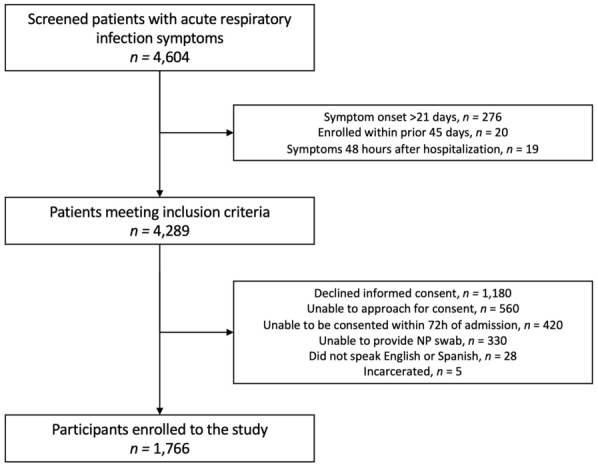
Methods: This was a prospective cohort study over two study periods (27 December 2021 to 1 April 2022 and 22 August 2022 to 11 November 2022) of patients aged ≥ 40 years hospitalized for acute respiratory illness (ARI) in Louisville, KY. NP swab, saliva, and sputum specimens were collected at enrollment and PCR tested (Luminex ARIES platform). Serology specimens were obtained at acute and convalescent timepoints (enrollment and 30-60-day visit). RSV detection rate was calculated for NP swab alone and for NP swab plus all other specimen type/test.
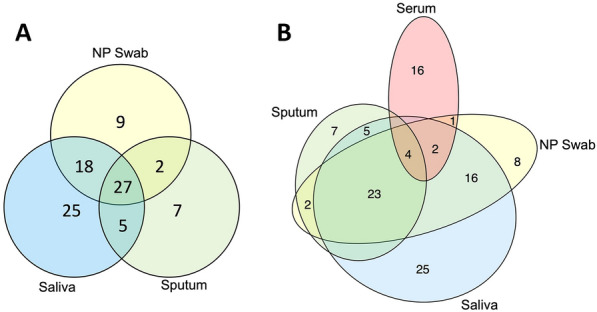
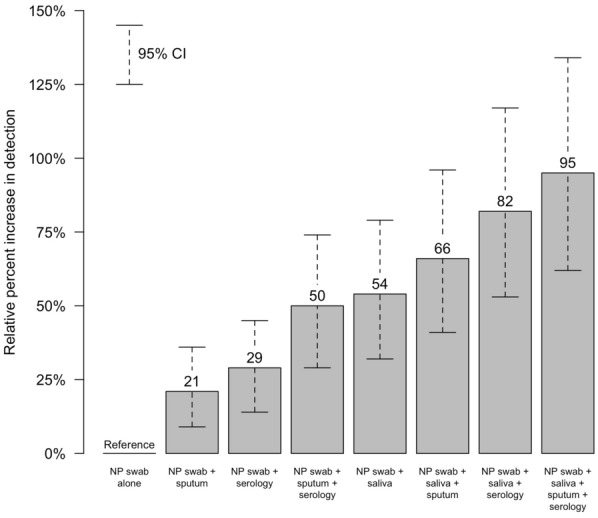
Results: Among 1766 patients enrolled, 100% had NP swab, 99% saliva, 34% sputum, and 21% paired serology specimens. RSV was diagnosed in 56 (3.2%) patients by NP swab alone, and in 109 (6.2%) patients by NP swab plus additional specimens, corresponding to a 1.95 times higher rate [95% confidence interval (CI) 1.62, 2.34]. Limiting the comparison to the 150 subjects with all four specimen types available (i.e., NP swab, saliva, sputum, and serology), there was a 2.60-fold increase (95% CI 1.31, 5.17) compared to NP swab alone (3.3% versus 8.7%). Sensitivities by specimen type were: NP swab 51%, saliva 70%, sputum 72%, and serology 79%.
Conclusions: Diagnosis of RSV in adults was several-fold greater when additional specimen types were added to NP swab, even with a relatively low percentage of subjects with sputum and serology results available. Hospitalized RSV ARI burden estimates in adults based solely on NP swab RT-PCR should be adjusted for underestimation.
Keywords: Acute respiratory illness; Disease diagnosis; Polymerase chain reaction; Respiratory syncytial virus.
© 2023. Pfizer Inc.
Figures
References
-
- Branche AR, Saiman L, Walsh EE et al. Incidence of respiratory syncytial virus infection among hospitalized adults, 2017–2020. Clin Infect Dis. 2020; - PubMed
LinkOut - more resources
Full Text Sources
Miscellaneous
