


Integrative analysis of metabolome and transcriptome profiles to highlight aroma determinants in Aglianico and Falanghina grape berries
- PMID: 37149574
- PMCID: PMC10163809
- DOI: 10.1186/s12870-023-04251-6
Integrative analysis of metabolome and transcriptome profiles to highlight aroma determinants in Aglianico and Falanghina grape berries
Erratum in
-
Correction: Integrative analysis of metabolome and transcriptome profiles to highlight aroma determinants in Aglianico and Falanghina grape berries.BMC Plant Biol. 2023 May 24;23(1):273. doi: 10.1186/s12870-023-04280-1. BMC Plant Biol. 2023. PMID: 37221477 Free PMC article. No abstract available.
Abstract
Background: The biochemical makeup of grape berries at harvest is essential for wine quality and depends on a fine transcriptional regulation occurring during berry development. In this study, we conducted a comprehensive survey of transcriptomic and metabolomic changes occurring in different berry tissues and developmental stages of the ancient grapes Aglianico and Falanghina to establish the patterns of the secondary metabolites contributing to their wine aroma and investigate the underlying transcriptional regulation.
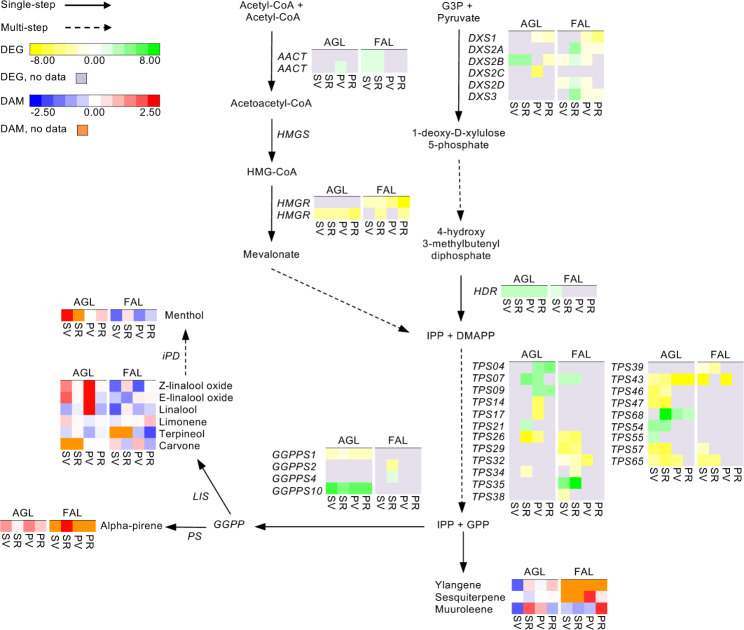
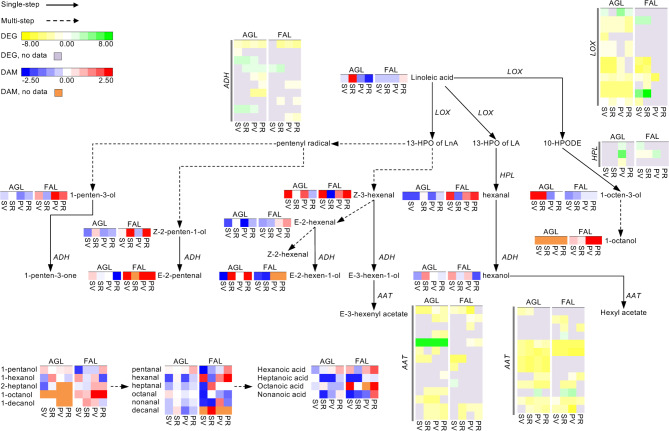
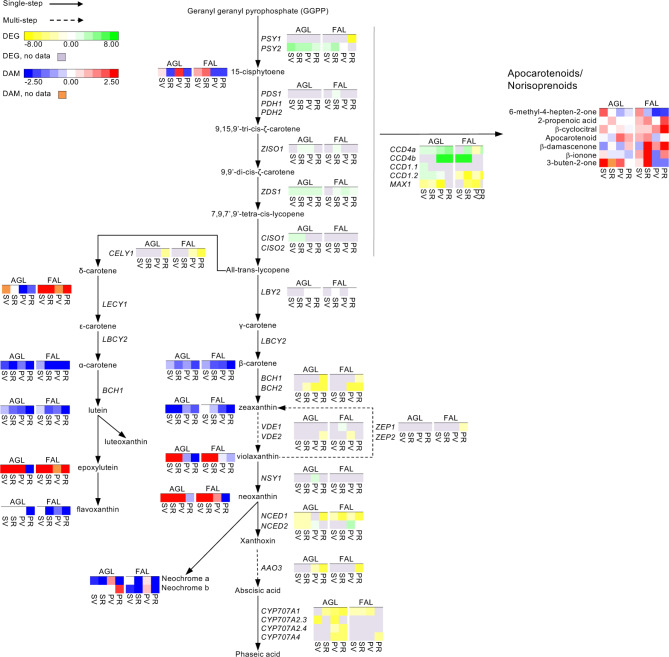
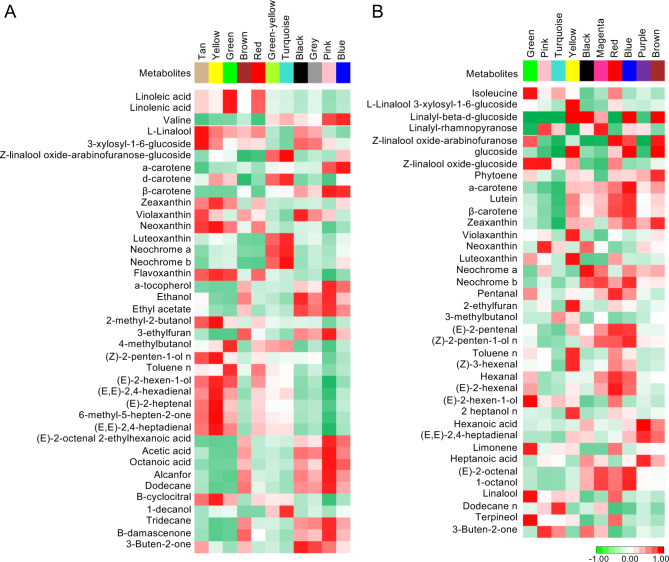
Results: Over two hundred genes related to aroma were found, of which 107 were differentially expressed in Aglianico and 99 in Falanghina. Similarly, 68 volatiles and 34 precursors were profiled in the same samples. Our results showed a large extent of transcriptomic and metabolomic changes at the level of isoprenoids (terpenes, norisoprenoids), green leaf volatiles (GLVs), and amino acid pathways, although the terpenoid metabolism was the most distinctive for Aglianico, and GLVs for Falanghina. Co-expression analysis that integrated metabolome and transcriptome data pinpointed 25 hub genes as points of biological interest in defining the metabolic patterns observed. Among them, three hub genes encoding for terpenes synthases (VvTPS26, VvTPS54, VvTPS68) in Aglianico and one for a GDP-L-galactose phosphorylase (VvGFP) in Falanghina were selected as potential active player underlying the aroma typicity of the two grapes.
Conclusion: Our data improve the understanding of the regulation of aroma-related biosynthetic pathways of Aglianico and Falanghina and provide valuable metabolomic and transcriptomic resources for future studies in these varieties.
Keywords: Amino acids; Green leaf volatiles; Norisoprenoids; RNASeq; Terpenoids; WGCNA.
© 2023. The Author(s).
Conflict of interest statement
The authors declare that they have no competing interests.
Figures
References
-
- Piombino P, Genovese A, Rustioni L, Moio L, Failla O, Bellincontro A, et al. Free and glycosylated green leaf volatiles, lipoxygenase and alcohol dehydrogenase in defoliated Nebbiolo grapes during postharvest dehydration. Aust J Grape Wine Res. 2022;28(1):107–118. doi: 10.1111/ajgw.12521. - DOI
-
- Waterhouse AL, Sacks GL, Jeffery DW. Understanding wine chemistry. Hoboken, NJ: John Wiley & Sons; 2016.
MeSH terms
Substances
Grants and funding
LinkOut - more resources
Full Text Sources
